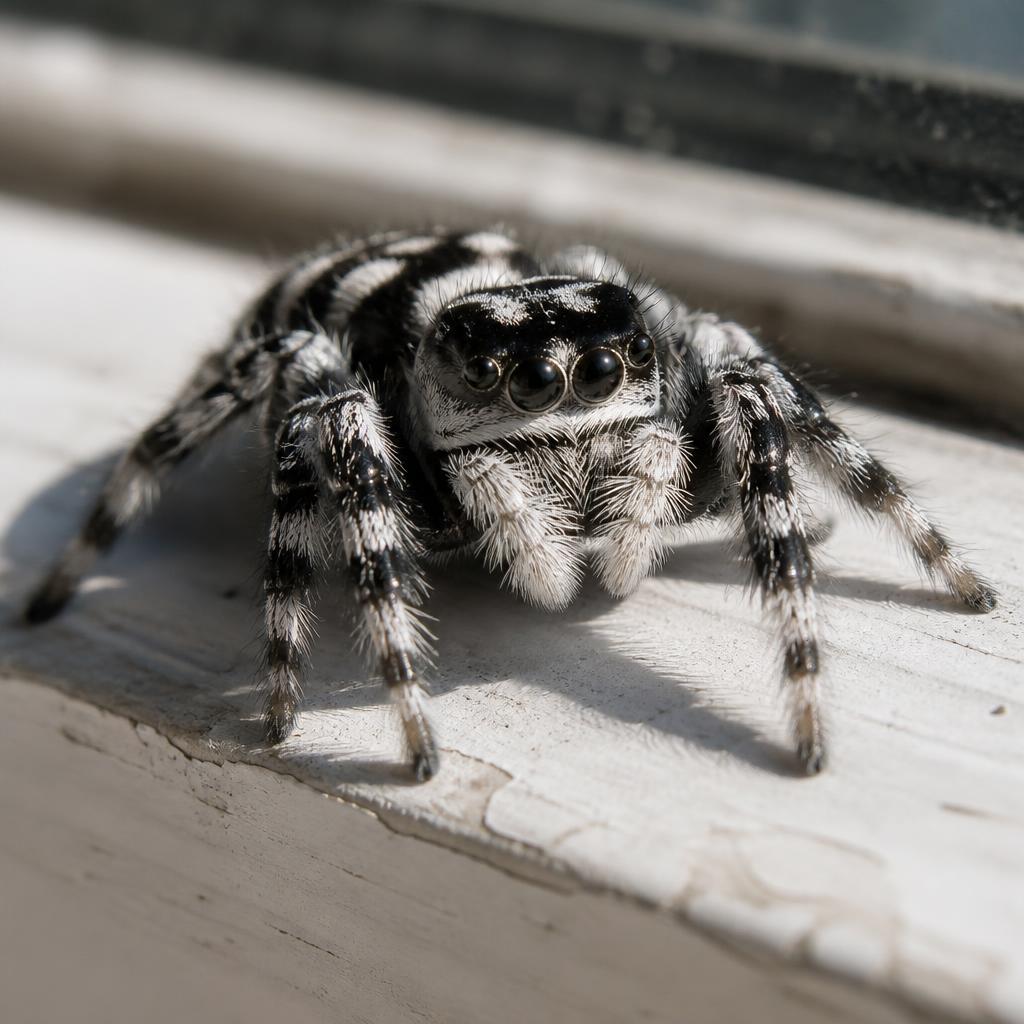
Spider
Zebra Jumping Spider
Salticus scenicus
Biology
Salticus scenicus is a small salticid, 4–7 mm, boldly patterned in black and white transverse bands that give it its name, with large forward-facing anterior median eyes and stout, spring-loaded front legs. Adult males have noticeably enlarged, forward-projecting chelicerae used in ritual contests. Females place 20–60 eggs in a flat silk retreat in a crevice and guard them; juveniles overwinter in silk hibernacula under bark and siding and mature in late spring, with a single annual generation.
Behaviour
This is a day-active, sun-loving stalker that patrols walls, fences and window frames, tracking prey visually and leaping up to several times its body length with a dragline attached. Prey is mostly small flies, mosquitoes, aphids and other tiny spiders, making it a useful biological control on building exteriors. It is entirely harmless: it has no capture web, does not bite people in any practical sense and will jump away when approached. Its habit of hunting on glass and bright interior sills makes it one of the most frequently noticed indoor spiders.
Habits
Look for zebra jumpers on sun-warmed masonry, brick, stucco, window glass, patio doors and fence rails, and indoors on windowsills, conservatory glazing and bright bathroom walls. They shelter overnight in tiny silk pockets in mortar joints, window channels and under sills. Because they need sunlight and visible prey, activity concentrates on the south and west elevations. Conducive conditions are small-fly pressure on sunlit walls plus abundant crevices in brickwork and window frames.
Control methods
- 1Live-capture indoor specimens with a cup and release outdoors
- 2Maintain intact window screens and door seals
- 3Brush silk retreats from window channels and mortar joints
- 4Cut small-fly and gnat pressure around sunny elevations
- 5Point damaged mortar and seal siding laps
- 6Avoid broadcast spraying — this species is beneficial
Tailored to Zebra Jumping Spider
IPM Procedure Checklist
Inspection
- Inspect undisturbed corners, voids and stored items
- Identify webs, egg sacs and prey debris
- Note conducive insect prey populations
Identification
- Confirm Zebra Jumping Spider (Salticus scenicus) — not a look-alike
- Note life stage and risk level: Low
- Capture clear photos and samples for the record
Action Thresholds
- Tolerate low-level activity outside sensitive zones
- Act if activity moves indoors or near food
- Review threshold seasonally with the client
Prevention
- Reduce clutter and seal cracks around the structure
- Switch exterior lights to yellow / sodium to reduce prey
- Install door sweeps and screen vents
Control Methods
- Live-capture indoor specimens with a cup and release outdoors
- Maintain intact window screens and door seals
- Brush silk retreats from window channels and mortar joints
- Cut small-fly and gnat pressure around sunny elevations
Monitoring & Evaluation
- Service monitors on schedule and trend captures
- Re-inspect for Zebra Jumping Spider activity at follow-up
- Adjust tactics based on data; report findings to client