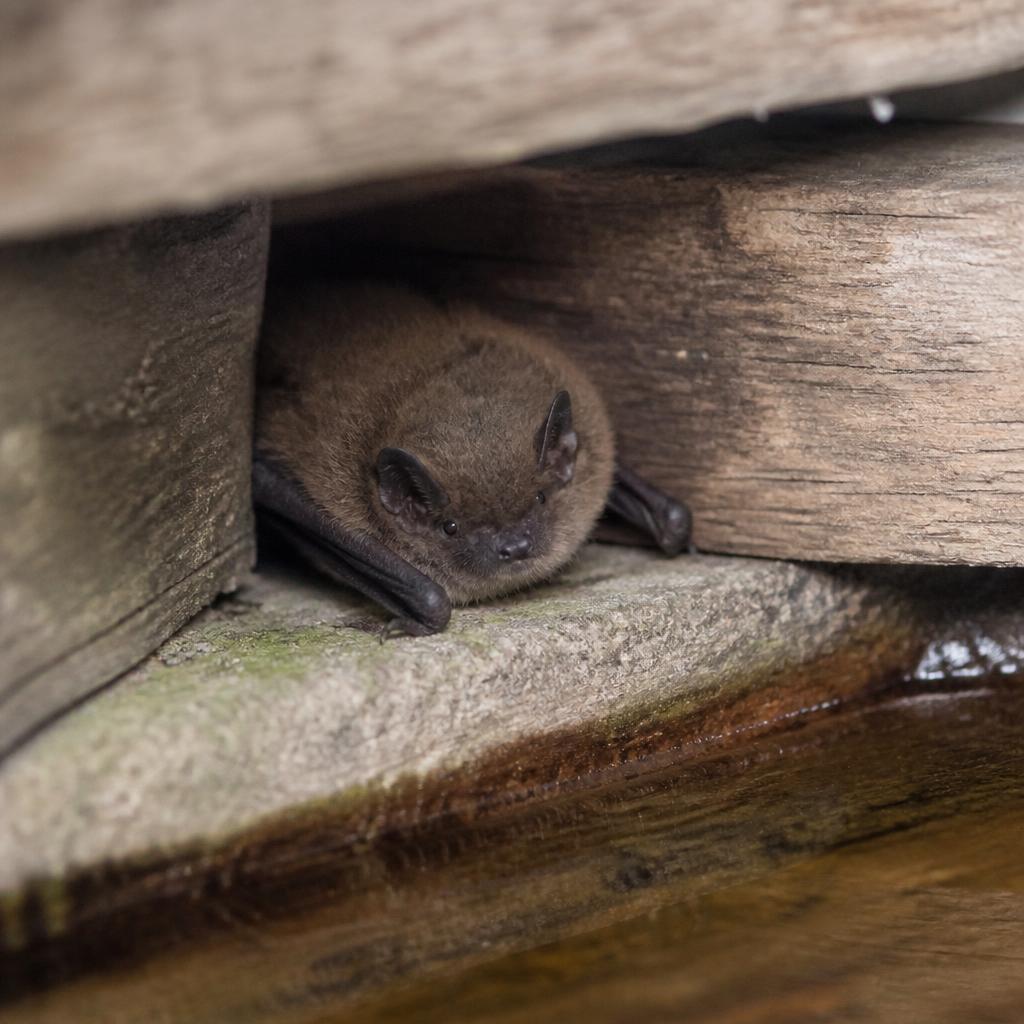
Bat
Yuma Myotis
Myotis yumanensis
Biology
Myotis yumanensis is a small western bat, 8–10 cm long with a 22–26 cm wingspan and 5–8 g in weight, with dull brown to tan fur, short ears and a small pointed tragus. It closely resembles the little brown bat, and the two are commonly confused in the field. Its defining requirement is open water: it is rarely found more than a short flight from a river, reservoir, pond or irrigation canal. Females bear a single pup in late spring in maternity colonies that frequently reach several hundred to a few thousand individuals, and often in buildings.
Behaviour
Foraging begins shortly after sunset with low, fast passes just centimetres above still water, taking midges, mosquitoes, caddisflies and other emerging aquatic insects. Colonies are dense and hot, and their concentrated guano and urine production is out of proportion to the animals' size — large building colonies stain and saturate insulation and drywall within a single season and generate strong ammonia odour. Histoplasmosis risk applies to accumulated deposits, and standard rabies precautions apply to any grounded bat. It is one of the most frequently excluded bats in the western United States.
Habits
Roosts are attics, wall voids, soffits, bridges, boathouses, barns, pump houses and outbuildings near water, entering through gaps of 1.5 cm or less. Signs are heavy localised guano piles, dark rub marks at entries, urine staining bleeding through ceilings, and audible daytime chatter in hot voids. Conducive conditions are waterside structures, unscreened vents, gaps at rooflines and soffits, and warm unfinished attics. Colony size means every gap along the affected roofline must be sealed — partial work simply relocates the colony within the same building.
Control methods
- 1Map all exits over multiple dusk emergences — colonies use many
- 2Exclude only after young are flying, typically late August onward
- 3Fit one-way devices on every active exit simultaneously
- 4Seal the entire roofline and soffit run, not just active gaps
- 5Remove saturated insulation and guano with respirator and HEPA
- 6Disinfect and deodorise voids before re-insulating
- 7Install large multi-chamber bat houses near the water before exclusion
Tailored to Yuma Myotis
IPM Procedure Checklist
Inspection
- Inspect at dusk to locate active entry/exit points
- Check attics, soffits and chimneys for guano
- Identify maternity colonies before any action
Identification
- Confirm Yuma Myotis (Myotis yumanensis) — not a look-alike
- Note life stage and risk level: High
- Capture clear photos and samples for the record
Action Thresholds
- Zero-tolerance: act on first confirmed sighting
- Notify client and document the trigger event
- Prioritize health and regulatory risk in the plan
Prevention
- Seal gaps ≥6 mm with caulk, mesh and flashing
- Cap chimneys and screen attic vents
- Provide alternative bat houses on the property
Control Methods
- Map all exits over multiple dusk emergences — colonies use many
- Exclude only after young are flying, typically late August onward
- Fit one-way devices on every active exit simultaneously
- Seal the entire roofline and soffit run, not just active gaps
Monitoring & Evaluation
- Service monitors on schedule and trend captures
- Re-inspect for Yuma Myotis activity at follow-up
- Adjust tactics based on data; report findings to client