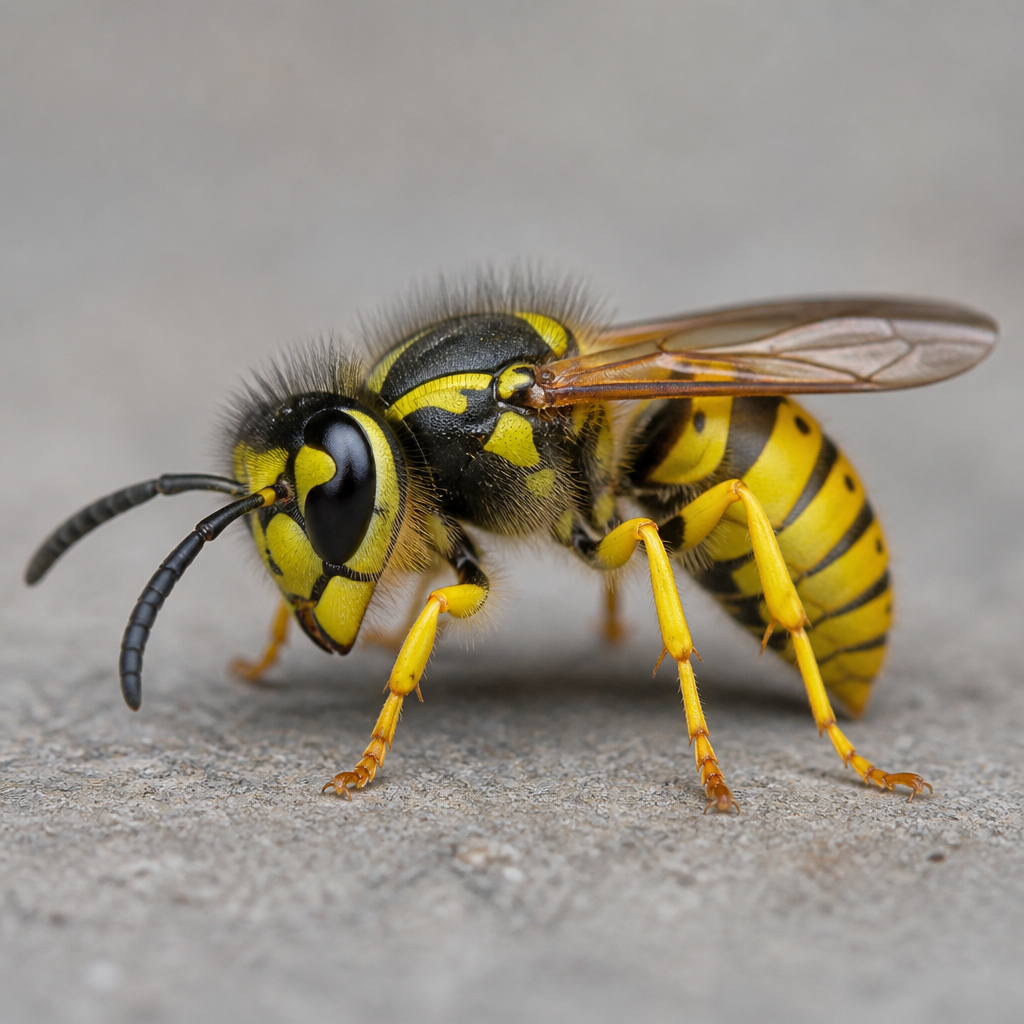
Stinging Insect
Yellowjacket
Vespula spp.
Biology
Yellowjackets, primarily Vespula and Dolichovespula species within the family Vespidae, are social wasps typically ranging from 10 to 16 mm in length for workers, with queens being slightly larger (18-20 mm). Their morphology is characterized by a distinct black-and-yellow patterned abdomen, a constricted 'wasp waist', and clear wings. Colonies are annual, initiated by a single overwintered, fertilized queen in spring, who lays eggs that develop through larval and pupal stages in approximately 3-4 weeks before emerging as sterile female workers. Colony populations can reach impressive sizes of 1,500 to 5,000 workers, sometimes exceeding 10,000 in optimal conditions, with a lifespan for workers typically 2-3 weeks, while queens can live for a year. Optimal development occurs in temperatures between 25-35°C and moderate humidity, with colony decline accelerating below 15°C.
Behaviour
Yellowjacket coloniesExhibit a eusocial structure with distinct castes: a reproductive queen, sterile female workers, and males (drones) produced in late summer. Workers communicate through tactile signals and, importantly, alarm pheromones released from the sting apparatus when a perceived threat is encountered, eliciting a mass defensive response from nest mates. Their foraging ecology shifts dramatically throughout the season; early in the season, they are predatory, hunting insects to feed developing larvae, whereas in late summer, with a reduced need for high-protein larval food, they primarily scavenge for high-energy carbohydrates like sugars. Public health impact stems from their highly aggressive defensive behavior, exacerbated by alarm pheromones, leading to multiple stings, potential anaphylaxis in sensitive individuals, and significant nuisance at outdoor gatherings.
Habits
Yellowjackets prefer to construct their paper nests in protected, concealed locations. Ground-nesting species (Vespula vulgaris, V. pensylvanica) favor abandoned rodent burrows, tree hollows, or subterranean voids, while aerial nesters (Dolichovespula maculata, V. arenaria) build in shrubs, trees, or often within structural voids like attics, wall voids, and soffits of buildings. Foraging patterns involve workers patrolling a radius of several hundred meters from the nest, following scent trails to food sources. As colonies mature in late summer and early fall, workers become increasingly opportunistic scavengers, attracted to outdoor food preparation areas, garbage receptacles, and sugary drinks. Signs of infestation for pest management professionals include a steady stream of workers entering/exiting a specific opening (e.g., ground hole, wall crack), observed foraging activity in proximity to a structure, and the presence of comb material or actual workers in wall voids after disturbing a potential access point.
Control methods
- 1Treat nest entrance after dusk with dust insecticide
- 2Aerosol freeze-jet for aerial nests at night
- 3Wasp traps placed away from activity areas
- 4Seal exterior cracks and soffit gaps in spring
- 5Cover food and drinks outdoors
- 6Remove fallen fruit and exposed garbage
Tailored to Yellowjacket
IPM Procedure Checklist
Inspection
- Survey interior and exterior for evidence and conducive conditions
- Document findings with photos and a site map
- Place monitors to confirm activity
Identification
- Confirm Yellowjacket (Vespula spp.) — not a look-alike
- Note life stage and risk level: High
- Capture clear photos and samples for the record
Action Thresholds
- Zero-tolerance: act on first confirmed sighting
- Notify client and document the trigger event
- Prioritize health and regulatory risk in the plan
Prevention
- Exclude entry points and harborage
- Improve sanitation and moisture control
- Modify habitat around the structure
Control Methods
- Treat nest entrance after dusk with dust insecticide
- Aerosol freeze-jet for aerial nests at night
- Wasp traps placed away from activity areas
- Seal exterior cracks and soffit gaps in spring
Monitoring & Evaluation
- Service monitors on schedule and trend captures
- Re-inspect for Yellowjacket activity at follow-up
- Adjust tactics based on data; report findings to client