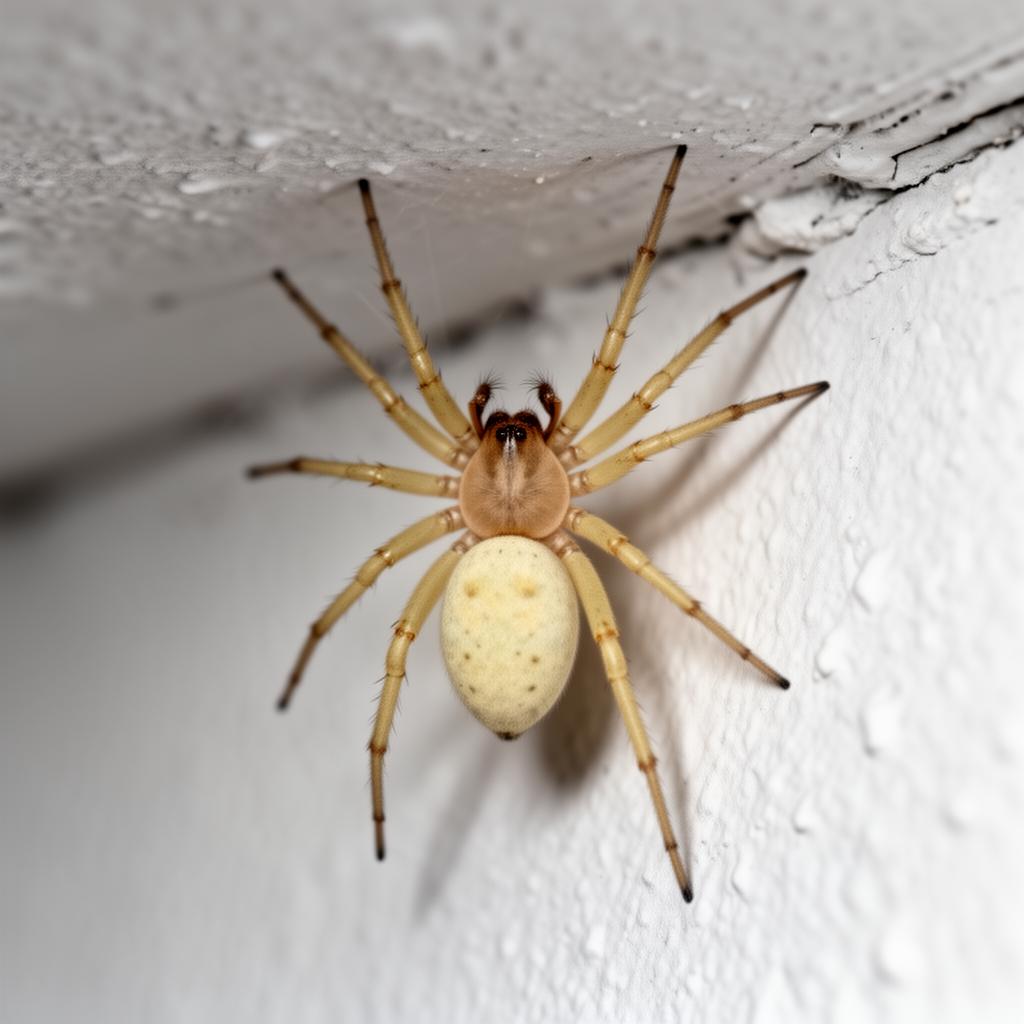
Spider
Yellow Sac Spider
Cheiracanthium inclusum
Biology
The yellow sac spider, Cheiracanthium inclusum (Hentz), is a common arboreal spider in the family Cheiracanthiidae. Adults are pale yellow to light green, with dark brown chelicerae and often a darker stripe dorsally on the abdomen, measuring 4-9 mm in body length. They possess eight eyes arranged in two rows. These spiders do not construct true webs for prey capture but instead build silken retreats, or sacs, in curled leaves, under bark, or indoors in corners and wall/ceiling junctures. Mating occurs in late spring to early summer, with females laying 30-70 eggs in their silken sac, guarding them until they hatch. They typically live for about a year.
Behaviour
Cheiracanthium inclusum is a nocturnal hunter, actively foraging for insects and other small arthropods on foliage and around structures. During the day, they retreat to their silken sacs. Unlike many spiders, they are frequently found indoors, especially during cooler months, seeking shelter. Bites from yellow sac spiders are a common concern, often occurring when the spider is accidentally pressed against the skin. Although the venom is not considered medically significant, bites can be painful, causing localized redness, swelling, and sometimes a necrotic lesion.
Habits
These spiders prefer outdoor habitats such as gardens, agricultural fields, and wooded areas, commonly found on shrubs, trees, and tall grasses. Indoors, they may be found in corners, behind pictures, or in other undisturbed areas. They are opportunistic predators, feeding on a wide range of small insects. Conducive conditions for indoor encounters include open windows and doors, gaps in foundations, and an abundance of prey insects. They are more likely to be encountered in human dwellings during late summer and fall as they seek overwintering sites or new hunting grounds.
Control methods
- 1Seal cracks, crevices, and entry points.
- 2Remove clutter and harborage inside and outside.
- 3Vacuum regularly to remove spiders and webs.
- 4Reduce outdoor lighting that attracts prey insects.
- 5Conduct general pest control to limit food sources.
- 6Use sticky traps in areas of suspected activity.
Tailored to Yellow Sac Spider
IPM Procedure Checklist
Inspection
- Inspect undisturbed corners, voids and stored items
- Identify webs, egg sacs and prey debris
- Note conducive insect prey populations
Identification
- Confirm Yellow Sac Spider (Cheiracanthium inclusum) — not a look-alike
- Note life stage and risk level: Moderate
- Capture clear photos and samples for the record
Action Thresholds
- Trigger action when monitor counts trend up
- Re-evaluate weekly during active season
- Document trigger criteria in the IPM plan
Prevention
- Reduce clutter and seal cracks around the structure
- Switch exterior lights to yellow / sodium to reduce prey
- Install door sweeps and screen vents
Control Methods
- Seal cracks, crevices, and entry points.
- Remove clutter and harborage inside and outside.
- Vacuum regularly to remove spiders and webs.
- Reduce outdoor lighting that attracts prey insects.
Monitoring & Evaluation
- Service monitors on schedule and trend captures
- Re-inspect for Yellow Sac Spider activity at follow-up
- Adjust tactics based on data; report findings to client