Stinging Insect
Yellow Paper Wasp
Polistes dominula
Biology
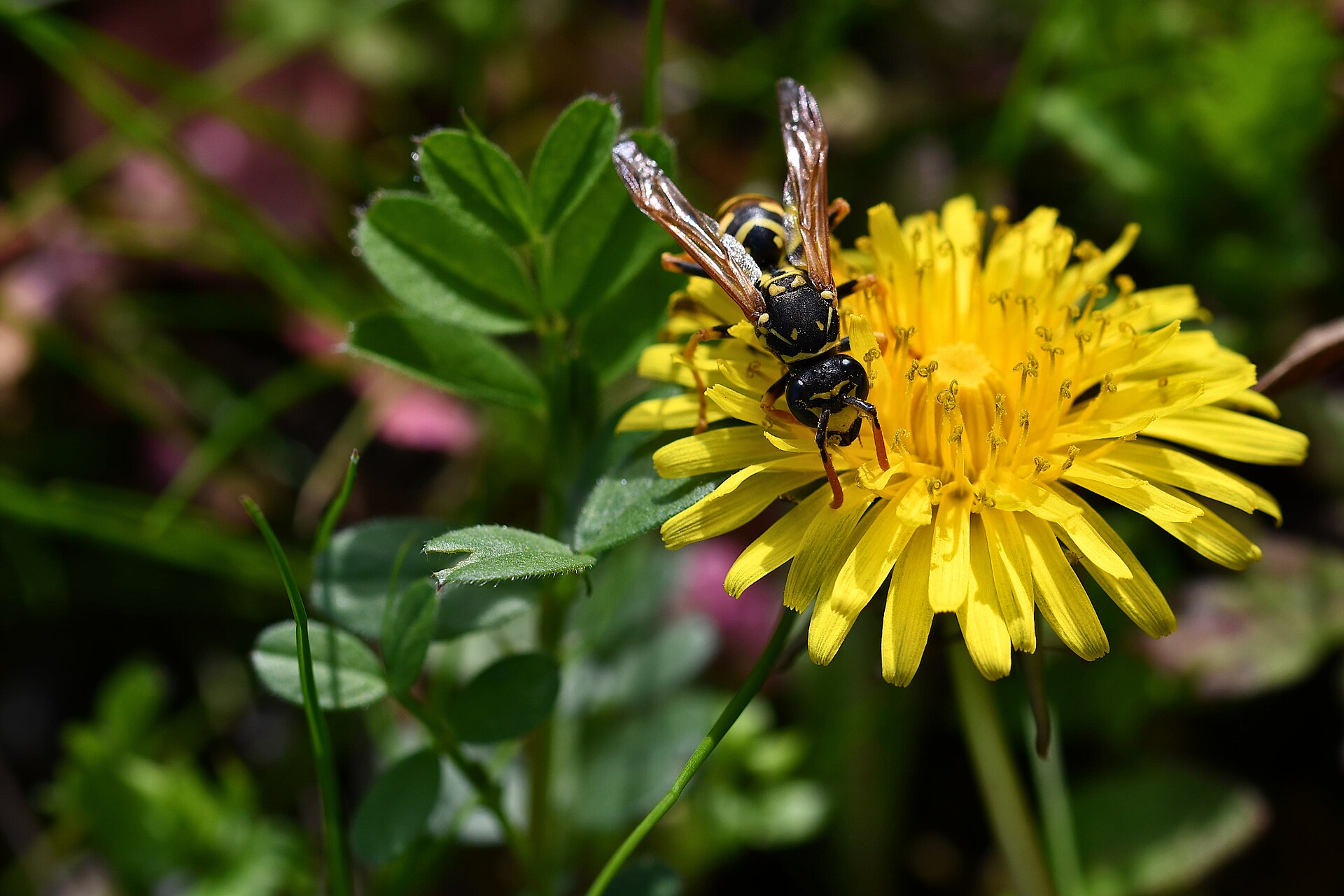
Polistes dominula (Christ), an invasive species in the family Vespidae, is a social wasp often recognized by its slender body and distinctive yellow and black markings. Queens are typically 15-20 mm long, while workers are slightly smaller. The head and thorax are predominantly black with yellow markings, and the abdomen has alternating yellow and black bands. Nests are constructed from masticated plant fibers mixed with saliva, forming a single, open comb structure, often resembling an inverted umbrella. The lifecycle begins in spring when an overwintered queen initiates a new nest.
Behaviour
P. dominula are predatory wasps, primarily feeding on caterpillars and other soft-bodied insects to provision their larvae. Adults also feed on nectar and honeydew. They are less aggressive than yellowjackets but will sting if their nest is disturbed or if they feel threatened. Nests are typically built in sheltered locations, often under eaves, in attics, or within wall voids. Multiple queens may initiate a nest together, with one eventually becoming dominant.
Habits
Yellow paper wasps thrive in temperate climates, adapting well to urban and suburban environments due to the availability of nesting sites and insect prey. Nests are frequently found in protected areas on buildings, such as under eaves, soffits, and in utility boxes, but also in natural settings like hollow trees or dense vegetation. Conducive conditions for nesting include accessible sheltered spaces on structures and abundant insect populations for larval provisioning. They are more active during warmer months.
Control methods
- 1Destroy nests at night when wasps are inactive.
- 2Wear protective clothing during nest removal.
- 3Apply an aerosol wasp killer directly to the nest.
- 4Seal entry points to attics and wall voids.
- 5Trim back dense vegetation near structures.
- 6Remove potential food sources like sugary spills.
Tailored to Yellow Paper Wasp
IPM Procedure Checklist
Inspection
- Survey interior and exterior for evidence and conducive conditions
- Document findings with photos and a site map
- Place monitors to confirm activity
Identification
- Confirm Yellow Paper Wasp (Polistes dominula) — not a look-alike
- Note life stage and risk level: Moderate
- Capture clear photos and samples for the record
Action Thresholds
- Trigger action when monitor counts trend up
- Re-evaluate weekly during active season
- Document trigger criteria in the IPM plan
Prevention
- Exclude entry points and harborage
- Improve sanitation and moisture control
- Modify habitat around the structure
Control Methods
- Destroy nests at night when wasps are inactive.
- Wear protective clothing during nest removal.
- Apply an aerosol wasp killer directly to the nest.
- Seal entry points to attics and wall voids.
Monitoring & Evaluation
- Service monitors on schedule and trend captures
- Re-inspect for Yellow Paper Wasp activity at follow-up
- Adjust tactics based on data; report findings to client