Stored Product Pest
Yellow Mealworm
Tenebrio molitor
Biology
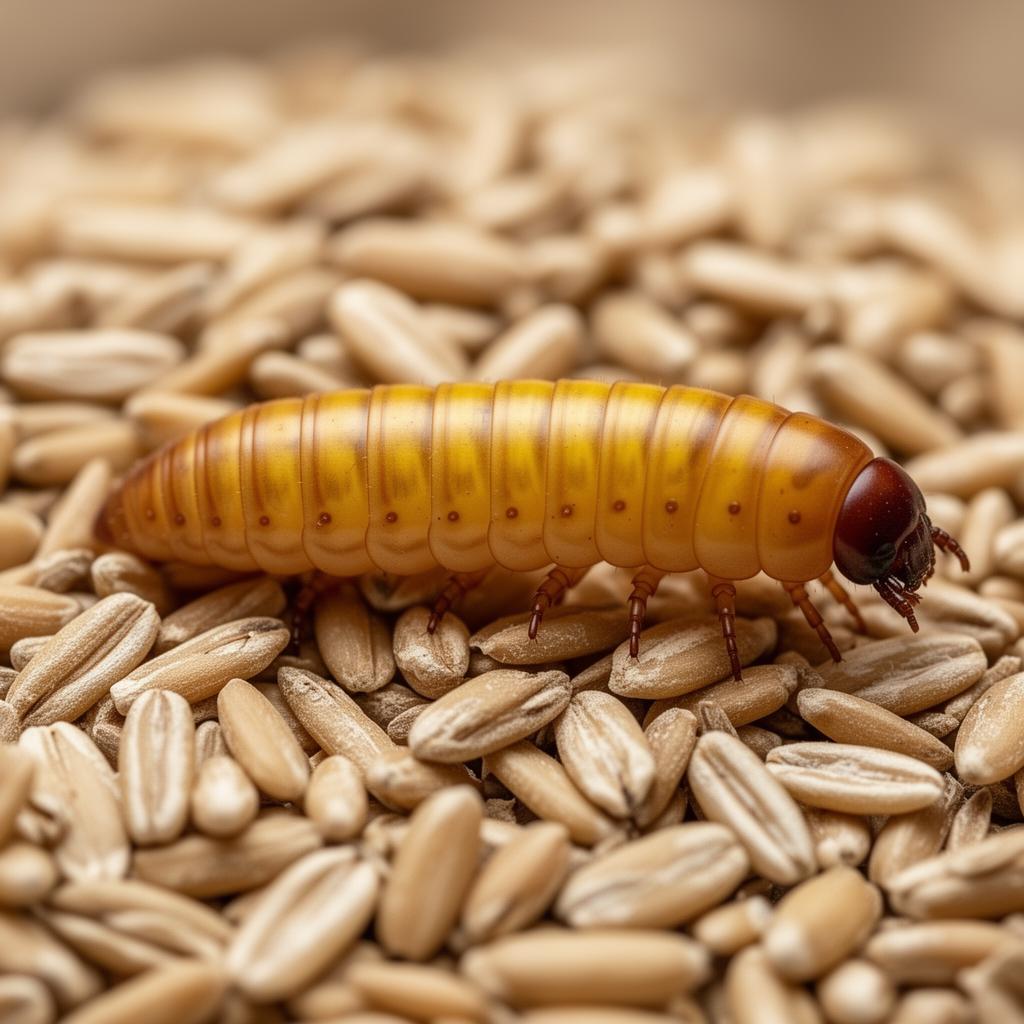
Tenebrio molitor, belonging to the family Tenebrionidae, exhibits complete metamorphosis. Larvae are distinctively cylindrical, smooth, and hard-bodied, ranging from pale yellow to golden-brown, with prominent segmentation and reaching 25–30 mm prior to pupation. The pupal stage, typically lasting 7–23 days, is exarate and white to yellowish-brown. Adults are ovate, dull black or dark brown beetles, 12–18 mm in length, with finely punctate elytra and distinct antennal clubs. Under optimal conditions (25–30°C and 70% RH), the full life cycle can be completed in 3–4 months, though it often extends to 6–12 months. Females lay up to 500 eggs individually or in small clusters over a period of several months, often embedded in foodstuff.
Behaviour
Yellow mealworm larvae are primarily nocturnal but will forage during the day in undisturbed, dark environments. They are detritivores, feeding on decaying organic matter, milled grain products, and animal feed. While adults possess wings, they are generally reluctant fliers, preferring to crawl, especially when disturbed. Larvae tunnel extensively through their food source, creating galleries and leaving behind characteristic frass and shed exoskeletons, which can accumulate significantly in infested materials, potentially causing allergenicity. This continuous feeding and movement degrade the quality and marketability of infested products. Communication is largely absent from the social structure beyond localized aggregation based on food availability.
Habits
Yellow mealworms thrive in damp, dark, and undisturbed environments, favoring storages lacking proper ventilation or experiencing moisture issues. Primary harborages include cracks and crevices in grain bins, beneath sacks of feed, within accumulated spilled product, and in the bottom of infrequently accessed pet food containers. Larvae exhibit thigmotaxis, preferring close contact with surfaces, thereby burrowing deep into grain masses or flour. Foraging ranges are localized to the immediate food source, but adults can disperse to new food sources by crawling or, less commonly, flying short distances if conditions become untenable. Infestation signs include the presence of larvae, pupae, and adult beetles, as well as the detection of frass, cast larval skins, and a characteristic musty odor in heavily infested commodities.
Control methods
- 1Discard heavily infested grain, meal and pet food
- 2Store products in sealed containers and rotate stock
- 3Reduce humidity below 60% in storage rooms
- 4Vacuum cracks, shelving and pallet bases thoroughly
- 5Deploy pheromone or pitfall traps for monitoring
- 6Apply residual treatment to cracks in commercial sites
Tailored to Yellow Mealworm
IPM Procedure Checklist
Inspection
- Inspect grain, spices, pet food and dry goods for larvae and webbing
- Deploy pheromone monitors near storage and shelving
- Check spillage in seams, cracks and shelf liners
Identification
- Confirm Yellow Mealworm (Tenebrio molitor) — not a look-alike
- Note life stage and risk level: Moderate
- Capture clear photos and samples for the record
Action Thresholds
- Trigger action when monitor counts trend up
- Re-evaluate weekly during active season
- Document trigger criteria in the IPM plan
Prevention
- Rotate stock FIFO; reject damaged packaging at receiving
- Store products in airtight containers
- Maintain low humidity and clean storage surfaces
Control Methods
- Discard heavily infested grain, meal and pet food
- Store products in sealed containers and rotate stock
- Reduce humidity below 60% in storage rooms
- Vacuum cracks, shelving and pallet bases thoroughly
Monitoring & Evaluation
- Service monitors on schedule and trend captures
- Re-inspect for Yellow Mealworm activity at follow-up
- Adjust tactics based on data; report findings to client