Spider
Yellow Garden Spider
Argiope aurantia
Biology
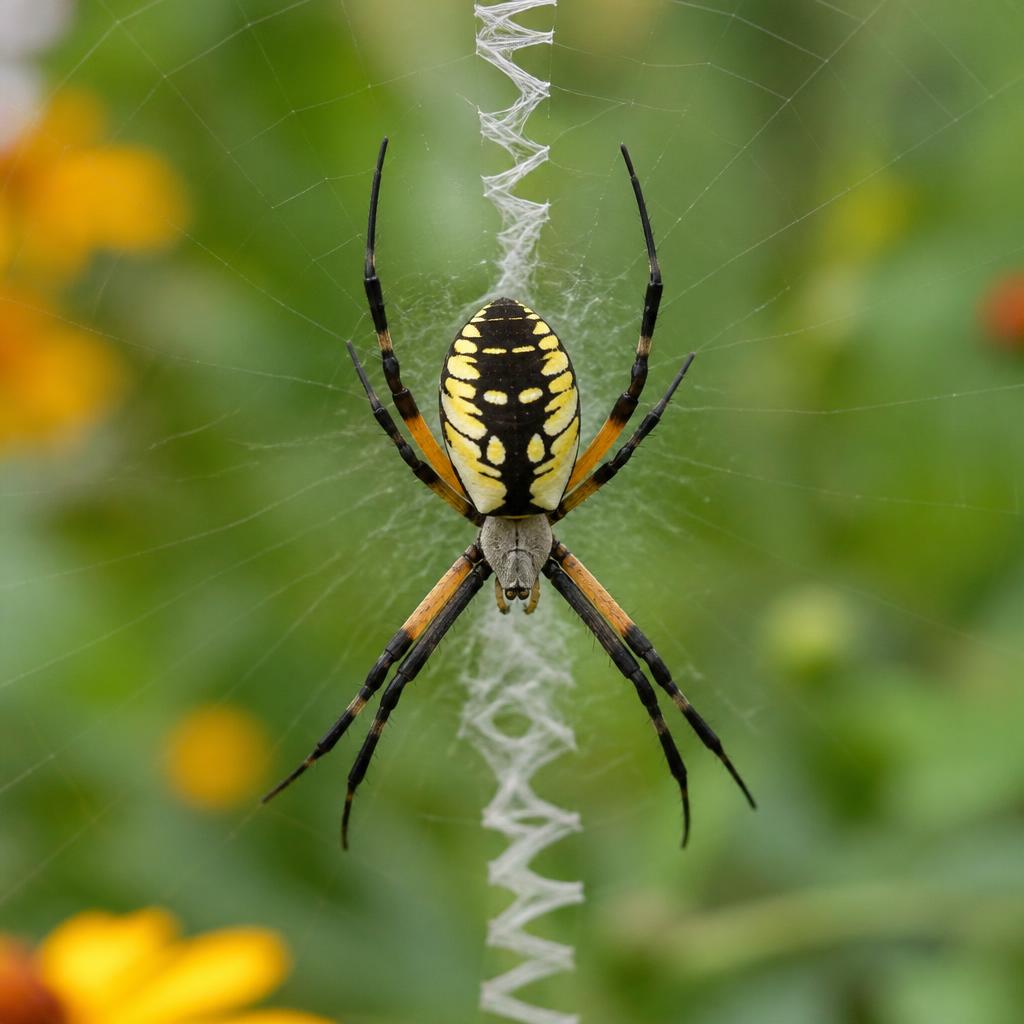
Argiope aurantia is a large araneid orb weaver; females reach 19–28 mm body length with a striking black abdomen boldly patterned in bright yellow, and silvery hairs on the carapace, while males are only 5–9 mm and inconspicuous. Mature females build a papery brown egg sac holding 300–1,400 eggs in late summer and die at first frost; spiderlings overwinter inside the sac and balloon away in spring. One generation occurs per year, with adults most conspicuous from midsummer to October.
Behaviour
The female builds a large vertical orb web with a dense zigzag silk band, the stabilimentum, running through the hub, and hangs head-down at the centre with legs paired. The web is rebuilt almost nightly, the old silk eaten and recycled. Prey — grasshoppers, wasps, flies and moths — is bitten, wrapped and cached. The spider bounces the web vigorously when threatened and retreats rather than confronting; bites are rare and comparable to a bee sting with brief local pain and no systemic effect. It is a valuable garden predator.
Habits
Webs are built in sunny, sheltered spots with tall vegetation and low wind: gardens, meadow edges, tall perennials, porch corners, deck rails, fence lines and shrubs against the structure. This is an exterior species that does not colonise interiors. Signs are the unmistakable orb with a zigzag band, and later the brown papery egg sac attached to nearby stems or siding. Conducive conditions are lush vegetation right up against the building and exterior lights concentrating flying prey.
Control methods
- 1Relocate rather than kill — a major garden predator
- 2Remove webs only where they block doors or walkways
- 3Trim tall plantings back from entries and walkways
- 4Move egg sacs to nearby landscaping if they must be relocated
- 5Reduce exterior lighting that draws flying prey
- 6No chemical treatment needed for garden orb webs
Tailored to Yellow Garden Spider
IPM Procedure Checklist
Inspection
- Inspect undisturbed corners, voids and stored items
- Identify webs, egg sacs and prey debris
- Note conducive insect prey populations
Identification
- Confirm Yellow Garden Spider (Argiope aurantia) — not a look-alike
- Note life stage and risk level: Low
- Capture clear photos and samples for the record
Action Thresholds
- Tolerate low-level activity outside sensitive zones
- Act if activity moves indoors or near food
- Review threshold seasonally with the client
Prevention
- Reduce clutter and seal cracks around the structure
- Switch exterior lights to yellow / sodium to reduce prey
- Install door sweeps and screen vents
Control Methods
- Relocate rather than kill — a major garden predator
- Remove webs only where they block doors or walkways
- Trim tall plantings back from entries and walkways
- Move egg sacs to nearby landscaping if they must be relocated
Monitoring & Evaluation
- Service monitors on schedule and trend captures
- Re-inspect for Yellow Garden Spider activity at follow-up
- Adjust tactics based on data; report findings to client