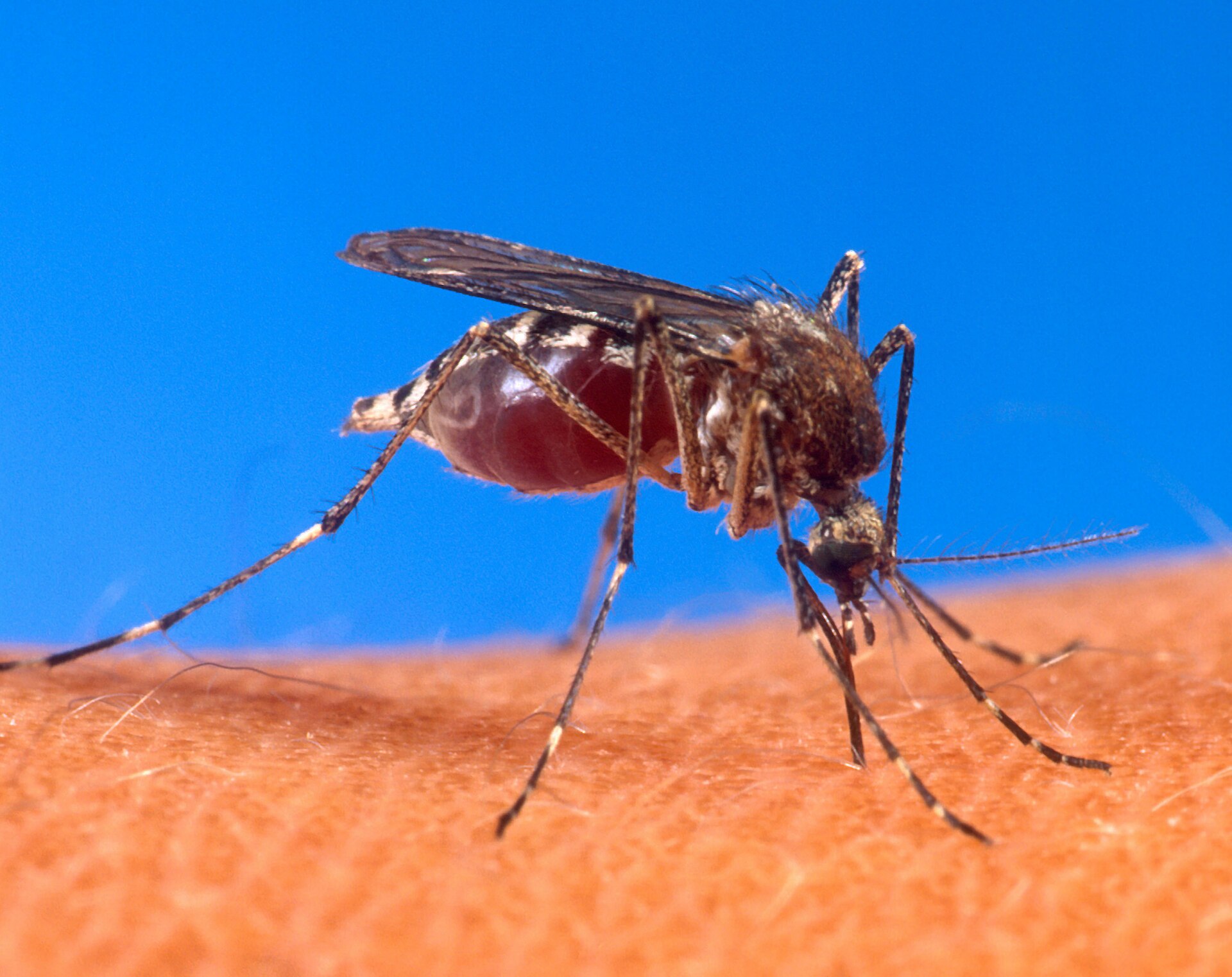
Blood Feeder
Yellow Fever Mosquito
Aedes aegypti
Biology
Aedes aegypti, the yellow fever mosquito, is a small to medium-sized mosquito (3-5 mm), easily identified by the distinctive lyre-shaped pattern of white scales on its thorax and white bands on its legs. A member of the family Culicidae, its lifecycle is typically completed in 7-10 days under warm, humid conditions (optimal 25-29°C), though it can extend up to 3 weeks in cooler temperatures. Females lay desiccation-resistant eggs individually on the inner walls of water-holding containers, just above the waterline. Larvae and pupae exclusively develop in these man-made containers, feeding on microorganisms and organic particulates.
Behaviour
Aedes aegypti is primarily a diurnal and crepuscular biter, with peak activity in the early morning and late afternoon/early evening. Females are highly anthropophilic, exhibiting a strong preference for human blood meals, which they often take multiple times within an egg-laying cycle. This species is an endophagic and endophilic mosquito, frequently resting and biting indoors. Its flight range is very short, typically less than 100 meters, meaning infestations are usually close to breeding sites. They are highly efficient vectors due to their adaptation to human environments and frequent biting habits.
Habits
The yellow fever mosquito is a highly domesticated species, almost exclusively found in and around human habitations. Harborage sites for adults include dark, cool, and humid areas within homes, such as closets, under furniture, and in bathrooms, as well as dense vegetation immediately surrounding houses. Larval development occurs in small, artificial water-holding containers, including water storage jars, discarded tires, flower vases, and pet water bowls. Conducive conditions include poor sanitation, lack of piped water leading to water storage, and the presence of numerous artificial water containers in and around homes.
Control methods
- 1Eliminate all standing water containers.
- 2Cover water storage containers tightly.
- 3Clean and scrub containers weekly.
- 4Use screens on windows and doors.
- 5Apply approved larvicides to breeding sites.
- 6Implement targeted adulticide applications.
Tailored to Yellow Fever Mosquito
IPM Procedure Checklist
Inspection
- Survey interior and exterior for evidence and conducive conditions
- Document findings with photos and a site map
- Place monitors to confirm activity
Identification
- Confirm Yellow Fever Mosquito (Aedes aegypti) — not a look-alike
- Note life stage and risk level: Severe
- Capture clear photos and samples for the record
Action Thresholds
- Zero-tolerance: act on first confirmed sighting
- Notify client and document the trigger event
- Prioritize health and regulatory risk in the plan
Prevention
- Exclude entry points and harborage
- Improve sanitation and moisture control
- Modify habitat around the structure
Control Methods
- Eliminate all standing water containers.
- Cover water storage containers tightly.
- Clean and scrub containers weekly.
- Use screens on windows and doors.
Monitoring & Evaluation
- Service monitors on schedule and trend captures
- Re-inspect for Yellow Fever Mosquito activity at follow-up
- Adjust tactics based on data; report findings to client