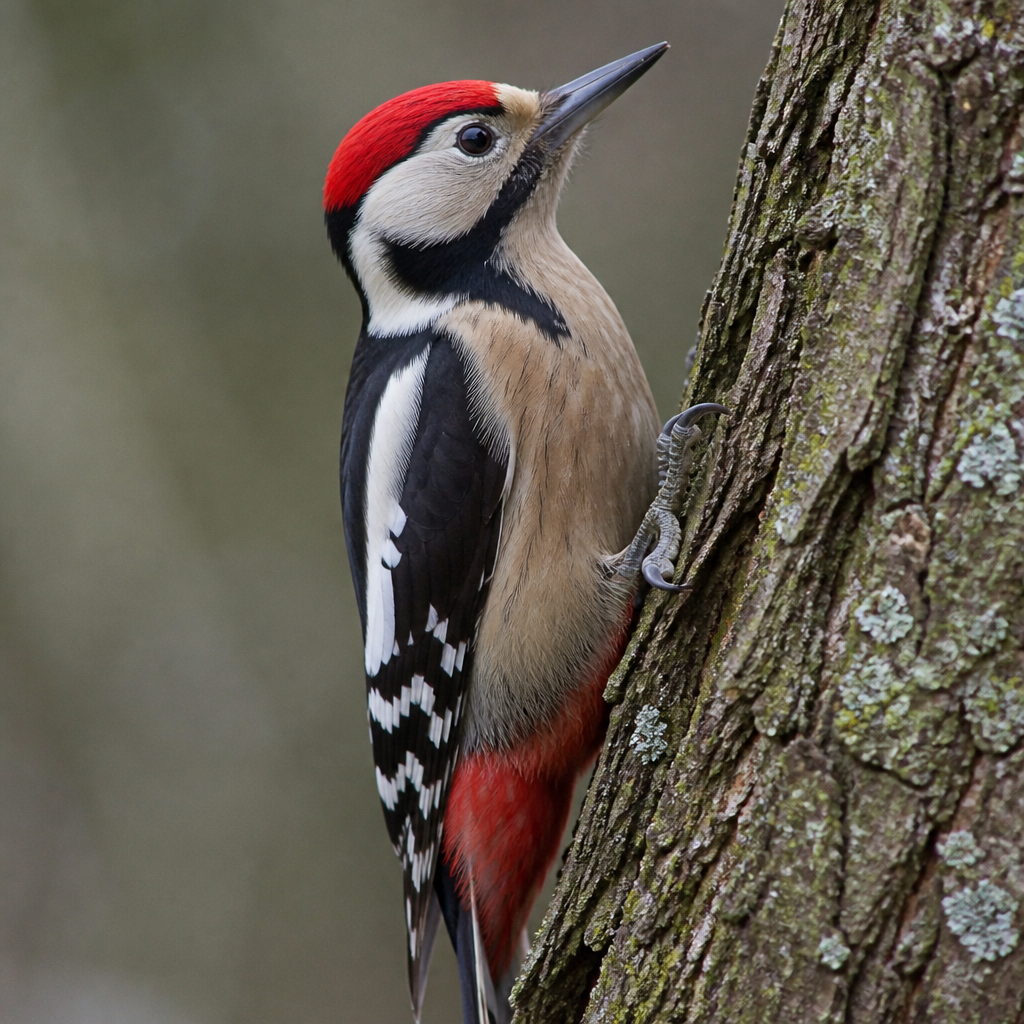
Bird
Woodpecker
Picidae spp.
Biology
Woodpeckers, belonging to the family Picidae, are a diverse group of birds with specialized morphological adaptations. They range in size from the 15 cm Downy Woodpecker to the 40 cm Pileated Woodpecker, all possessing strong, chisel-shaped beaks, zygodactyl feet (two toes forward, two back) for gripping, and stiff tail feathers for bracing. Their life cycle typically involves a single brood per year, with clutches of 3–8 eggs incubated for 11–14 days. Nestlings fledge within 20–30 days, becoming independent shortly thereafter. Woodpeckers can live 4–12 years in the wild, depending on the species, with high juvenile mortality. Optimal breeding conditions generally occur in temperate deciduous or coniferous forests with ambient temperatures between 15–25°C and moderate humidity to support insect prey populations.
Behaviour
Woodpeckers exhibit complex social and foraging behaviors, often centered around their specialized feeding ecology. Many species are diurnal, actively foraging and drumming during daylight hours, though some crepuscular activity may occur. Territory establishment and mate attraction are primarily achieved through drumming, a non-vocal form of communication, rather than vocalizations, particularly during late winter and early spring. Their diet consists predominantly of wood-boring beetle larvae (Cerambycidae, Buprestidae), ants, and other insects extracted from wood, supplemented by nuts, seeds, and sap. Some species, like sapsuckers (Sphyrapicus spp.), create sap wells, which also attract insects. While generally not aggressive, they can become territorial, defending primary drumming sites and nesting cavities, and their persistent pecking can inflict significant structural damage to homes and commercial buildings, especially to siding, fascias, and utility poles.
Habits
Woodpeckers typically prefer to create roosting and nesting cavities in dead or decaying trees, but readily exploit human structures when natural substrates are scarce or suitable. Harborage preferences on structures include untreated or softwoods such as cedar and redwood siding, eaves, fascia boards, and window frames, but also synthetic stucco (EIFS) for cavity excavation to seek insects or create nests. Foraging patterns involve systematic exploration of trees and structures for signs of insect activity, such as exit holes or galleries. Drumming activity, often a precursor to foraging or nesting, is frequently concentrated on highly resonant surfaces like metal gutters, downspouts, chimney caps, or loose siding, which amplify their territorial claims. Conducive conditions for infestations include expansive, exposed wooden surfaces, especially on the sunny side of buildings, presence of wood-boring insects in the structure, and proximity to wooded areas. Signs of infestation for pest management professionals include characteristic round or oval holes (foraging), larger rectangular or pear-shaped holes (nesting/roosting), accumulated wood chips at the base of affected areas, and persistent drumming sounds.
Control methods
- 1Hang reflective tape, mylar streamers or predator silhouettes
- 2Cover damaged siding with hardware cloth or burlap
- 3Treat underlying insect infestations (carpenter bees, beetles)
- 4Install woodpecker netting 7 cm off the wall
- 5Use sonic distress-call devices in spring
- 6Repair holes promptly to prevent reuse — apply for depredation permits where lawful
Tailored to Woodpecker
IPM Procedure Checklist
Inspection
- Identify roosting, loafing and nesting sites
- Document droppings, feathers and damage to structure
- Note food and water sources attracting birds
Identification
- Confirm Woodpecker (Picidae spp.) — not a look-alike
- Note life stage and risk level: Moderate
- Capture clear photos and samples for the record
Action Thresholds
- Trigger action when monitor counts trend up
- Re-evaluate weekly during active season
- Document trigger criteria in the IPM plan
Prevention
- Install spikes, netting or shock track on ledges
- Remove standing water and accessible food
- Close openings to attics, vents and signage voids
Control Methods
- Hang reflective tape, mylar streamers or predator silhouettes
- Cover damaged siding with hardware cloth or burlap
- Treat underlying insect infestations (carpenter bees, beetles)
- Install woodpecker netting 7 cm off the wall
Monitoring & Evaluation
- Service monitors on schedule and trend captures
- Re-inspect for Woodpecker activity at follow-up
- Adjust tactics based on data; report findings to client