Spider
Woodlouse Spider
Dysdera crocata
Biology
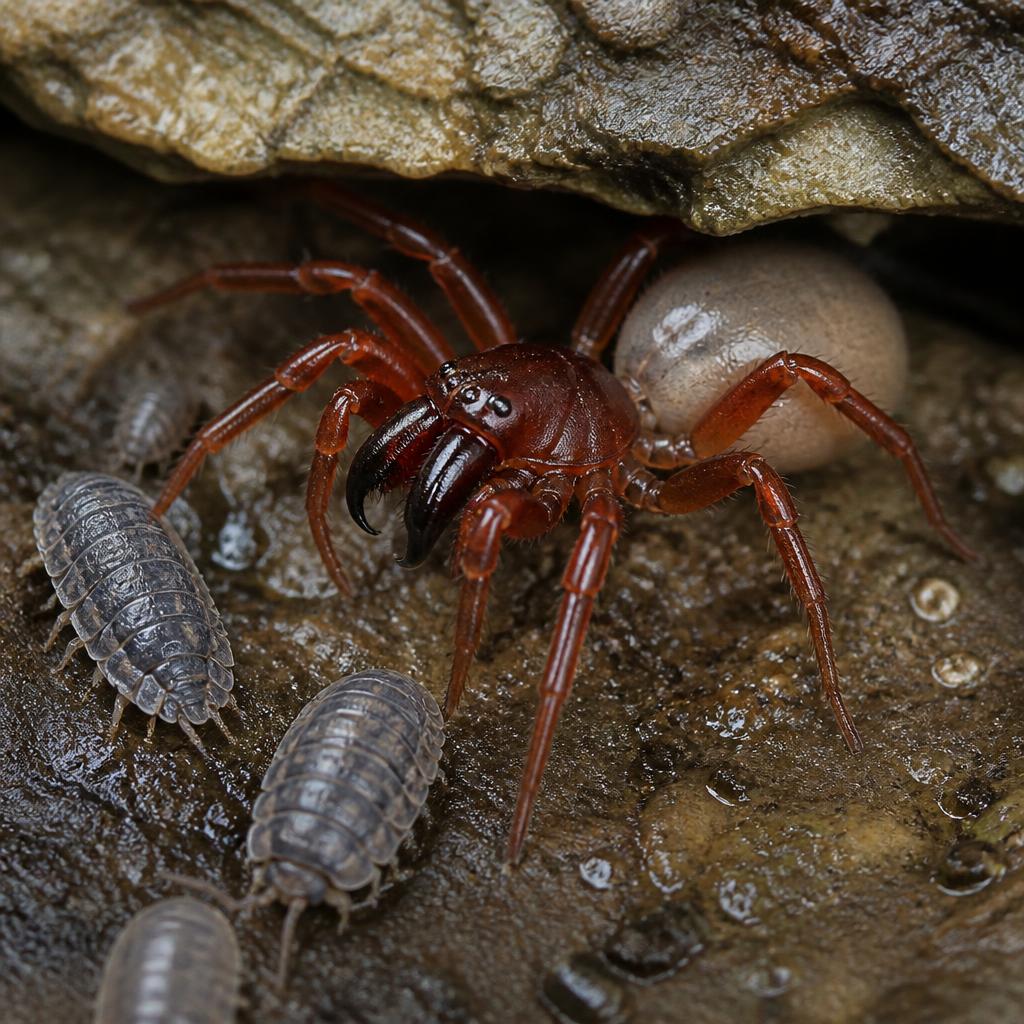
Dysdera crocata is instantly recognisable: 9–15 mm, with a shiny dark orange-red cephalothorax and legs contrasting with a smooth, glossy cream-grey abdomen, six eyes rather than eight, and disproportionately huge forward-projecting fangs adapted for piercing the armoured shells of woodlice. Females deposit 30–70 eggs in a loose silk cell in soil or under stone and guard the brood; the spiders live one to two years and can breed year-round in mild, damp conditions.
Behaviour
This is a nocturnal, webless hunting spider that spends the day sealed in a silken cell under stone, bark or debris and emerges at night to hunt pillbugs and sowbugs almost exclusively. The oversized chelicerae look alarming and the species can deliver a defensive bite if trapped against skin, but venom effects are minor and local — brief sharp pain and itching, with no medically significant sequelae despite the spider's reputation. Its presence is a direct indicator of a large woodlouse population, so prey management is the core control lever.
Habits
Harborage is damp and ground-level: beneath landscape stone, pavers, mulch, leaf litter, log piles and siding at grade, and indoors in basements, crawlspaces, garages and ground-floor bathrooms where moisture is high. Specimens found indoors are typically wanderers that followed woodlice through slab gaps or door thresholds. Signs include the small silk sleeping cells under objects at grade and the spiders themselves in overnight sticky traps. Conducive conditions are heavy mulch against foundations, poor drainage and high perimeter moisture.
Control methods
- 1Reduce woodlouse and sowbug populations — remove the prey base
- 2Pull mulch, leaf litter and stone back from the foundation
- 3Correct drainage and fix leaks to dry out perimeter soil
- 4Seal slab gaps, thresholds and utility penetrations
- 5Dehumidify basements and crawlspaces
- 6Sticky monitors along interior ground-level walls
Tailored to Woodlouse Spider
IPM Procedure Checklist
Inspection
- Inspect undisturbed corners, voids and stored items
- Identify webs, egg sacs and prey debris
- Note conducive insect prey populations
Identification
- Confirm Woodlouse Spider (Dysdera crocata) — not a look-alike
- Note life stage and risk level: Low
- Capture clear photos and samples for the record
Action Thresholds
- Tolerate low-level activity outside sensitive zones
- Act if activity moves indoors or near food
- Review threshold seasonally with the client
Prevention
- Reduce clutter and seal cracks around the structure
- Switch exterior lights to yellow / sodium to reduce prey
- Install door sweeps and screen vents
Control Methods
- Reduce woodlouse and sowbug populations — remove the prey base
- Pull mulch, leaf litter and stone back from the foundation
- Correct drainage and fix leaks to dry out perimeter soil
- Seal slab gaps, thresholds and utility penetrations
Monitoring & Evaluation
- Service monitors on schedule and trend captures
- Re-inspect for Woodlouse Spider activity at follow-up
- Adjust tactics based on data; report findings to client