Mammal
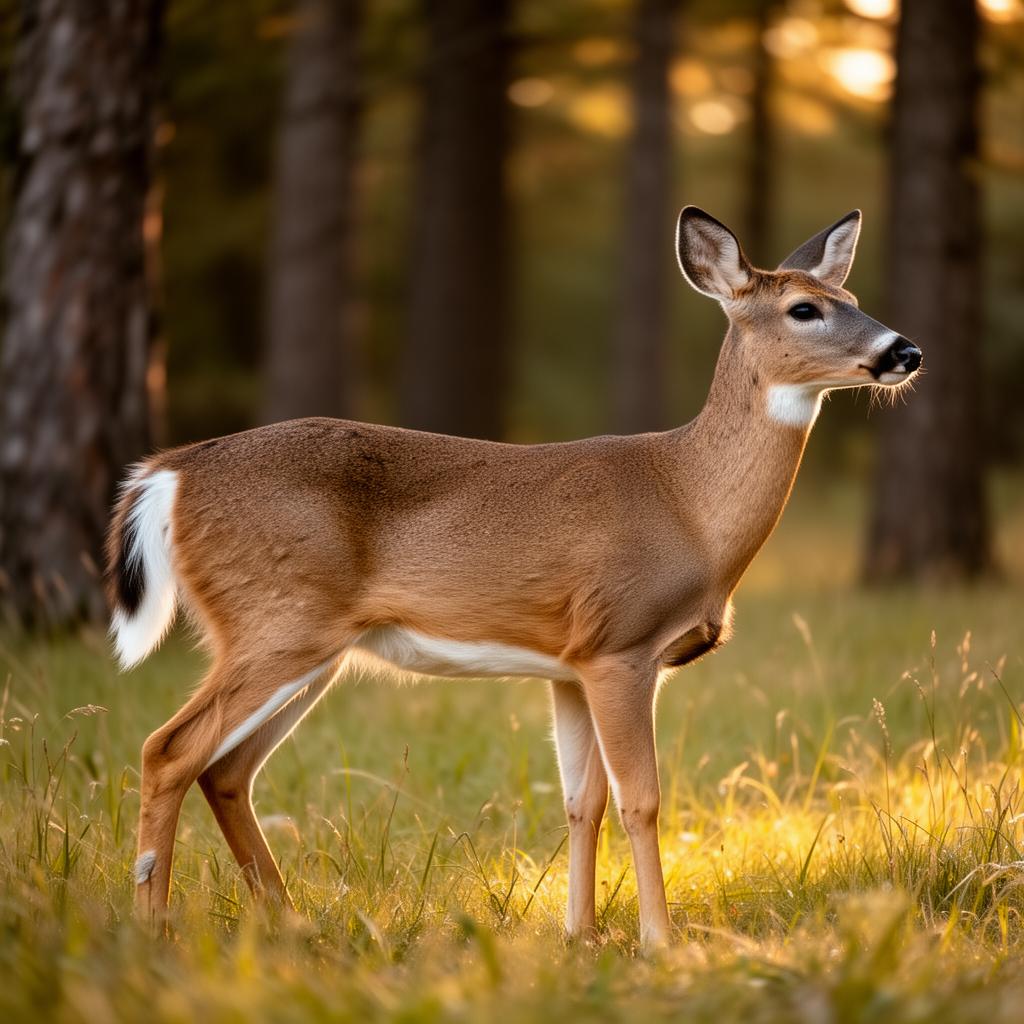
White-tailed Deer
Odocoileus virginianus
Biology
Odocoileus virginianus, the white-tailed deer, is a medium-sized ungulate native to North and South America, belonging to the family Cervidae. Adults typically weigh 45-135 kg and stand 80-100 cm tall at the shoulder. They have reddish-brown coats in summer, turning grayish-brown in winter, with a distinctive white underside to their tail, which is raised as an alarm signal. Bucks grow and shed antlers annually, typically in spring and late winter, respectively. Mating occurs in autumn (the 'rut'), and after a gestation of 199-201 days, does give birth to 1-3 fawns in late spring/early summer. Lifespan averages 6-14 years.
Behaviour
White-tailed deer are herbivores, browsing on a wide variety of leaves, twigs, buds, fruits, and fungi, exhibiting seasonal dietary shifts. They are primarily crepuscular and nocturnal but can be active during the day. Deer are generally solitary or found in small family groups (does and fawns), with bucks often solitary or in bachelor groups. When alarmed, they 'flag' their white tail and bound away. In suburban and urban environments, increasing deer populations lead to significant damage to gardens, landscaping, and agricultural crops. Their presence also increases the risk of vehicular collisions and can contribute to the spread of tick-borne diseases like Lyme disease.
Habits
White-tailed deer thrive in diverse habitats, including forests, woodlands, grasslands, agricultural fields, and suburban areas, particularly those offering a mix of cover for concealment and open areas for foraging. They do not create permanent shelters but utilize dense thickets, tall grasses, and tree cover for bedding down. Conducive conditions include abundant vegetative food sources, access to water, and reduced predator pressure. With increasing urbanization, deer have adapted to residential areas, exploiting ornamental plants, gardens, and fruit trees as readily available food sources. Their bedding areas are often found in secluded patches of dense vegetation within urban green spaces or undeveloped lots.
Control methods
- 1Install tall, sturdy deer-resistant fencing.
- 2Select deer-resistant plant species in landscaping.
- 3Apply deer repellents to vulnerable plants.
- 4Utilize frightening devices or motion-activated sprinklers.
- 5Use netting or cages to protect individual plants.
- 6Consult with wildlife management on population control.
Tailored to White-tailed Deer
IPM Procedure Checklist
Inspection
- Survey interior and exterior for evidence and conducive conditions
- Document findings with photos and a site map
- Place monitors to confirm activity
Identification
- Confirm White-tailed Deer (Odocoileus virginianus) — not a look-alike
- Note life stage and risk level: Moderate
- Capture clear photos and samples for the record
Action Thresholds
- Trigger action when monitor counts trend up
- Re-evaluate weekly during active season
- Document trigger criteria in the IPM plan
Prevention
- Exclude entry points and harborage
- Improve sanitation and moisture control
- Modify habitat around the structure
Control Methods
- Install tall, sturdy deer-resistant fencing.
- Select deer-resistant plant species in landscaping.
- Apply deer repellents to vulnerable plants.
- Utilize frightening devices or motion-activated sprinklers.
Monitoring & Evaluation
- Service monitors on schedule and trend captures
- Re-inspect for White-tailed Deer activity at follow-up
- Adjust tactics based on data; report findings to client