All pests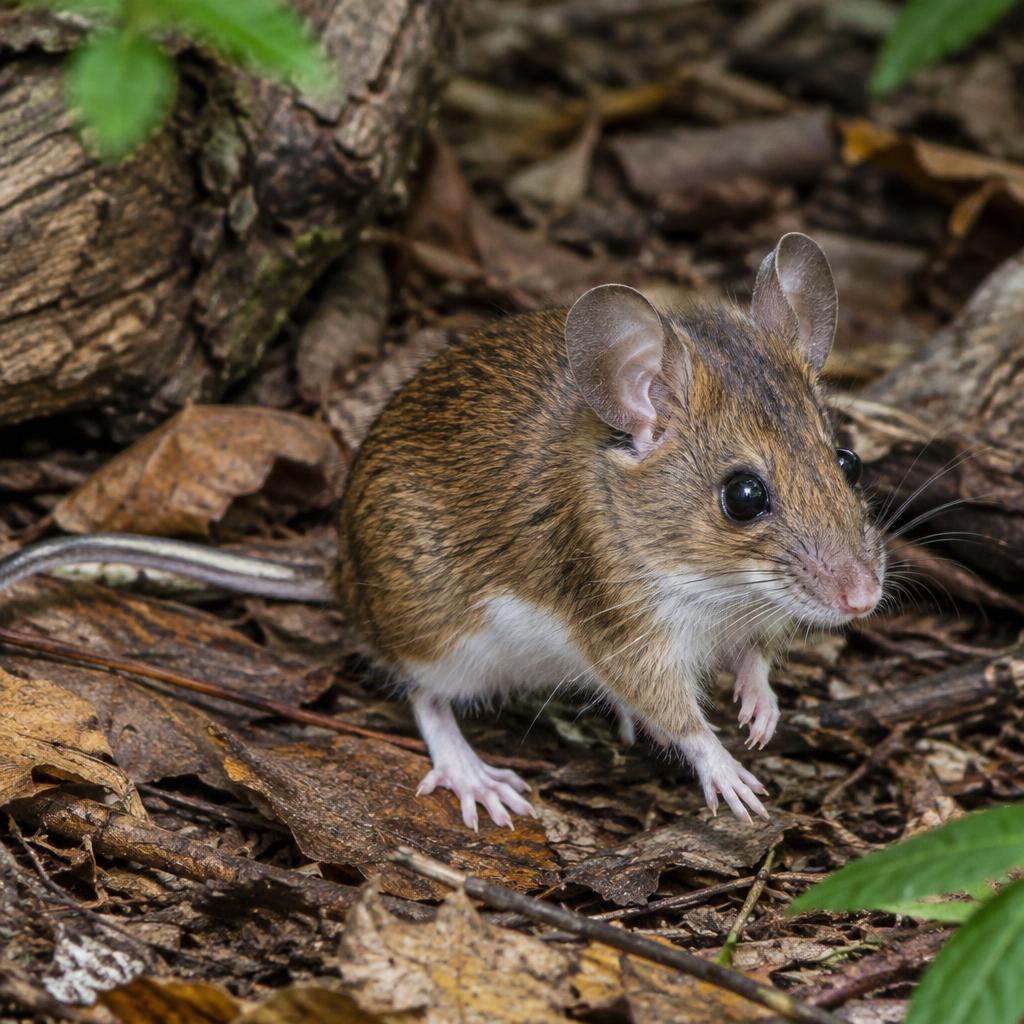 View full procedure
Rodent
White-footed Mouse
Peromyscus leucopus
Moderate Risk
Biology
Peromyscus leucopus is a small native rodent, 15–20 cm total length, with reddish-brown upperparts, a white belly and feet, and large dark eyes. It is a key reservoir for Lyme disease and other tick-borne pathogens.
Behaviour
White-footed mice are nocturnal climbers and jumpers that nest in tree cavities, rock walls, brush piles, and building voids. They forage for seeds, insects, nuts, and fungi and store food in caches. They can enter structures through very small openings.
Habits
Indoors they contaminate food and surfaces with droppings and urine. Outdoors they support tick populations that pose Lyme disease risk. They are common in wooded suburbs and rural areas with dense understory.
Control methods
- 1Seal openings >1/4 inch with rodent-proof materials
- 2Reduce brush, leaf litter, and firewood piles near structures
- 3Store birdseed, pet food, and grains in sealed containers
- 4Use snap traps or tamper-resistant bait stations indoors and out
- 5Implement tick-control and landscaping measures to reduce host contact
- 6Clean droppings with disinfectant and avoid airborne dust
Tailored to White-footed Mouse
IPM Procedure Checklist
Step 1
Inspection
- Locate runways, droppings, rub marks and gnaw damage
- Identify entry points (gaps ≥6 mm) and harborage
- Place tracking patches or non-toxic monitors
Step 2
Identification
- Confirm White-footed Mouse (Peromyscus leucopus) — not a look-alike
- Note life stage and risk level: Moderate
- Capture clear photos and samples for the record
Step 3
Action Thresholds
- Trigger action when monitor counts trend up
- Re-evaluate weekly during active season
- Document trigger criteria in the IPM plan
Step 4
Prevention
- Exclude with steel wool, hardware cloth and door sweeps
- Trim vegetation 0.5 m from structure; clear debris
- Secure trash, pet food and stored grain
Step 5
Control Methods
- Seal openings >1/4 inch with rodent-proof materials
- Reduce brush, leaf litter, and firewood piles near structures
- Store birdseed, pet food, and grains in sealed containers
- Use snap traps or tamper-resistant bait stations indoors and out
Step 6
Monitoring & Evaluation
- Service monitors on schedule and trend captures
- Re-inspect for White-footed Mouse activity at follow-up
- Adjust tactics based on data; report findings to client