Ant
White-footed Ant
Technomyrmex difficilis
Biology
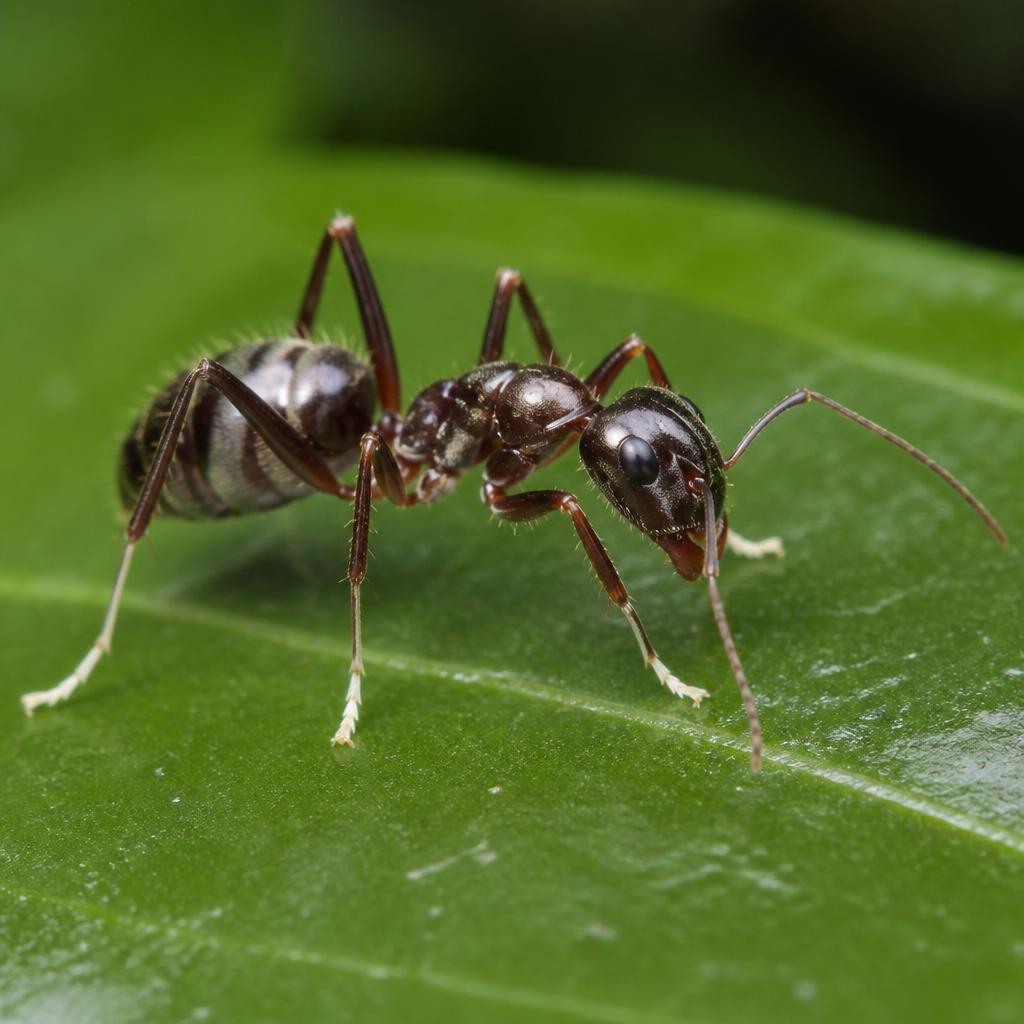
The white-footed ant, Technomyrmex difficilis (Family: Formicidae, Subfamily: Dolichoderinae), is a small ant, with workers measuring 2.5-3.0 mm in length. Its most distinctive morphological feature is the pale, whitish-yellow tarsi (feet) on an otherwise dark brown to black body, though this can be subtle. The antennae are 12-segmented without a club. They possess a distinctive, flattened petiole. Queens are typically larger than workers (3.5-4.0 mm) and can be distinguished by their larger thorax and alar scars. Males are alate and generally smaller. This species undergoes complete metamorphosis. Colonies are highly polygynous and polydomous, often containing millions of individuals across numerous satellite nests, leading to the formation of extensive supercolonies. Reproduction occurs primarily through budding, making colony foundation through nuptial flights less common. Developmental time from egg to adult is approximately 30-45 days at optimal conditions, facilitating rapid population expansion.
Behaviour
Technomyrmex difficilis is primarily an arboreal ant, commonly nesting and foraging in trees, shrubs, and other vegetation. Their diet consists almost exclusively of honeydew produced by sap-feeding insects such as aphids, scales, and mealybugs, which they diligently tend and protect. They rarely forage for protein or other food sources. Foraging occurs along distinct, sometimes faint, trails on plants and structures. Workers can often be seen moving in long, continuous lines. They are generally non-aggressive towards humans and do not sting or bite, but their presence in large numbers can be a nuisance. When disturbed, they may emit a faint, musky odor. They require consistent moisture and will establish satellite nests near water sources.
Habits
White-footed ants construct nests in a wide variety of sheltered locations, both outdoors and indoors. Outdoors, common nesting sites include trees cavities, under bark, in leaf litter, under stones, and within dense vegetation. Indoors, they readily nest in wall voids, attics, soffits, and electrical boxes, especially areas with high humidity or moisture. They frequently enter structures by trailing along utility lines, tree branches touching the building, or through small cracks and crevices. Conducive conditions include abundant sources of honeydew-producing insects, high moisture environments, and easy access to structures from arboreal habitats. Their expansive supercolonies can quickly infest large areas and are challenging to control due to their multiple nesting sites.
Control methods
- 1Locate and disrupt all visible foraging trails.
- 2Apply non-repellent liquid insecticides to entry points and harborage.
- 3Utilize slow-acting liquid or gel baits specifically for honeydew feeders.
- 4Eliminate honeydew-producing insects from surrounding vegetation.
- 5Trim tree branches and shrubs away from structures.
- 6Seal all entry points to prevent indoor access.
Tailored to White-footed Ant
IPM Procedure Checklist
Inspection
- Follow trails to nests, food and moisture sources
- Inspect wall voids, slab edges and exterior soil
- Place non-repellent monitors at trail crossings
Identification
- Confirm White-footed Ant (Technomyrmex difficilis) — not a look-alike
- Note life stage and risk level: Low
- Capture clear photos and samples for the record
Action Thresholds
- Tolerate low-level activity outside sensitive zones
- Act if activity moves indoors or near food
- Review threshold seasonally with the client
Prevention
- Seal entry cracks, utility penetrations and weep holes
- Eliminate honeydew-producing pests on landscape plants
- Store food in sealed containers and clean spills promptly
Control Methods
- Locate and disrupt all visible foraging trails.
- Apply non-repellent liquid insecticides to entry points and harborage.
- Utilize slow-acting liquid or gel baits specifically for honeydew feeders.
- Eliminate honeydew-producing insects from surrounding vegetation.
Monitoring & Evaluation
- Service monitors on schedule and trend captures
- Re-inspect for White-footed Ant activity at follow-up
- Adjust tactics based on data; report findings to client