Insect
Wheel Bug
Arilus cristatus
Biology
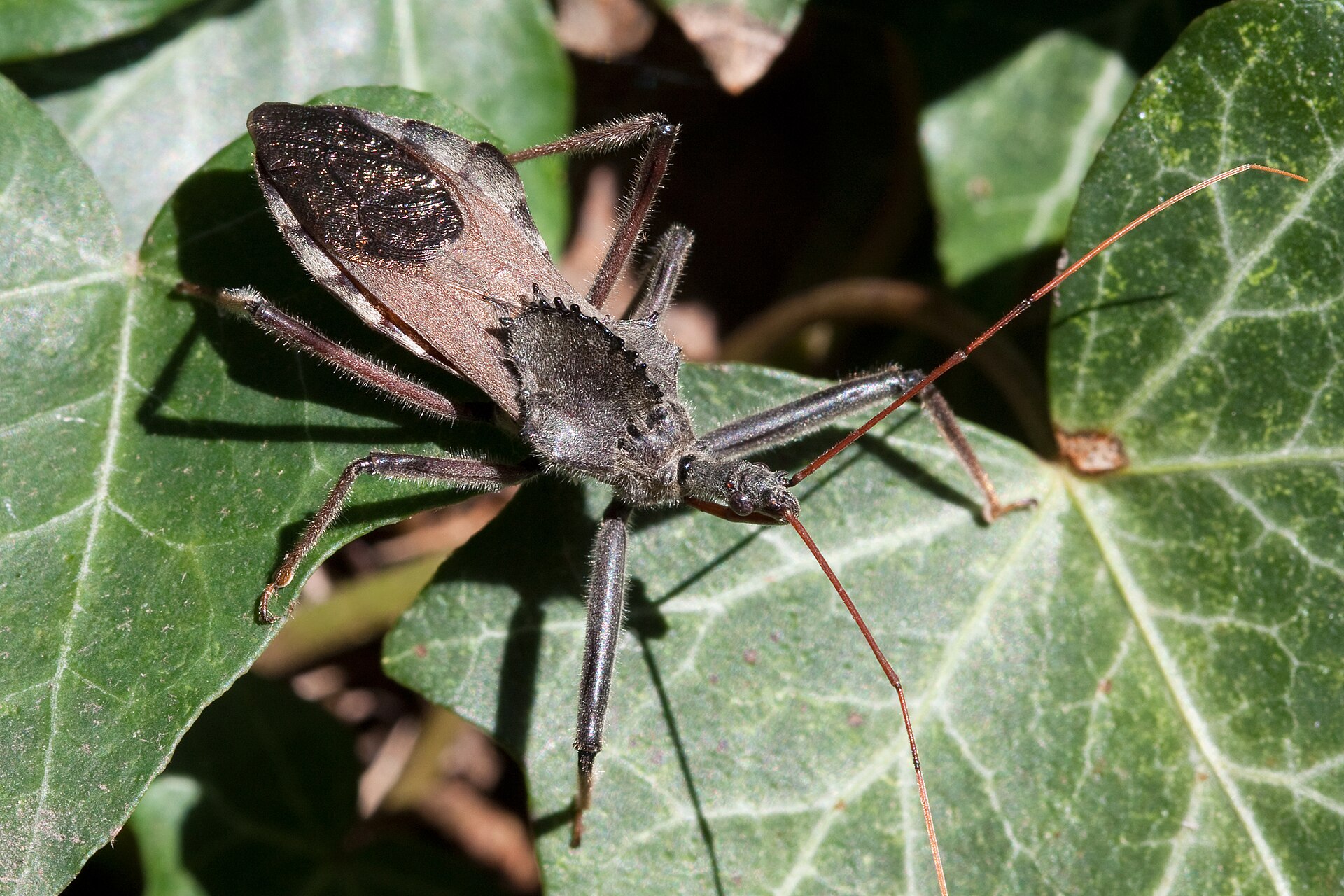
Arilus cristatus, widely referred to as the wheel bug, is a prominent member of the family Reduviidae, order Hemiptera. Adults are large, robust insects, typically measuring 25-38 mm in length, characterized by a striking, cogwheel-like crest on their pronotum—a diagnostic feature. Their coloration is generally dark grey or brownish-black. They possess a robust, raptorial foreleg pair adapted for grasping prey and a stout, three-segmented proboscis used for injecting venom and extracting liquefied tissues. Nymphs resemble miniature adults but lack the pronotal wheel and are often more brightly colored, progressing through five instars. Eggs are barrel-shaped, typically cemented in clusters to substrates. The life cycle usually spans a single year in temperate regions, with overwintering occurring in the egg stage.
Behaviour
Wheel bugs are solitary, diurnal predators, actively hunting other insects, including caterpillars, beetles, and wasps, which they subdue using their powerful forelegs and venomous bite. Their bite is painful to humans but not medically significant, typically occurring only when provoked. They are generally slow-moving but can fly, though infrequently. Mating involves a protracted courtship. They are not considered pests but rather beneficial insects due to their predatory habits on agricultural pests. Despite being a true bug, they do not feed on blood or vegetation.
Habits
Arilus cristatus is commonly found in a variety of outdoor habitats, including gardens, agricultural fields, wooded areas, and tall grasses, wherever prey insects are abundant. They are often active on trees, shrubs, and other vegetation, where they can ambush prey. They do not infest structures and are rarely found indoors unless they inadvertently wander in. During overwintering, eggs are often cemented to tree branches or other sheltered outdoor substrates. Conducive conditions for their presence include diverse ecosystems with ample insect prey and suitable vegetation for harborage and hunting, such as deciduous trees and ornamental shrubs near cultivated areas.
Control methods
- 1Protect and conserve natural predators.
- 2Educate public on beneficial role.
- 3Relocate incidental indoor wanderers.
- 4Avoid direct handling or provocation.
- 5Foster diverse garden ecosystems.
- 6Minimize broad-spectrum insecticide use.
Tailored to Wheel Bug
IPM Procedure Checklist
Inspection
- Inspect harborage near food, water and warmth
- Check cracks, voids and appliance interiors
- Place sticky monitors at suspected hot-spots
Identification
- Confirm Wheel Bug (Arilus cristatus) — not a look-alike
- Note life stage and risk level: Moderate
- Capture clear photos and samples for the record
Action Thresholds
- Trigger action when monitor counts trend up
- Re-evaluate weekly during active season
- Document trigger criteria in the IPM plan
Prevention
- Seal cracks, plumbing penetrations and wall voids
- Eliminate moisture sources and standing water
- Improve sanitation: sealed food storage, grease removal
Control Methods
- Protect and conserve natural predators.
- Educate public on beneficial role.
- Relocate incidental indoor wanderers.
- Avoid direct handling or provocation.
Monitoring & Evaluation
- Service monitors on schedule and trend captures
- Re-inspect for Wheel Bug activity at follow-up
- Adjust tactics based on data; report findings to client