All pests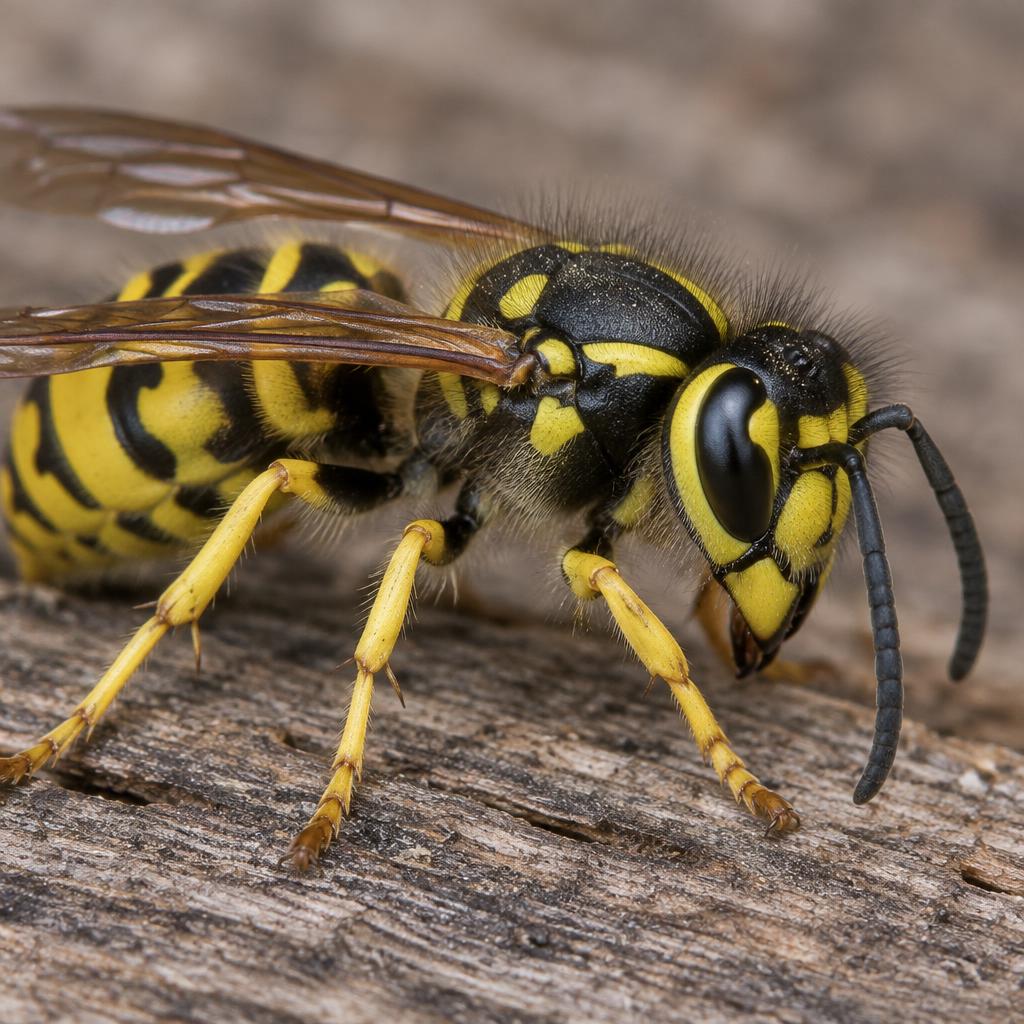 View full procedure
Stinging Insect
Western Yellowjacket
Vespula pensylvanica
High Risk
Biology
Vespula pensylvanica is a 12–16 mm yellow and black wasp identified by a complete yellow ring around each eye. Colonies nest underground or in wall voids and can exceed several thousand workers by late summer.
Behaviour
Workers are aggressive scavengers at picnics, bins, and pet food, and switch from protein to sugar late in the season. They defend nests vigorously and can sting repeatedly.
Habits
Nests are commonly in abandoned rodent burrows, under decks, and in wall voids, revealed by steady traffic to a single ground hole or siding gap. Late-summer colonies drive most sting incidents.
Control methods
- 1Mark and treat ground nests at dusk with protective gear
- 2Hire a professional for wall-void or high-traffic nests
- 3Keep bins sealed and clean spilled sugary drinks promptly
- 4Set baited traps well away from patios in early spring
- 5Seal siding gaps and screen vents to block nest sites
- 6Fill abandoned rodent burrows near walkways
Tailored to Western Yellowjacket
IPM Procedure Checklist
Step 1
Inspection
- Survey interior and exterior for evidence and conducive conditions
- Document findings with photos and a site map
- Place monitors to confirm activity
Step 2
Identification
- Confirm Western Yellowjacket (Vespula pensylvanica) — not a look-alike
- Note life stage and risk level: High
- Capture clear photos and samples for the record
Step 3
Action Thresholds
- Zero-tolerance: act on first confirmed sighting
- Notify client and document the trigger event
- Prioritize health and regulatory risk in the plan
Step 4
Prevention
- Exclude entry points and harborage
- Improve sanitation and moisture control
- Modify habitat around the structure
Step 5
Control Methods
- Mark and treat ground nests at dusk with protective gear
- Hire a professional for wall-void or high-traffic nests
- Keep bins sealed and clean spilled sugary drinks promptly
- Set baited traps well away from patios in early spring
Step 6
Monitoring & Evaluation
- Service monitors on schedule and trend captures
- Re-inspect for Western Yellowjacket activity at follow-up
- Adjust tactics based on data; report findings to client