Stored Product Pest
Warehouse Beetle
Trogoderma variabile
Biology
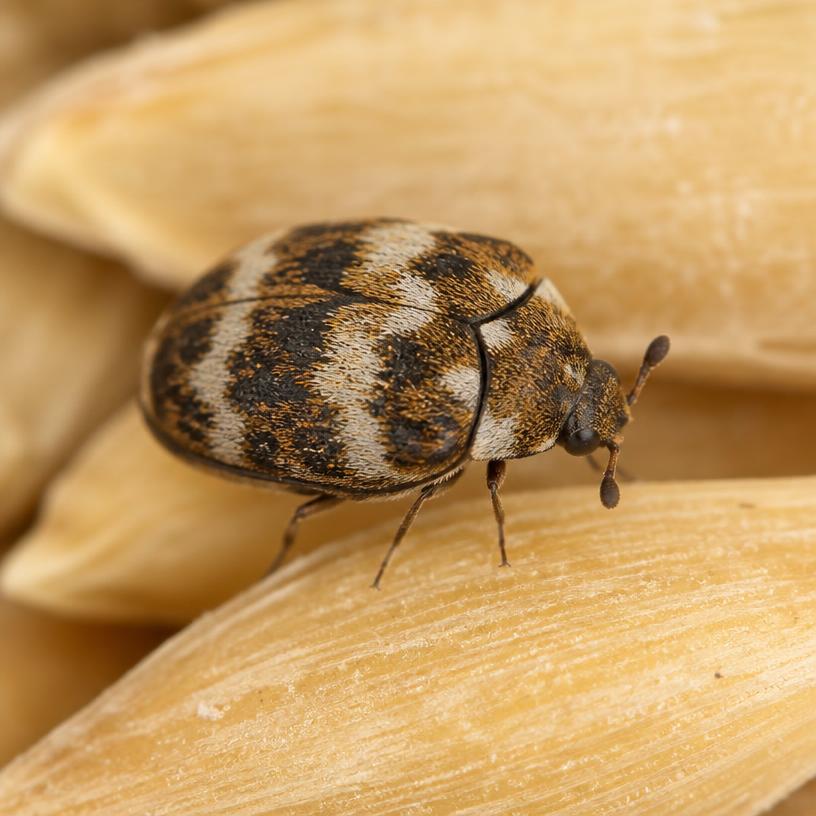
Trogoderma variabile, a polyphagous dermestid beetle, measures 2.5–4.0 mm, exhibiting an oval, somewhat flattened body. Its coloration varies from mottled black-and-tan to reddish-brown, with indistinct banding pattern; males are generally smaller and darker. The life cycle encompasses egg (6–20 days), larva (30 days to 4 years due to facultative diapause), pupa (4–18 days), and adult (10–90 days), with development optimized between 25–32°C and 30–70% RH. Females lay 20–100 eggs in food sources; multiple generations per year are possible under ideal conditions. Larvae are covered in dense, reddish-brown setae, including characteristic spear-headed hairs (hastisetae) that detach readily, serving as a primary identifier and defense mechanism.
Behaviour
Warehouse beetle larvae exhibit a significant thigmotactic response, preferring to aggregate in tight crevices and under debris. Their feeding ecology is highly indiscriminate, consuming a vast array of stored products including cereal grains, oilseeds, dried fruits, nuts, pet food, spices, and even dried animal remains or insect collections. These larvae are known for their ability to enter facultative diapause, often cued by unfavorable environmental conditions or food scarcity, enabling survival without food for extended periods, sometimes several years. Adult beetles are primarily nocturnal, weak fliers, and exhibit positive phototaxis, often seen congregating near windows or light sources. The primary public health impact stems from the irritating hastisetae ingested or inhaled, leading to gastrointestinal and respiratory distress, 'Trogoderma dermatitis,' and potential allergic reactions in sensitive individuals.
Habits
Larval warehouse beetles prefer secluded harborages such as cracks and crevices in pantries, warehouses, food processing machinery, and within packaging materials, accumulating shed skins and fecal pellets. They are opportunistic scavengers, employing a 'grazing' foraging pattern on a wide variety of foodstuffs, frequently moving within and between infested products. In heated structures, infestations can persist year-round, while in unheated facilities, larval diapause often manifests seasonally with colder temperatures. Conducive conditions for infestation include poor sanitation, spilled food, stored pet supplies, undisturbed bulk products, and bird or rodent carcasses in attics. Technicians should look for adult beetles near windows, cast larval skins and hastisetae accumulation in product and on surfaces, and localized damage to packaging or product within stored goods.
Control methods
- 1Sanitation: vacuum all dust and product spills
- 2Pheromone monitor lures (Trogoderma blend)
- 3Discard infested product and contact food
- 4Long-residual aerosol or dust in cracks
- 5Heat treat (50°C/24h) when feasible
- 6Inspect incoming shipments rigorously
Tailored to Warehouse Beetle
IPM Procedure Checklist
Inspection
- Inspect grain, spices, pet food and dry goods for larvae and webbing
- Deploy pheromone monitors near storage and shelving
- Check spillage in seams, cracks and shelf liners
Identification
- Confirm Warehouse Beetle (Trogoderma variabile) — not a look-alike
- Note life stage and risk level: High
- Capture clear photos and samples for the record
Action Thresholds
- Zero-tolerance: act on first confirmed sighting
- Notify client and document the trigger event
- Prioritize health and regulatory risk in the plan
Prevention
- Rotate stock FIFO; reject damaged packaging at receiving
- Store products in airtight containers
- Maintain low humidity and clean storage surfaces
Control Methods
- Sanitation: vacuum all dust and product spills
- Pheromone monitor lures (Trogoderma blend)
- Discard infested product and contact food
- Long-residual aerosol or dust in cracks
Monitoring & Evaluation
- Service monitors on schedule and trend captures
- Re-inspect for Warehouse Beetle activity at follow-up
- Adjust tactics based on data; report findings to client