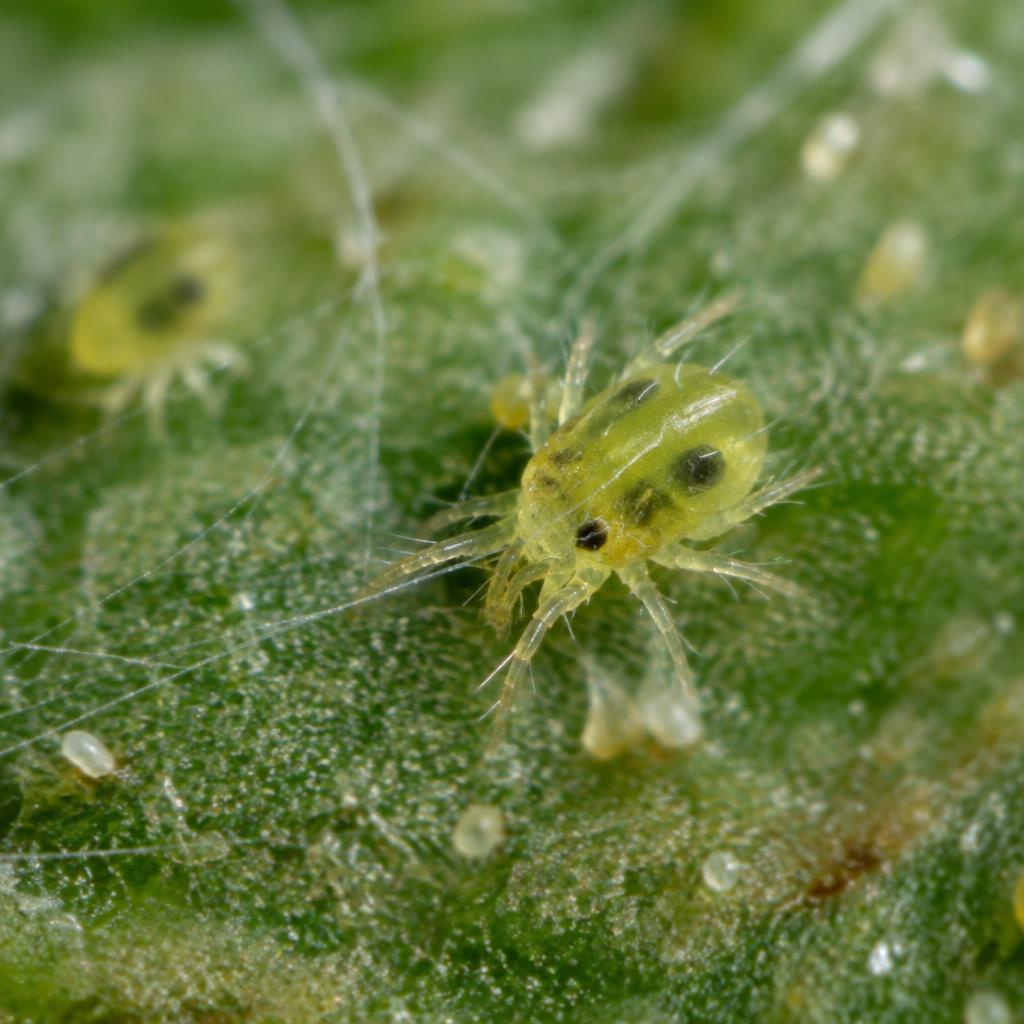
Arachnid
Two-spotted Spider Mite
Tetranychus urticae
Biology
Tetranychus urticae is a tiny plant-feeding arachnid, about 0.5 mm, usually greenish-yellow with two dark spots. Under stress or cool conditions it turns orange-red. Populations can explode in warm, dry environments, with generations completing in days.
Behaviour
Spider mites pierce leaf cells and suck sap, producing characteristic stippling, yellowing, and webbing. They are not blood-feeders and pose no direct health risk to people or pets, though dense webbing can be unsightly on houseplants and ornamentals.
Habits
Infestations begin on stressed indoor and outdoor plants, greenhouse crops, and drought-affected landscaping. Fine silk webbing appears on leaf undersides and stems. Hot, dry, dusty conditions accelerate outbreaks.
Control methods
- 1Increase humidity and rinse plants with water regularly
- 2Prune and dispose of heavily infested leaves
- 3Introduce predatory mites or lady beetles for biological control
- 4Apply horticultural oil or insecticidal soap to leaf undersides
- 5Avoid broad-spectrum insecticides that kill natural enemies
- 6Monitor with magnification and sticky traps in greenhouses
Tailored to Two-spotted Spider Mite
IPM Procedure Checklist
Inspection
- Survey interior and exterior for evidence and conducive conditions
- Document findings with photos and a site map
- Place monitors to confirm activity
Identification
- Confirm Two-spotted Spider Mite (Tetranychus urticae) — not a look-alike
- Note life stage and risk level: Low
- Capture clear photos and samples for the record
Action Thresholds
- Tolerate low-level activity outside sensitive zones
- Act if activity moves indoors or near food
- Review threshold seasonally with the client
Prevention
- Exclude entry points and harborage
- Improve sanitation and moisture control
- Modify habitat around the structure
Control Methods
- Increase humidity and rinse plants with water regularly
- Prune and dispose of heavily infested leaves
- Introduce predatory mites or lady beetles for biological control
- Apply horticultural oil or insecticidal soap to leaf undersides
Monitoring & Evaluation
- Service monitors on schedule and trend captures
- Re-inspect for Two-spotted Spider Mite activity at follow-up
- Adjust tactics based on data; report findings to client