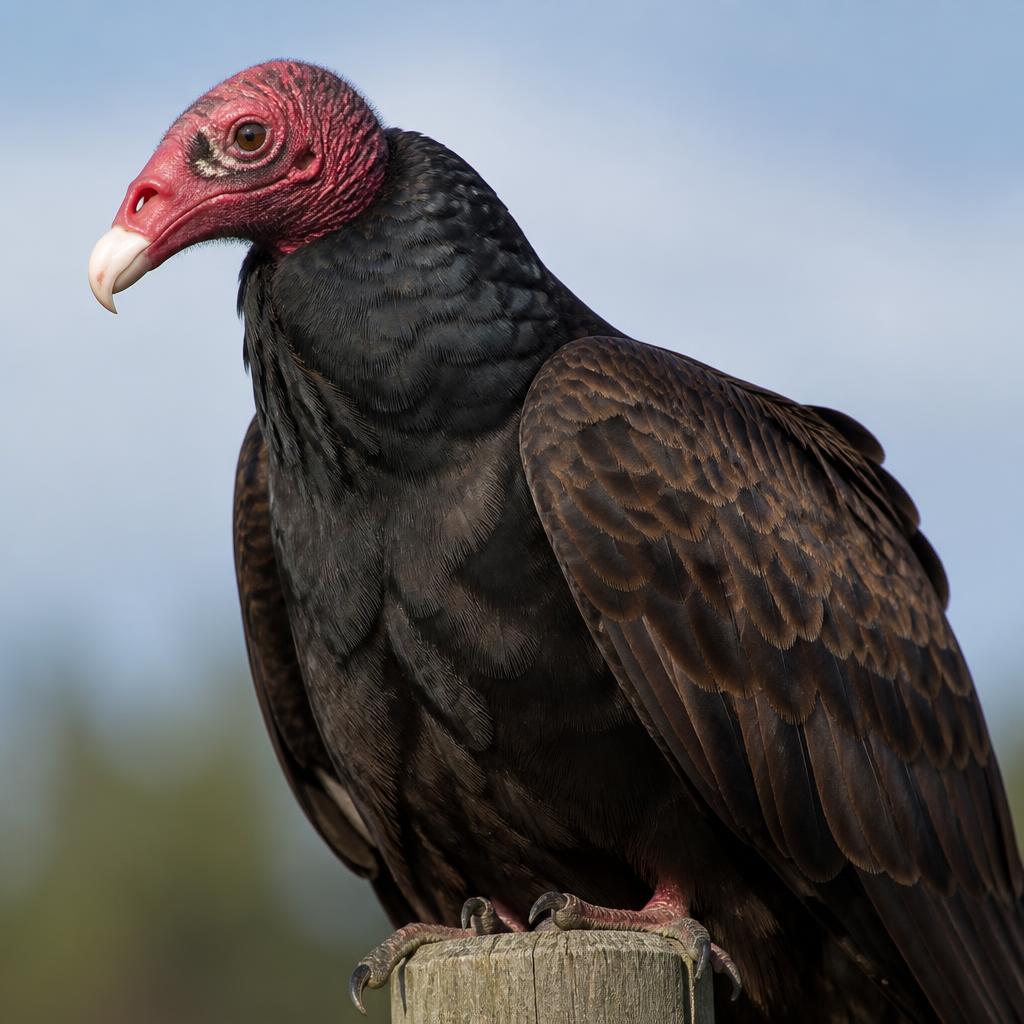
Bird
Turkey Vulture
Cathartes aura
Biology
The turkey vulture, Cathartes aura (Order Cathartiformes, Family Cathartidae), is a large scavenging bird of prey, typically 62-81 cm in length, with a wingspan of 160-183 cm, weighing 0.8-2.4 kg. Adults are characterized by their dark brown to black plumage, featherless red head (resembling a turkey's), and pale bill. In flight, the undersides of their flight feathers appear two-toned, with silvery-gray primaries and secondaries contrasting with darker wing linings. Breeding occurs from March-July. Nests are often in secluded, protected sites such as caves, rock crevices, hollow logs, or abandoned buildings. Clutch size is typically 2 eggs, incubated for 38-41 days. Young fledge at 70-80 days.
Behaviour
Turkey vultures are renowned for their exceptional sense of smell, which they use to locate carrion, often flying low to the ground to detect the gases produced by decaying animals. They are typically seen soaring in wide circles, often teetering from side to side, which helps them detect thermals. They are largely silent, only vocalizing with hisses and grunts when agitated. While generally solitary when foraging, they often roost communally in large aggregations, especially on bare trees or communication towers.
Habits
C. aura is an obligate scavenger, feeding almost exclusively on carrion. They play a crucial ecological role by consuming dead animals, thereby preventing the spread of disease and recycling nutrients. They prefer freshly deceased animals but will consume older carrion. Foraging occurs over open landscapes, forests, and suburban areas. Harbors include tall trees for roosting, often in groups, and secluded protected sites for nesting. Conducive conditions include areas with available carrion, extensive open spaces for soaring, and suitable roosting and nesting structures, both natural and man-made.
Control methods
- 1Remove all sources of exposed carrion.
- 2Install exclusion barriers on structures.
- 3Use visual deterrents like effigies.
- 4Trim high roosting branches.
- 5Apply taste/area aversion repellents.
- 6Consult with wildlife management specialists.
Tailored to Turkey Vulture
IPM Procedure Checklist
Inspection
- Identify roosting, loafing and nesting sites
- Document droppings, feathers and damage to structure
- Note food and water sources attracting birds
Identification
- Confirm Turkey Vulture (Cathartes aura) — not a look-alike
- Note life stage and risk level: Moderate
- Capture clear photos and samples for the record
Action Thresholds
- Trigger action when monitor counts trend up
- Re-evaluate weekly during active season
- Document trigger criteria in the IPM plan
Prevention
- Install spikes, netting or shock track on ledges
- Remove standing water and accessible food
- Close openings to attics, vents and signage voids
Control Methods
- Remove all sources of exposed carrion.
- Install exclusion barriers on structures.
- Use visual deterrents like effigies.
- Trim high roosting branches.
Monitoring & Evaluation
- Service monitors on schedule and trend captures
- Re-inspect for Turkey Vulture activity at follow-up
- Adjust tactics based on data; report findings to client