All pests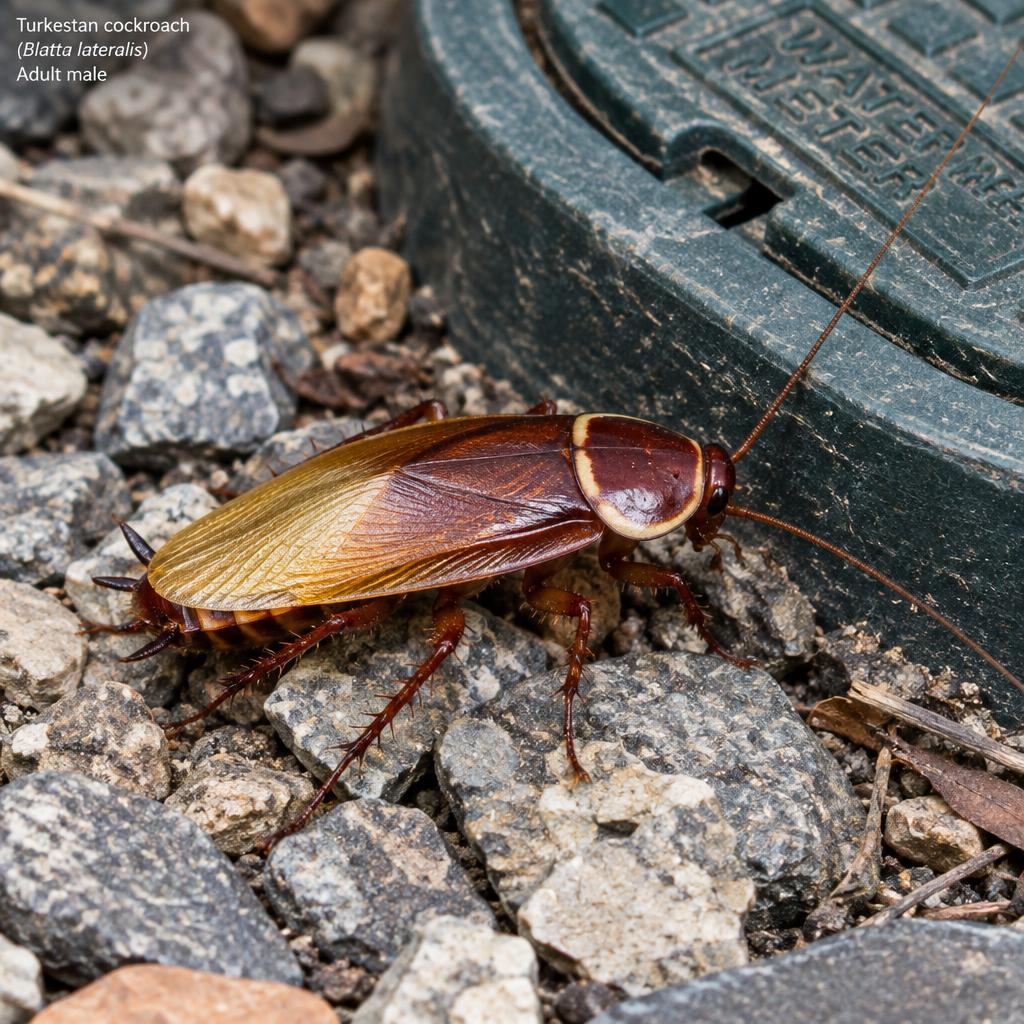 View full procedure
Cockroach
Turkestan Cockroach
Blatta lateralis
Moderate Risk
Biology
Blatta lateralis adults are 24–30 mm long. Males are reddish-brown with cream-edged pronotum and long yellowish wings; females are dark brown and stout with short lobe-like wings. Egg cases hold 12–18 eggs.
Behaviour
It is an outdoor species living in water meter boxes, irrigation valve boxes, leaf litter, and compost. Males fly to lights at night, which drives most indoor sightings. It is rapidly displacing the Oriental cockroach in the southwestern United States.
Habits
Populations concentrate in damp utility boxes and under potted plants, then migrate indoors through garage doors, weep holes, and door thresholds during heat or irrigation changes.
Control methods
- 1Inspect and treat water meter and irrigation valve boxes
- 2Seal garage door bottoms, thresholds, and weep holes
- 3Remove leaf litter, compost, and debris near the foundation
- 4Correct over-irrigation and fix leaking drip lines
- 5Use outdoor granular or gel baits labelled for cockroaches
- 6Replace white exterior lights with warm low-attraction LEDs
Tailored to Turkestan Cockroach
IPM Procedure Checklist
Step 1
Inspection
- Survey interior and exterior for evidence and conducive conditions
- Document findings with photos and a site map
- Place monitors to confirm activity
Step 2
Identification
- Confirm Turkestan Cockroach (Blatta lateralis) — not a look-alike
- Note life stage and risk level: Moderate
- Capture clear photos and samples for the record
Step 3
Action Thresholds
- Trigger action when monitor counts trend up
- Re-evaluate weekly during active season
- Document trigger criteria in the IPM plan
Step 4
Prevention
- Exclude entry points and harborage
- Improve sanitation and moisture control
- Modify habitat around the structure
Step 5
Control Methods
- Inspect and treat water meter and irrigation valve boxes
- Seal garage door bottoms, thresholds, and weep holes
- Remove leaf litter, compost, and debris near the foundation
- Correct over-irrigation and fix leaking drip lines
Step 6
Monitoring & Evaluation
- Service monitors on schedule and trend captures
- Re-inspect for Turkestan Cockroach activity at follow-up
- Adjust tactics based on data; report findings to client