Bat
Tricolored Bat
Perimyotis subflavus
Biology
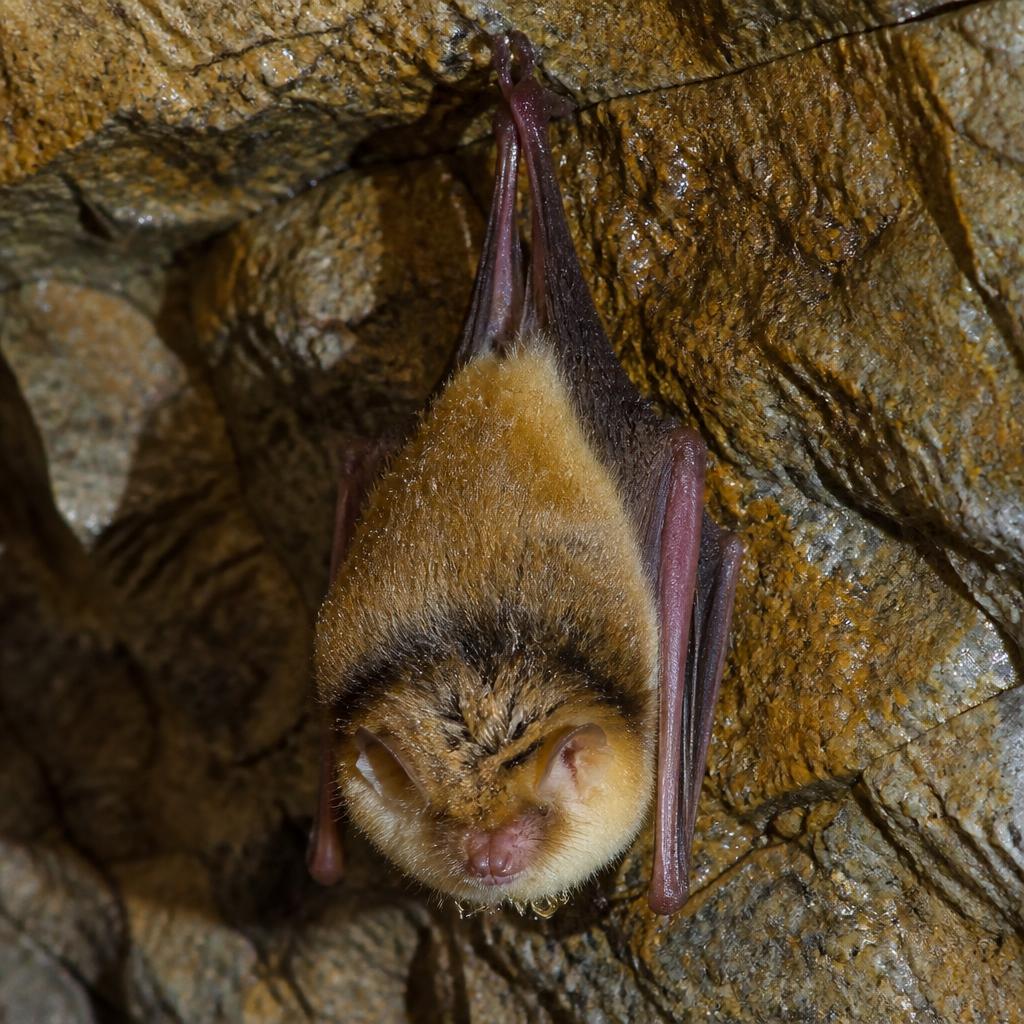
Perimyotis subflavus, formerly the eastern pipistrelle, is one of the smallest bats in eastern North America at 7–9 cm long, 21–26 cm wingspan and only 4–8 g. Its common name comes from individual hairs banded dark at the base, pale yellow in the middle and brown at the tip, combined with distinctive pinkish forearms contrasting with black wing membranes. Females bear twins in June. The species is highly susceptible to white-nose syndrome, which has caused declines exceeding 90% across much of its range, and it now carries elevated conservation status in many jurisdictions.
Behaviour
Emergence is early, and flight is weak, erratic and moth-like over waterways, woodland edges and roadways, feeding on small flies, beetles, leafhoppers and moths. Individuals hibernate singly rather than in clusters, choosing the most thermally stable and humid pockets of caves, mines and occasionally deep culverts and cellars, and often hang undisturbed long enough to accumulate condensation droplets on their fur. Because it roosts alone or in very small groups, it does not create the guano volume that drives most structural complaints; encounters are usually single bats in a garage, culvert or breezeway.
Habits
Summer roosts are in clusters of dead leaves in live tree foliage, Spanish moss, barns, breezeways, porch rafters and rarely attics; winter roosts are caves, mines and culverts. Signs of a structural roost are a small number of tiny guano pellets in one spot beneath a rafter and a solitary bat visible hanging in an open shelter. Conducive conditions are open outbuildings, unscreened breezeways and undisturbed porch ceilings. Given its protected or petitioned status in many areas, confirm regulatory requirements before any exclusion or disturbance.
Control methods
- 1Verify legal status — this species is protected in many jurisdictions
- 2Prefer passive exclusion and roost-site modification over removal
- 3Screen open breezeways, porches and outbuilding gaps after departure
- 4Never disturb hibernating individuals in caves, mines or culverts
- 5Decontaminate gear between sites to avoid spreading white-nose syndrome
- 6Clean small guano deposits with PPE and disinfectant
- 7Refer any injured or grounded bat to licensed wildlife rehabilitators
Tailored to Tricolored Bat
IPM Procedure Checklist
Inspection
- Inspect at dusk to locate active entry/exit points
- Check attics, soffits and chimneys for guano
- Identify maternity colonies before any action
Identification
- Confirm Tricolored Bat (Perimyotis subflavus) — not a look-alike
- Note life stage and risk level: Moderate
- Capture clear photos and samples for the record
Action Thresholds
- Trigger action when monitor counts trend up
- Re-evaluate weekly during active season
- Document trigger criteria in the IPM plan
Prevention
- Seal gaps ≥6 mm with caulk, mesh and flashing
- Cap chimneys and screen attic vents
- Provide alternative bat houses on the property
Control Methods
- Verify legal status — this species is protected in many jurisdictions
- Prefer passive exclusion and roost-site modification over removal
- Screen open breezeways, porches and outbuilding gaps after departure
- Never disturb hibernating individuals in caves, mines or culverts
Monitoring & Evaluation
- Service monitors on schedule and trend captures
- Re-inspect for Tricolored Bat activity at follow-up
- Adjust tactics based on data; report findings to client