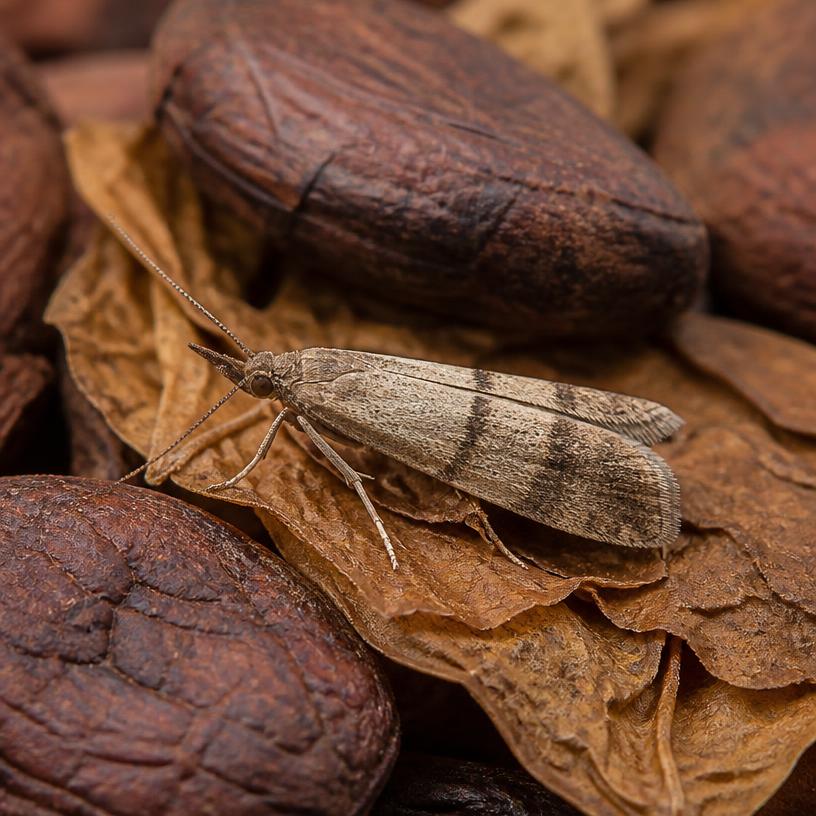
Stored Product Pest
Tobacco Moth
Ephestia elutella
Biology
A small pyralid with a 15–20 mm wingspan and greyish-brown forewings crossed by two faint darker bands. Larvae are creamy white with a dark head and reach about 12 mm; one to three generations a year, and larvae can enter a long winter diapause.
Behaviour
Larvae spin silk webbing through the commodity and feed on cured tobacco, cocoa, dried fruit, nuts, spices and cereals. The webbing, frass and cast skins usually cause more product rejection than the feeding itself.
Habits
A key pest of tobacco warehouses and cocoa and confectionery plants, also found in pantries. Diapausing larvae overwinter in cracks, pallets and ceiling voids and re-infest new stock in spring, which is why sanitation between seasons matters most.
Control methods
- 1Deep-clean cracks, pallets and ceiling voids between seasons
- 2Use pheromone traps to time and map adult flights
- 3Rotate stock strictly first-in first-out
- 4Maintain cool storage below 20°C where possible
- 5Seal or hermetically pack finished product
- 6Consider mating disruption in large facilities
- 7Treat harbourage voids with labelled residuals
Tailored to Tobacco Moth
IPM Procedure Checklist
Inspection
- Inspect grain, spices, pet food and dry goods for larvae and webbing
- Deploy pheromone monitors near storage and shelving
- Check spillage in seams, cracks and shelf liners
Identification
- Confirm Tobacco Moth (Ephestia elutella) — not a look-alike
- Note life stage and risk level: Moderate
- Capture clear photos and samples for the record
Action Thresholds
- Trigger action when monitor counts trend up
- Re-evaluate weekly during active season
- Document trigger criteria in the IPM plan
Prevention
- Rotate stock FIFO; reject damaged packaging at receiving
- Store products in airtight containers
- Maintain low humidity and clean storage surfaces
Control Methods
- Deep-clean cracks, pallets and ceiling voids between seasons
- Use pheromone traps to time and map adult flights
- Rotate stock strictly first-in first-out
- Maintain cool storage below 20°C where possible
Monitoring & Evaluation
- Service monitors on schedule and trend captures
- Re-inspect for Tobacco Moth activity at follow-up
- Adjust tactics based on data; report findings to client