Ant
Thief Ant
Solenopsis molesta
Biology
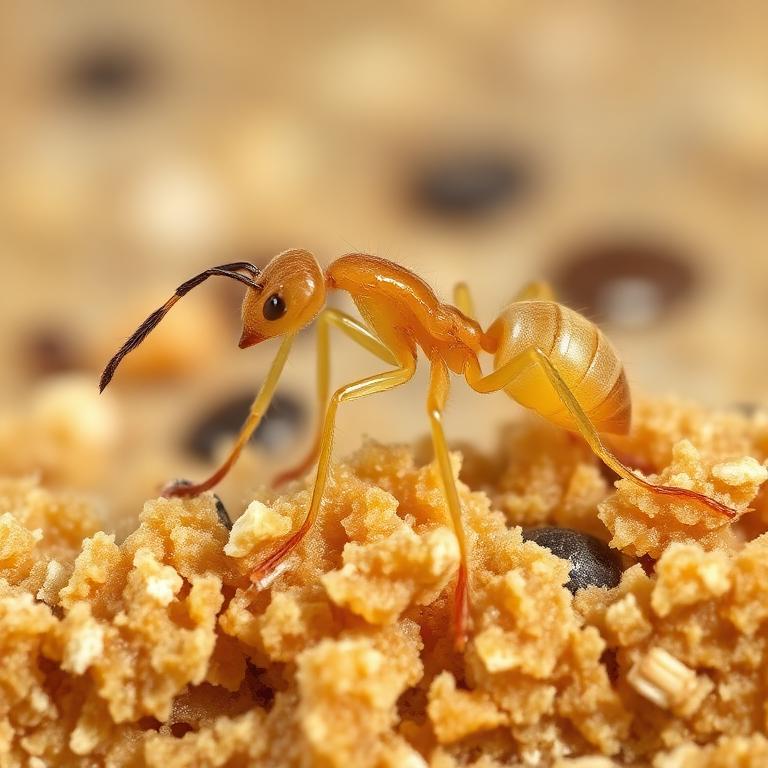
Thief ants are among the smallest structural pest ants, pale yellow to light brown workers just 1.5–2 mm long with a two-segmented waist and, diagnostically, 10-segmented antennae ending in a distinct two-segmented club. Colonies are polygynous with several hundred to several thousand workers, and their tiny size lets them exploit spaces other ants cannot reach. Mating flights occur in mid to late summer, though established indoor colonies persist year-round in heated buildings.
Behaviour
The common name comes from their habit of nesting immediately adjacent to — sometimes inside the walls of — larger ant and termite colonies and stealing brood and food from them. Unlike most household ants, they strongly prefer greasy and protein foods over sweets: meats, cheese, nuts, oils, and pet food, which is why sweet-only bait programmes fail against them. They are readily overlooked because of their size and their very thin, slow trails, and they are a documented contaminant of packaged food.
Habits
Indoor nests are in wall voids, behind baseboards, under floors, in cabinet voids, masonry cracks and the tiny gaps around plumbing; outdoors they nest in soil, under stones and in rotten wood, entering through crevices too small for other species. Conducive conditions include exposed greasy residues, unsecured pantry goods, cluttered cabinets, and unsealed penetrations. Inspect with a bright light along baseboards and cabinet seams, use grease-based monitors, and take specimens — they are frequently mistaken for pharaoh ants.
Control methods
- 1Confirm identification — easily confused with pharaoh ants
- 2Use grease and protein based baits; sweet-only baits usually fail
- 3Place bait in many small placements along thin indoor trails
- 4Seal cracks around plumbing, baseboards and cabinet voids
- 5Store food in sealed containers and clean greasy residues
- 6Apply targeted void dust rather than broad surface spraying
Tailored to Thief Ant
IPM Procedure Checklist
Inspection
- Follow trails to nests, food and moisture sources
- Inspect wall voids, slab edges and exterior soil
- Place non-repellent monitors at trail crossings
Identification
- Confirm Thief Ant (Solenopsis molesta) — not a look-alike
- Note life stage and risk level: Moderate
- Capture clear photos and samples for the record
Action Thresholds
- Trigger action when monitor counts trend up
- Re-evaluate weekly during active season
- Document trigger criteria in the IPM plan
Prevention
- Seal entry cracks, utility penetrations and weep holes
- Eliminate honeydew-producing pests on landscape plants
- Store food in sealed containers and clean spills promptly
Control Methods
- Confirm identification — easily confused with pharaoh ants
- Use grease and protein based baits; sweet-only baits usually fail
- Place bait in many small placements along thin indoor trails
- Seal cracks around plumbing, baseboards and cabinet voids
Monitoring & Evaluation
- Service monitors on schedule and trend captures
- Re-inspect for Thief Ant activity at follow-up
- Adjust tactics based on data; report findings to client