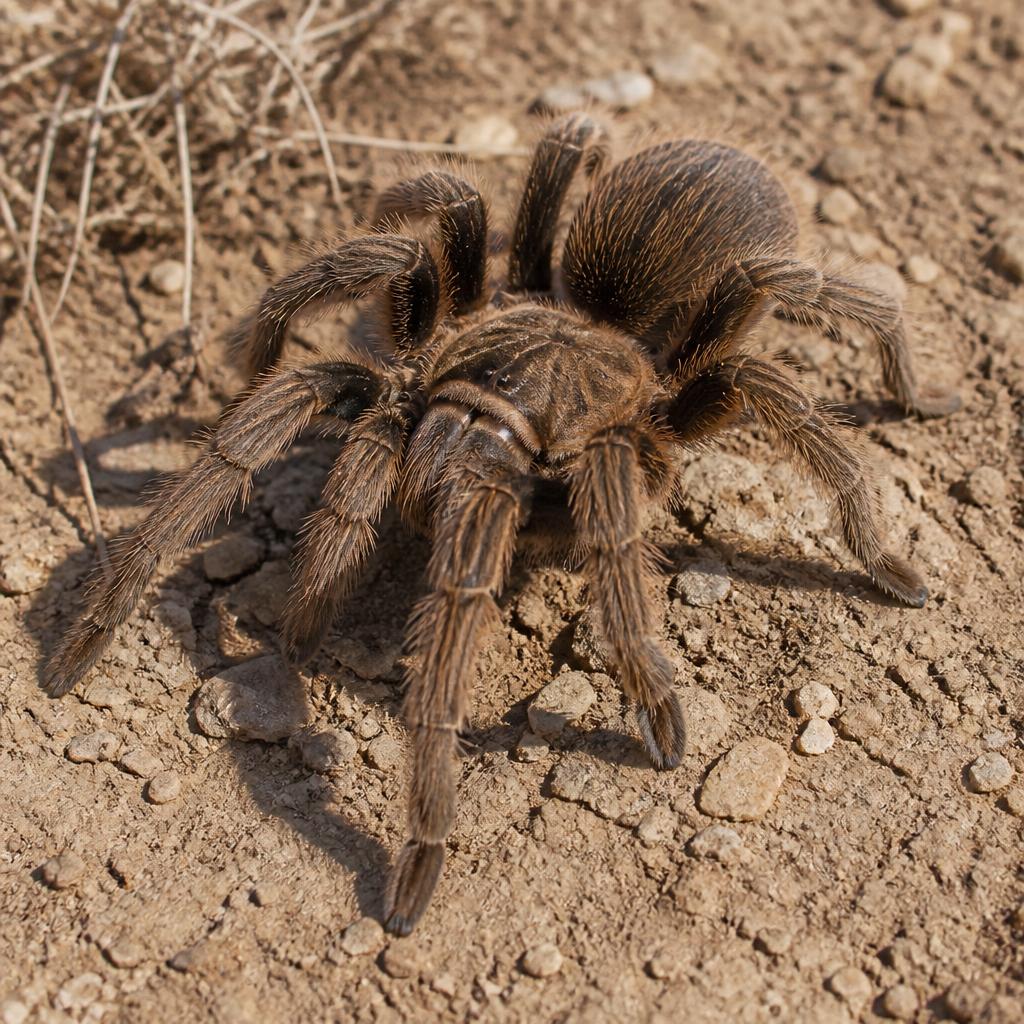
Spider
Tarantula
Aphonopelma
Biology
Tarantulas, family Theraphosidae, are large, hairy, and often docile spiders found in various habitats worldwide. Those of the genus Aphonopelma, common in North America, vary significantly in size, color, and lifespan, with many species being dark brown or black. Body lengths can range from 25 mm to over 100 mm, with leg spans exceeding 200 mm. They are long-lived, particularly females, which can live for 20-30 years, while males typically live for 5-10 years post-maturation. Females lay hundreds of eggs in a silken sac, which they guard meticulously, with spiderlings developing over several weeks to months.
Behaviour
Tarantulas are primarily nocturnal ambush predators, hunting insects, small reptiles, and amphibians. They are typically burrow dwellers, modifying existing burrows or excavating their own, which they line with silk. They are generally solitary and non-aggressive, preferring to retreat from threats. When threatened, many New World tarantulas (including Aphonopelma) will flick urticating hairs from their abdomen, which can cause irritation to skin and mucous membranes. Bites are rare and mostly occur if the spider is severely provoked, with venom generally not dangerous to humans, akin to a bee sting.
Habits
Aphonopelma tarantulas inhabit desert, grassland, and forested regions, often found in burrows under rocks, logs, or within dense vegetation. Their presence is indicative of undisturbed, natural environments. Conducive conditions for encounters are often linked to male tarantulas actively searching for mates during late summer and early fall, particularly after rainfall. They do not typically infest homes but may wander in accidentally if their natural habitat abuts human dwellings, especially basements or garages, seeking shelter. Control revolves around exclusion rather than eradication.
Control methods
- 1Seal gaps and cracks in foundations.
- 2Install screens on doors and windows.
- 3Trim vegetation away from structure perimeters.
- 4Remove woodpiles and debris near the building.
- 5Educate occupants on tarantula behavior.
- 6Relocate wandering spiders safely outdoors.
Tailored to Tarantula
IPM Procedure Checklist
Inspection
- Inspect undisturbed corners, voids and stored items
- Identify webs, egg sacs and prey debris
- Note conducive insect prey populations
Identification
- Confirm Tarantula (Aphonopelma) — not a look-alike
- Note life stage and risk level: Low
- Capture clear photos and samples for the record
Action Thresholds
- Tolerate low-level activity outside sensitive zones
- Act if activity moves indoors or near food
- Review threshold seasonally with the client
Prevention
- Reduce clutter and seal cracks around the structure
- Switch exterior lights to yellow / sodium to reduce prey
- Install door sweeps and screen vents
Control Methods
- Seal gaps and cracks in foundations.
- Install screens on doors and windows.
- Trim vegetation away from structure perimeters.
- Remove woodpiles and debris near the building.
Monitoring & Evaluation
- Service monitors on schedule and trend captures
- Re-inspect for Tarantula activity at follow-up
- Adjust tactics based on data; report findings to client