Stinging Insect
Sweat Bee
Halictidae
Biology
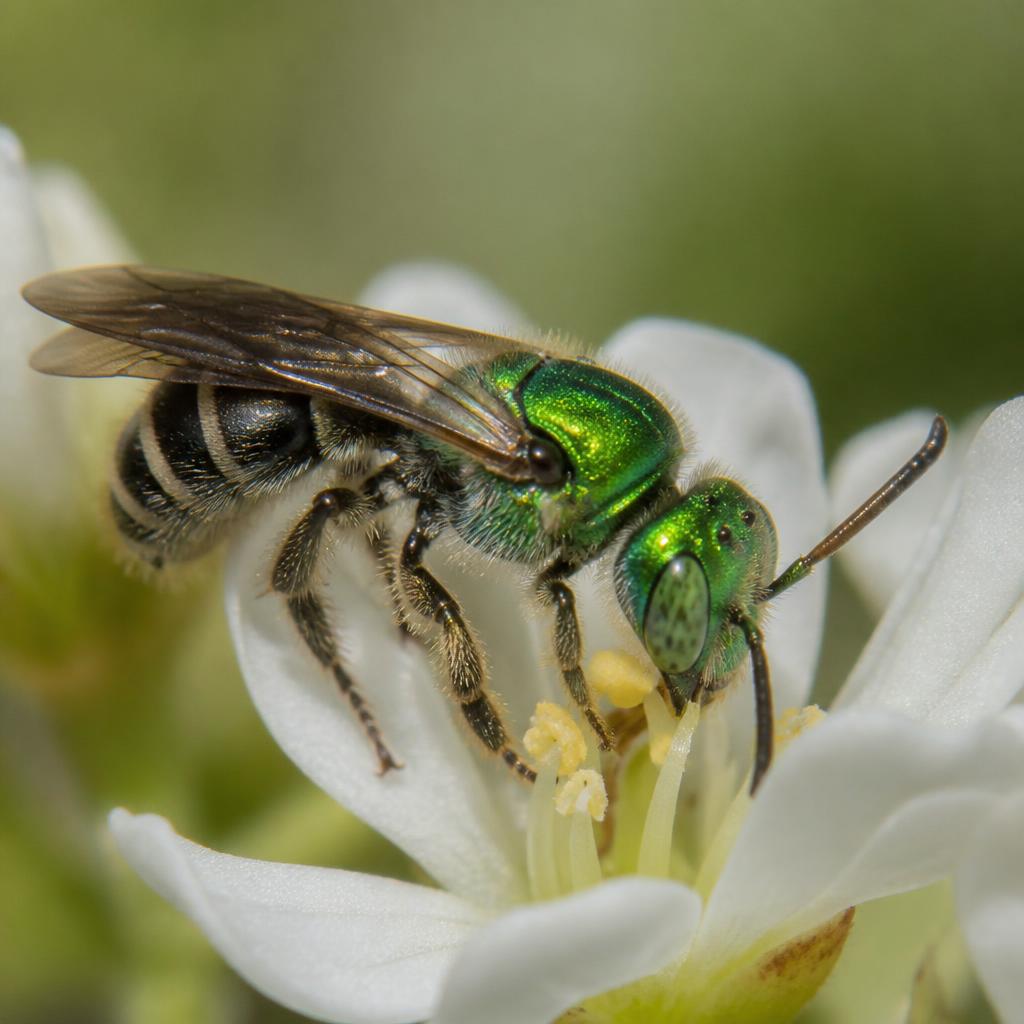
Halictidae, commonly known as sweat bees, comprise a large and diverse family of bees, many of which are metallic green, blue, or coppery, though some are black or brown. Sizes range from small (3 mm) to moderately large (10 mm). Many species are solitary, with the female digging a nest burrow in the soil, but some exhibit communal or even primitively social behaviors. Larvae are provisioned with pollen and nectar collected by the female. The lifecycle typically involves several generations per year, depending on the species and climate, with adults emerging from pupal cells in the soil.
Behaviour
Sweat bees are generalist pollinators, visiting a wide variety of flowers to collect nectar and pollen. They are named for their attraction to human perspiration, which they seek for its salt content, often landing on skin. While most species are solitary, some may nest in aggregations, with individual females constructing their own burrows in close proximity. Females can sting, but are generally not aggressive unless provoked or crushed, and their stings are mild, similar to a pinprick.
Habits
Halictidae are globally distributed and can be found in a wide range of habitats, from forests and grasslands to urban gardens. They prefer to nest in well-drained, often bare or sparsely vegetated soil, though some species may nest in rotting wood. Conducive conditions for nesting include undisturbed soil, areas for sun exposure, and proximity to flowering plants that provide nectar and pollen resources. Minimizing soil disturbance and maintaining flowering plants can encourage their presence, which is beneficial for pollination.
Control methods
- 1Avoid disturbing nesting sites in the soil.
- 2Do not swat or crush bees landing on skin.
- 3Provide alternative water sources for bees.
- 4Educate clients on beneficial pollinator role.
- 5Avoid broad-spectrum pesticide applications.
- 6Encourage natural predators of pest insects.
Tailored to Sweat Bee
IPM Procedure Checklist
Inspection
- Survey interior and exterior for evidence and conducive conditions
- Document findings with photos and a site map
- Place monitors to confirm activity
Identification
- Confirm Sweat Bee (Halictidae) — not a look-alike
- Note life stage and risk level: Low
- Capture clear photos and samples for the record
Action Thresholds
- Tolerate low-level activity outside sensitive zones
- Act if activity moves indoors or near food
- Review threshold seasonally with the client
Prevention
- Exclude entry points and harborage
- Improve sanitation and moisture control
- Modify habitat around the structure
Control Methods
- Avoid disturbing nesting sites in the soil.
- Do not swat or crush bees landing on skin.
- Provide alternative water sources for bees.
- Educate clients on beneficial pollinator role.
Monitoring & Evaluation
- Service monitors on schedule and trend captures
- Re-inspect for Sweat Bee activity at follow-up
- Adjust tactics based on data; report findings to client