Blood Feeder
Sticktight Flea
Echidnophaga gallinacea
Biology
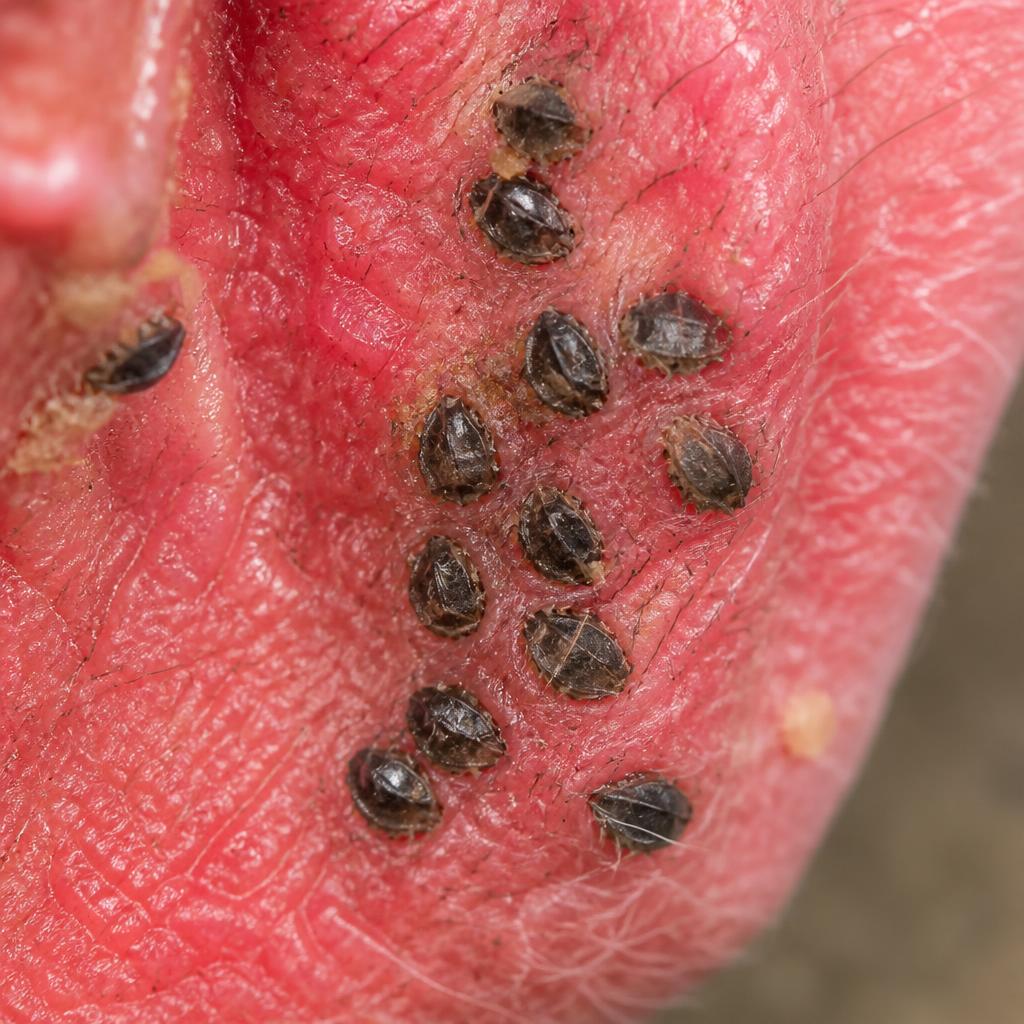
*Echidnophaga gallinacea*, the sticktight or hen flea, is a small combless flea about 1.5–2 mm long with a distinctly angular, flattened head and very short antennae. Unlike other fleas, the mated female embeds her mouthparts permanently in the host's skin and remains attached for two to six weeks, becoming partially encased in inflamed tissue. Eggs are laid into the ulcerated lesion and drop to the litter or soil below, where larvae develop on organic debris and pupate in a cocoon; the full cycle takes roughly four to six weeks in warm conditions.
Behaviour
Attached females form dense dark clusters on sparsely feathered skin — the comb, wattles and around the eyes of poultry — and on the ears, face and between the toes of dogs, cats, rabbits, horses and wildlife. Feeding causes ulceration, blood loss, secondary bacterial infection, drop in egg production, and death of young birds under heavy loads. People handling infested birds pick up fleas that will attach and bite, and the species has been implicated in murine typhus circulation where poultry and rodents share premises.
Habits
Infestations centre on poultry houses, coops, backyard flocks, and dry dusty litter and soil where larvae develop; dogs and cats with coop access carry the flea back to the home. Conducive conditions are dry loose litter, packed dirt floors, overcrowded coops, wild bird and rodent traffic, and no rotation or removal of bedding. Inspection means examining bird heads for dark attached clusters and checking pet ears and faces; attached fleas must be removed manually, not simply pulled, to avoid leaving mouthparts behind.
Control methods
- 1Remove attached fleas by softening with petroleum jelly, then wipe clear
- 2Treat affected birds and pets with a veterinarian-approved product
- 3Remove, bag and replace all coop litter; scrape floors clean
- 4Apply a labelled poultry-safe dust or IGR to coop floors and cracks
- 5Reduce crowding and keep litter dry and turned
- 6Exclude wild birds and rodents from the coop and feed store
- 7Re-treat at 14 days and re-inspect bird heads weekly
Tailored to Sticktight Flea
IPM Procedure Checklist
Inspection
- Survey interior and exterior for evidence and conducive conditions
- Document findings with photos and a site map
- Place monitors to confirm activity
Identification
- Confirm Sticktight Flea (Echidnophaga gallinacea) — not a look-alike
- Note life stage and risk level: Moderate
- Capture clear photos and samples for the record
Action Thresholds
- Trigger action when monitor counts trend up
- Re-evaluate weekly during active season
- Document trigger criteria in the IPM plan
Prevention
- Exclude entry points and harborage
- Improve sanitation and moisture control
- Modify habitat around the structure
Control Methods
- Remove attached fleas by softening with petroleum jelly, then wipe clear
- Treat affected birds and pets with a veterinarian-approved product
- Remove, bag and replace all coop litter; scrape floors clean
- Apply a labelled poultry-safe dust or IGR to coop floors and cracks
Monitoring & Evaluation
- Service monitors on schedule and trend captures
- Re-inspect for Sticktight Flea activity at follow-up
- Adjust tactics based on data; report findings to client