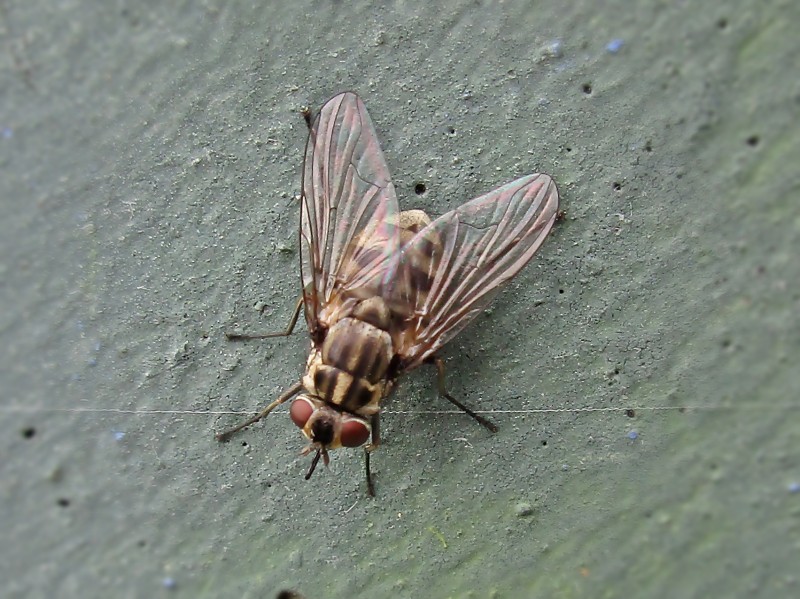
Blood Feeder
Stable Fly
Stomoxys calcitrans
Biology
The stable fly, *Stomoxys calcitrans*, is a Dipteran insect within the family Muscidae, closely related to the common house fly but distinguished by its prominent, bayonet-like proboscis, adapted for piercing and blood-feeding. Adults typically measure 6–8 mm in length, possessing a grayish body with four longitudinal stripes on the thorax and a distinct ‘checkerboard’ pattern on the abdomen. The life cycle comprises four stages: egg, larva (three instars), pupa, and adult, with development from egg to adult often completed within 10–25 days under optimal conditions—around 27°C and high humidity. Females can lay up to 800 eggs in batches over their 3–6 week lifespan, depositing them in decaying organic matter; both sexes require multiple blood meals daily for survival and reproduction.
Behaviour
Stable flies exhibit diurnal biting activity, primarily feeding during daylight hours, particularly in the morning and late afternoon, and are known for their persistent and painful bites on a wide range of warm-blooded hosts, including livestock, pets, and humans around the ankles and lower legs. Unlike many other biting flies, both male and female stable flies are obligate blood feeders, requiring blood meals every 24–48 hours for sustenance and reproductive capacity. They are strong fliers and can disperse considerable distances, up to 10 miles, impacting public health through their irritating bites and serving as mechanical vectors for several pathogens, including equine infectious anemia (EIA), anthrax, and various parasitic nematodes such as *Habronema* spp.
Habits
Stable flies primarily breed in decaying organic matter that is well-moistened but not submerged, preferring substrates such as wet straw, fermenting hay, silage, manure piles (especially horse and cattle), and rotting vegetable matter. Adults typically rest on fences, walls, vegetation, or sunny surfaces during non-feeding periods, seeking sheltered locations during adverse weather. Infestations are often indicated by the characteristic pepper-like fecal spots observed on resting surfaces and the defensive reactions of animals, such as foot stamping and tail flicking. Conducive conditions include poor sanitation in agricultural settings, particularly around feedlots, stables, and dairies where moist organic debris accumulates, creating ideal larval development sites and contributing to significant nuisance and economic losses.
Control methods
- 1Remove and dry wet straw, hay and grass clippings
- 2Sticky fly traps near breeding sites
- 3Insecticide-treated targets at livestock entries
- 4Clean manure and bedding twice weekly
- 5Improve drainage in pens and around feeders
- 6Permethrin pour-ons for livestock when severe
Tailored to Stable Fly
IPM Procedure Checklist
Inspection
- Survey interior and exterior for evidence and conducive conditions
- Document findings with photos and a site map
- Place monitors to confirm activity
Identification
- Confirm Stable Fly (Stomoxys calcitrans) — not a look-alike
- Note life stage and risk level: Moderate
- Capture clear photos and samples for the record
Action Thresholds
- Trigger action when monitor counts trend up
- Re-evaluate weekly during active season
- Document trigger criteria in the IPM plan
Prevention
- Exclude entry points and harborage
- Improve sanitation and moisture control
- Modify habitat around the structure
Control Methods
- Remove and dry wet straw, hay and grass clippings
- Sticky fly traps near breeding sites
- Insecticide-treated targets at livestock entries
- Clean manure and bedding twice weekly
Monitoring & Evaluation
- Service monitors on schedule and trend captures
- Re-inspect for Stable Fly activity at follow-up
- Adjust tactics based on data; report findings to client