Occasional Invader
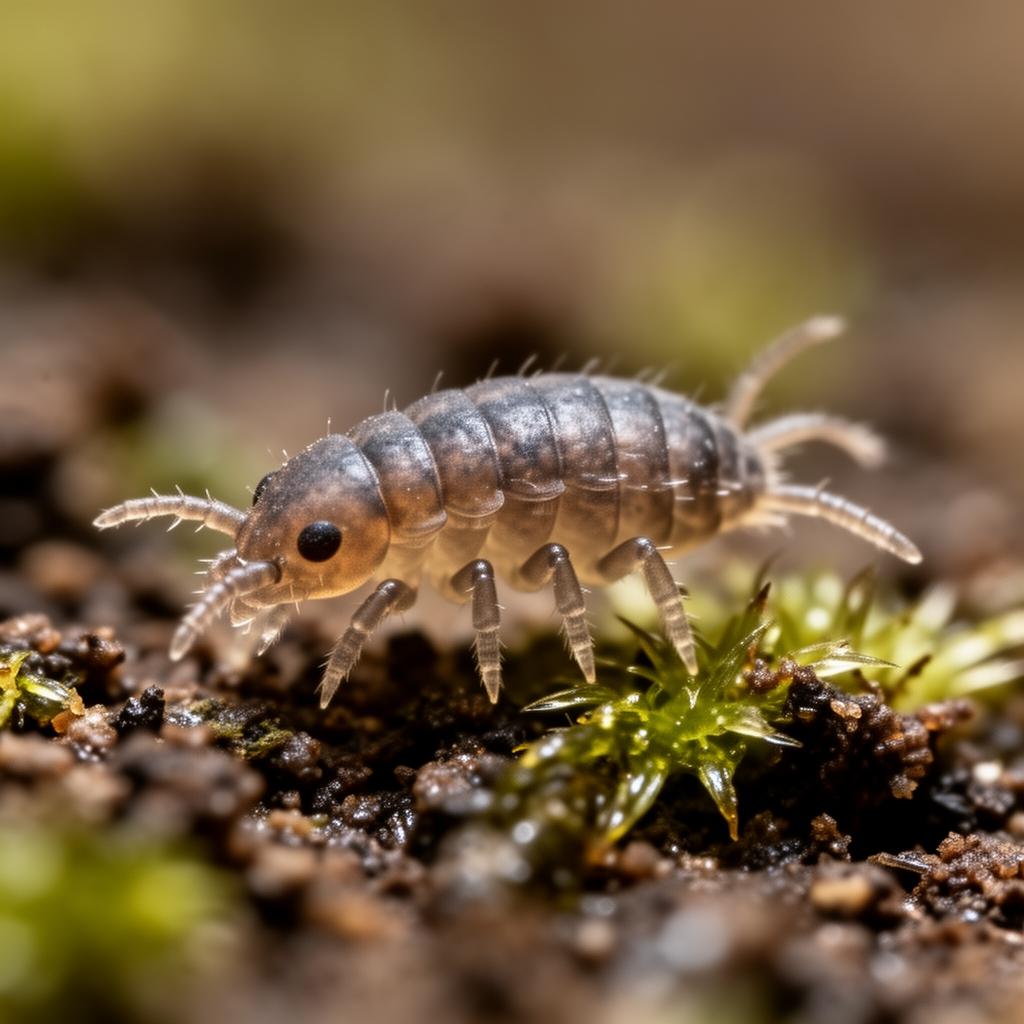
Springtail
Collembola
Biology
Springtails, belonging to the class Collembola, are six-legged arthropods, not true insects, distinguished taxonomically by internal mouthparts and a collophore (ventral tube) on the first abdominal segment. Adults typically range from 0.25 to 6 mm in length, exhibiting diverse forms, from globular to elongated, and lacking wings. Their lifecycle is ametabolous, meaning they molt throughout their life, even after reaching sexual maturity, with some species molting up to 50 times; eggs hatch in 3-10 days depending on temperature (15-25°C), and nymphal stages mature in 2-4 weeks, leading to a lifespan of up to a year. Reproduction can be sexual or parthenogenetic, with some species exhibiting elaborate courtship rituals involving spermatophore deposition. They thrive in environments with relative humidity consistently above 70-80% and are extremely sensitive to desiccation.
Behaviour
Springtails are primarily detritivores, exhibiting continuous feeding activity on decaying organic matter, fungi, algae, bacteria, pollen, and even lichens, contributing significantly to nutrient cycling in soil ecosystems. While generally considered nuisance pests and not directly harmful to humans, certain species, particularly Dicyrtomina spp., can cause minor plant damage by grazing on root hairs or germinating seedlings, though this is rare in structural infestations. Dispersal is often passive, via wind or movement of infested materials, but they can actively explore new areas in response to declining food or moisture resources. Communication is largely tactile or chemosensory, with some species using chemical cues for aggregation when conditions are favorable. Their characteristic 'jumping' behavior, facilitated by a furcula and retinaculum, is a primary escape mechanism from predators, allowing them to rapidly reposition themselves.
Habits
Springtails typically harbor in moist, decaying organic substrates such as leaf litter, compost, mulch, under bark, or within the top few inches of soil. Indoors, they are drawn to high-humidity areas, commonly infesting bathrooms (especially around leaky fixtures or shower drains), kitchens (under sinks, near dishwashers), damp basements, crawlspaces, potted plants, and areas with moisture-damaged wood or excessive condensation. Their foraging patterns are non-linear, often involving exploratory movements across damp surfaces in search of microbial films or fungal growth. Infestations often become apparent during periods of heavy rain or when outdoor populations migrate indoors seeking refuge from desiccation or waterlogging. Signs of infestation include visible populations of actively jumping, minute arthropods on damp surfaces, or the presence of numerous individuals in standing water or collected in sinks/tubs, particularly noticeable after dark due to their often nocturnal tendencies.
Control methods
- 1Reduce indoor humidity (dehumidifier, ventilate)
- 2Fix plumbing leaks and condensation
- 3Repot overwatered houseplants in fresh medium
- 4Remove mulch piled against foundation
- 5Improve crawlspace and bathroom airflow
- 6Vacuum visible groups — chemicals rarely needed
Tailored to Springtail
IPM Procedure Checklist
Inspection
- Inspect exterior perimeter for entry pathways
- Note moisture, mulch and ground-cover near foundation
- Identify aggregation sites on warm walls
Identification
- Confirm Springtail (Collembola) — not a look-alike
- Note life stage and risk level: Low
- Capture clear photos and samples for the record
Action Thresholds
- Tolerate low-level activity outside sensitive zones
- Act if activity moves indoors or near food
- Review threshold seasonally with the client
Prevention
- Seal foundation cracks, weep holes and utility penetrations
- Pull mulch and vegetation back from the structure
- Improve drainage and reduce exterior moisture
Control Methods
- Reduce indoor humidity (dehumidifier, ventilate)
- Fix plumbing leaks and condensation
- Repot overwatered houseplants in fresh medium
- Remove mulch piled against foundation
Monitoring & Evaluation
- Service monitors on schedule and trend captures
- Re-inspect for Springtail activity at follow-up
- Adjust tactics based on data; report findings to client