Stinging Insect
Southern Yellowjacket
Vespula squamosa
Biology
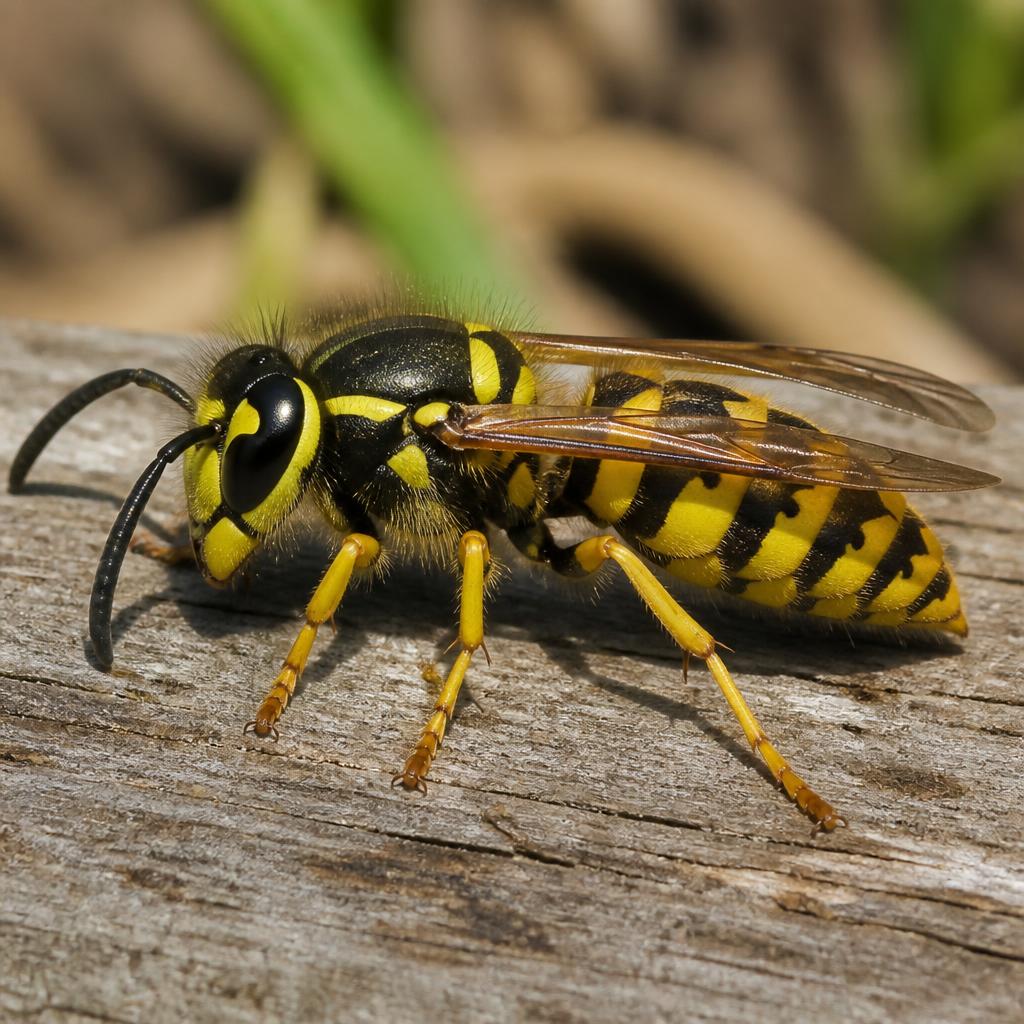
Vespula squamosa (Drury), a member of the Vespidae family, is a common social wasp found in eastern North America. Queens are approximately 18-20 mm long, while workers are 10-15 mm. They are brightly colored with distinct yellow and black markings. The head is predominantly yellow with black markings, and the abdomen has alternating yellow and black bands, often with a prominent yellow stripe on the upper part of the thorax. Nests are subterranean or built in protected cavities, often constructed from paper-like material. An overwintered queen initiates the colony in spring.
Behaviour
V. squamosa are highly predatory, feeding their larvae with a variety of insects, including caterpillars, flies, and other arthropods. Adults also forage for sugary substances, such as nectar, fruit, and human foods, often becoming a nuisance at picnics and outdoor events. They are notoriously aggressive when their nest is disturbed, delivering painful stings. Foraging activity is highest during warmer parts of the day, extending into early evening.
Habits
Southern yellowjackets prefer warm, temperate climates and are frequently encountered in urban, suburban, and agricultural landscapes. Nests are primarily subterranean, often utilizing abandoned rodent burrows, or are constructed in sheltered cavities like wall voids, rotten stumps, or dense ground cover. Conducive conditions for nesting include undisturbed ground areas, presence of existing cavities, and readily available food sources, both insect prey and human discarded foods. Nests can grow quite large by late summer, housing thousands of individuals.
Control methods
- 1Locate and cautiously treat subterranean nests.
- 2Apply insecticide dust or liquid directly to the nest.
- 3Avoid disturbing active yellowjacket nests.
- 4Seal all openings in building foundations and walls.
- 5Cover outdoor food and drink containers.
- 6Remove fallen fruit and pet food from yards.
Tailored to Southern Yellowjacket
IPM Procedure Checklist
Inspection
- Survey interior and exterior for evidence and conducive conditions
- Document findings with photos and a site map
- Place monitors to confirm activity
Identification
- Confirm Southern Yellowjacket (Vespula squamosa) — not a look-alike
- Note life stage and risk level: High
- Capture clear photos and samples for the record
Action Thresholds
- Zero-tolerance: act on first confirmed sighting
- Notify client and document the trigger event
- Prioritize health and regulatory risk in the plan
Prevention
- Exclude entry points and harborage
- Improve sanitation and moisture control
- Modify habitat around the structure
Control Methods
- Locate and cautiously treat subterranean nests.
- Apply insecticide dust or liquid directly to the nest.
- Avoid disturbing active yellowjacket nests.
- Seal all openings in building foundations and walls.
Monitoring & Evaluation
- Service monitors on schedule and trend captures
- Re-inspect for Southern Yellowjacket activity at follow-up
- Adjust tactics based on data; report findings to client