Spider
Southern House Spider
Kukulcania hibernalis
Biology
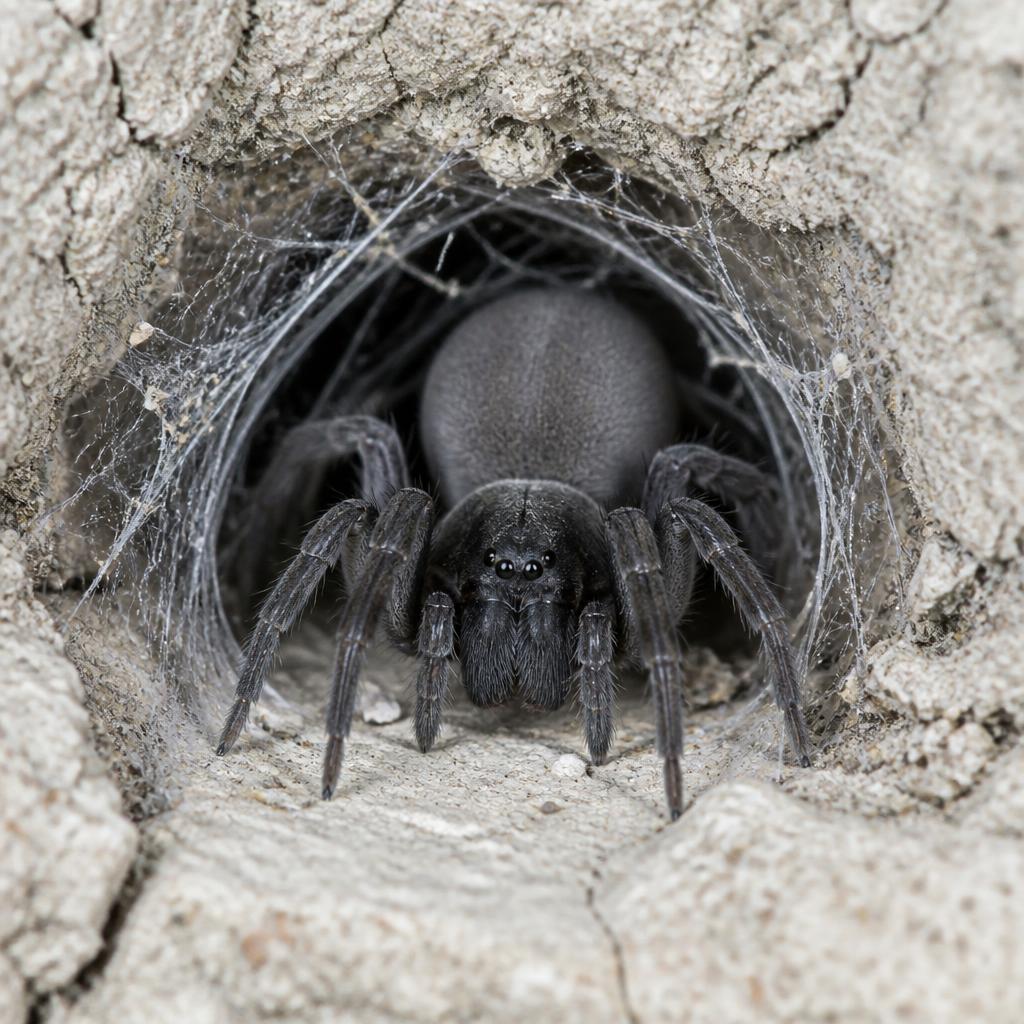
Kukulcania hibernalis is a filistatid crevice weaver. Females are stocky, velvety charcoal-grey to black spiders of 13–19 mm that may live up to eight years; males are slimmer, tan-brown with long legs and elongated palps and are very frequently misidentified as brown recluses despite having eight eyes and no violin marking. Females rarely leave the retreat and produce multiple egg sacs inside the silk tube; development is slow, taking a year or more to maturity in warm southern climates.
Behaviour
Females build a distinctive retreat: a silk tube pushed into a crack with ragged radiating lines of cribellate wool-like silk fanning out across the surrounding surface. They wait inside and dash out to seize insects touching the radiating lines. Females are essentially sedentary for life; the wandering specimens homeowners find are short-lived males searching for mates. The species is harmless — the fangs are small, bites are almost unheard of and there is no medical significance — so the main service issues are unsightly silk and recluse misidentification.
Habits
Retreats occupy cracks in stucco, brick weep holes, block voids, window and door frames, soffits, under eaves and behind shutters, usually on warm exterior walls; indoors they use garage corners, attic vents and crawlspace framing. Signs are the messy radiating tangles of grey silk around a crack, often stained and dusty, and shed skins in the tube. Conducive conditions are older masonry with abundant crevices, warm southern climates and bright exterior lights that concentrate prey along walls.
Control methods
- 1Correctly identify — not a brown recluse; eight eyes, no violin
- 2Brush and vacuum silk retreats from cracks and weep holes
- 3Point mortar and caulk stucco cracks to remove harborage
- 4Screen weep holes, vents and soffit gaps
- 5Switch exterior lighting to yellow bulbs to cut prey
- 6Crack-and-crevice residual where retreats are dense
Tailored to Southern House Spider
IPM Procedure Checklist
Inspection
- Inspect undisturbed corners, voids and stored items
- Identify webs, egg sacs and prey debris
- Note conducive insect prey populations
Identification
- Confirm Southern House Spider (Kukulcania hibernalis) — not a look-alike
- Note life stage and risk level: Low
- Capture clear photos and samples for the record
Action Thresholds
- Tolerate low-level activity outside sensitive zones
- Act if activity moves indoors or near food
- Review threshold seasonally with the client
Prevention
- Reduce clutter and seal cracks around the structure
- Switch exterior lights to yellow / sodium to reduce prey
- Install door sweeps and screen vents
Control Methods
- Correctly identify — not a brown recluse; eight eyes, no violin
- Brush and vacuum silk retreats from cracks and weep holes
- Point mortar and caulk stucco cracks to remove harborage
- Screen weep holes, vents and soffit gaps
Monitoring & Evaluation
- Service monitors on schedule and trend captures
- Re-inspect for Southern House Spider activity at follow-up
- Adjust tactics based on data; report findings to client