All pests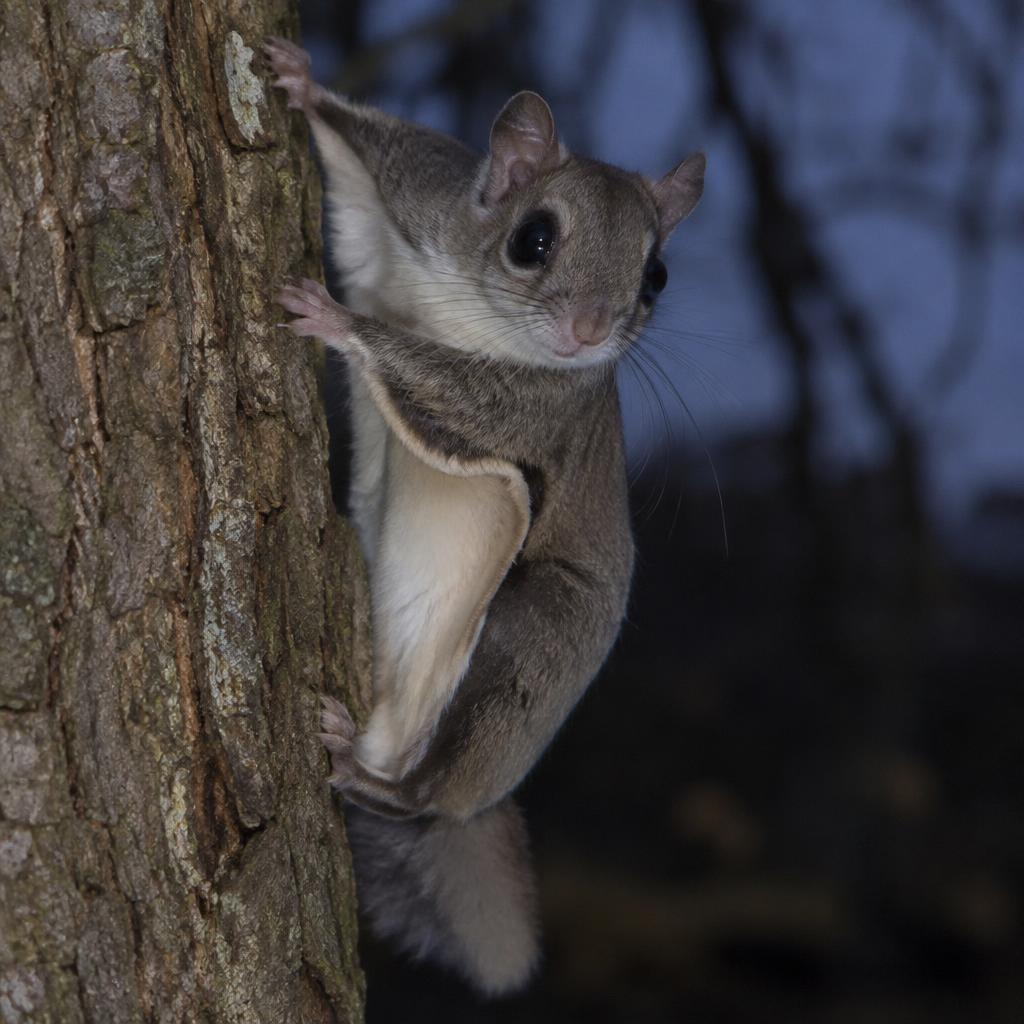 View full procedure
Rodent
Southern Flying Squirrel
Glaucomys volans
Moderate Risk
Biology
Glaucomys volans is a small nocturnal squirrel, 20–25 cm total length, with large dark eyes, a flattened tail, and a loose patagium of skin stretching from wrist to ankle that allows gliding between trees.
Behaviour
Southern flying squirrels are highly social; multiple animals may share an attic roost. They are nocturnal and glide between trees and structures. They feed on nuts, seeds, fungi, insects, and bird eggs.
Habits
Attic colonies produce scratching and chattering sounds at night, stains from urine, gnawed wiring, and stored food caches. They enter through small gaps near rooflines, fascia, and vents, especially where trees touch the roof.
Control methods
- 1Trim tree branches back at least 6 feet from the roof
- 2Seal roof gaps, vents, and fascia holes with rodent-proof mesh
- 3Install one-way exits over active entry holes
- 4Remove bird feeders and secure outdoor food sources
- 5Use live traps or exclusion traps in attics
- 6Disinfect and repair wiring damage after eviction
Tailored to Southern Flying Squirrel
IPM Procedure Checklist
Step 1
Inspection
- Locate runways, droppings, rub marks and gnaw damage
- Identify entry points (gaps ≥6 mm) and harborage
- Place tracking patches or non-toxic monitors
Step 2
Identification
- Confirm Southern Flying Squirrel (Glaucomys volans) — not a look-alike
- Note life stage and risk level: Moderate
- Capture clear photos and samples for the record
Step 3
Action Thresholds
- Trigger action when monitor counts trend up
- Re-evaluate weekly during active season
- Document trigger criteria in the IPM plan
Step 4
Prevention
- Exclude with steel wool, hardware cloth and door sweeps
- Trim vegetation 0.5 m from structure; clear debris
- Secure trash, pet food and stored grain
Step 5
Control Methods
- Trim tree branches back at least 6 feet from the roof
- Seal roof gaps, vents, and fascia holes with rodent-proof mesh
- Install one-way exits over active entry holes
- Remove bird feeders and secure outdoor food sources
Step 6
Monitoring & Evaluation
- Service monitors on schedule and trend captures
- Re-inspect for Southern Flying Squirrel activity at follow-up
- Adjust tactics based on data; report findings to client