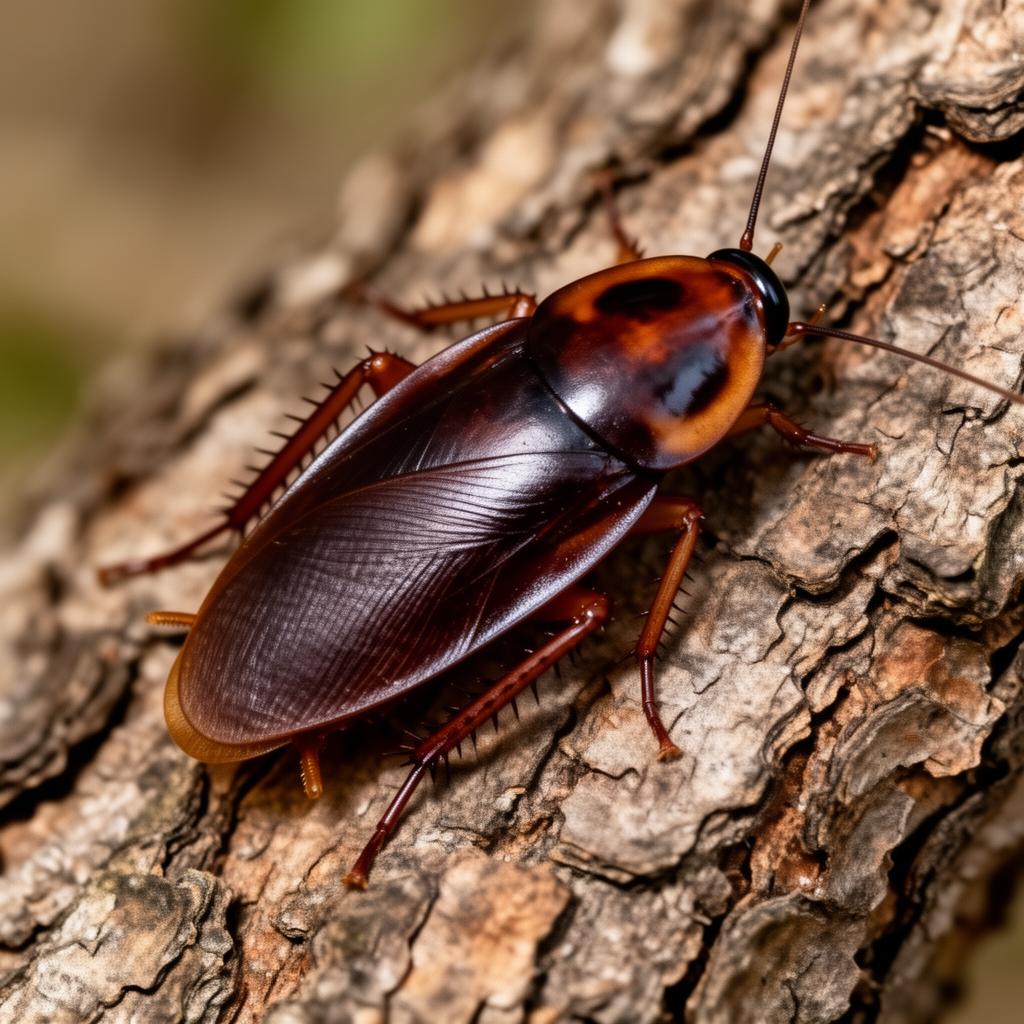
Cockroach
Smoky Brown Cockroach
Periplaneta fuliginosa
Biology
The smoky brown cockroach, <em>Periplaneta fuliginosa</em>, belongs to the family Blattidae, characterized by its imposing size, typically 25–38 mm in length, with both sexes possessing fully developed wings extending past the abdomen. Its distinctive uniform, glossy dark mahogany coloration and lack of lighter markings on the pronotum differentiate it from other <em>Periplaneta</em> species. The lifecycle, spanning approximately 320 days under optimal conditions (25–30°C, 60–80% relative humidity), encompasses egg, nymphal (6–12 instars over 100–300 days), and adult stages. Females produce oothecae, averaging 1–2 per week for several months, each containing approximately 20 (range 15–28) eggs, which hatch after about 45 days. Adults live for 4–12 months, with males generally having shorter lifespans than females.
Behaviour
Primarily a nocturnal species, <em>P. fuliginosa</em> exhibits strong phototaxis, actively flying towards artificial lights around structures after dusk, which often leads to indoor invasions. These cockroaches are solitary for foraging but may aggregate in suitable harborage areas; however, they lack complex social structures seen in other insect orders. Unlike many domestic cockroaches, smoky browns are highly susceptible to desiccation due to their permeable cuticle, leading to pronounced hydrotaxis where they actively seek high-humidity environments. Their diet is omnivorous, including decaying organic matter, plant material, and even starchy household items. While not aggressive, large indoor populations pose a significant public health risk as mechanical vectors for pathogens and allergens.
Habits
Favored outdoor harborage includes tree holes, hollow logs, dense ground cover, mulch beds, woodpiles, and leaf litter, as these locations offer both shelter and the high humidity crucial for their survival. Indoors, they typically establish harborages in moisture-rich, secluded environments such as attics, crawl spaces, soffits, wall voids, and basements, often gaining access through utility penetrations, unscreened vents, or gaps in foundations. Foraging occurs predominantly at night, with individuals traveling considerable distances (up to several hundred feet) from their harborage in search of food and water. Conducive conditions for indoor infestations include excess outdoor moisture, overgrown landscaping against the structure, and inadequate sealing of entry points, particularly in warm, humid climates. Technicians should look for reddish-brown fecal spotting/smears, shed nymphal exoskeletons, and oothecae in harborage areas to confirm activity.
Control methods
- 1Seal soffit, attic vent and pipe penetrations
- 2Move mulch and woodpiles away from foundation
- 3Reduce outdoor lighting or switch to yellow LEDs
- 4Perimeter residual treatment in warm months
- 5Clean gutters and fix roof leaks
- 6Bait stations in crawlspaces and garages
Tailored to Smoky Brown Cockroach
IPM Procedure Checklist
Inspection
- Survey interior and exterior for evidence and conducive conditions
- Document findings with photos and a site map
- Place monitors to confirm activity
Identification
- Confirm Smoky Brown Cockroach (Periplaneta fuliginosa) — not a look-alike
- Note life stage and risk level: Moderate
- Capture clear photos and samples for the record
Action Thresholds
- Trigger action when monitor counts trend up
- Re-evaluate weekly during active season
- Document trigger criteria in the IPM plan
Prevention
- Exclude entry points and harborage
- Improve sanitation and moisture control
- Modify habitat around the structure
Control Methods
- Seal soffit, attic vent and pipe penetrations
- Move mulch and woodpiles away from foundation
- Reduce outdoor lighting or switch to yellow LEDs
- Perimeter residual treatment in warm months
Monitoring & Evaluation
- Service monitors on schedule and trend captures
- Re-inspect for Smoky Brown Cockroach activity at follow-up
- Adjust tactics based on data; report findings to client