Mammal
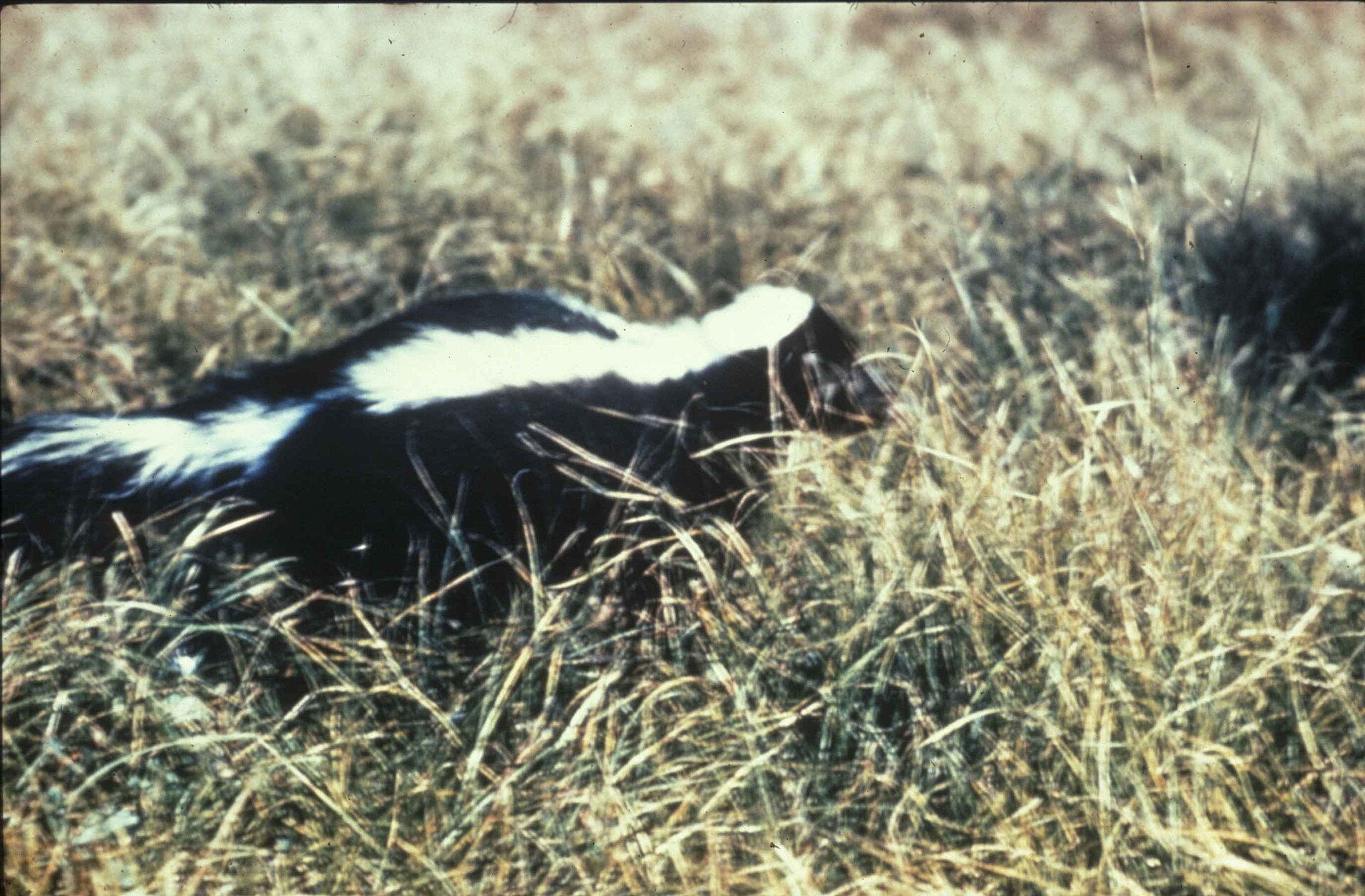
Striped Skunk
Mephitis mephitis
Biology
The striped skunk, taxonomically *Mephitis mephitis*, is a stout-bodied mustelid, typically weighing 2–6 kg with males often larger than females. Its striking pelage, typically glossy black with two prominent white dorsal stripes extending from the head to a bushy tail, serves as aposematic coloration. They undergo a single annual breeding season (late winter to early spring), with a gestation period of 60–75 days yielding a litter of 4–7 kits. Lifespan in the wild averages 2–4 years but can reach 10 years in captivity, with high juvenile mortality rates. They are remarkably tolerant of diverse climates, thriving in temperatures ranging from 0–30°C, but are susceptible to extreme cold without adequate denning. Distinguishing features include the characteristic V-shaped white stripe on the forehead.
Behaviour
Striped skunks are primarily nocturnal and solitary foragers, though they may den communally during severe winter conditions to conserve heat. Their foraging ecology is omnivorous and highly opportunistic, consuming a wide array of insects (especially grubs, crickets, beetles), small rodents, eggs, carrion, berries, and human refuse, utilizing their keen sense of smell and robust claws for digging. Communication primarily involves hissing, stomping, and the infamous defensive musk spray, a potent blend of thiols deployed from anal glands with remarkable accuracy up to 3 meters. This defensive mechanism is a last resort, preceded by warning displays, and serves as a significant deterrent to predators. Skunks are a primary terrestrial vector for rabies virus in North America, posing a public health risk, and their digging can cause minor structural damage to lawns and gardens.
Habits
Striped skunks exhibit strong denning preferences for concealed, dry, and protected locations, often utilizing abandoned burrows of other animals, hollow logs, rock crevices, or readily excavating dens under human structures such as sheds, decks, porches, and foundations. Their foraging patterns involve slow, methodical searches, often evidenced by characteristic cone-shaped depressions in lawns where they dig for grubs and beetle larvae, typically within a 0.5–2 km radius of their den. Seasonal movements are limited, though they may establish winter dens closer to consistent food sources. Conducive conditions for skunk activity include accessible garbage, pet food left outdoors, dense shrubbery providing cover, and easily accessible crawl spaces or voids under structures. Signs of infestation include strong, musky odors, disturbed soil and turf, fecal droppings containing insect exoskeletons or seeds, and structural damage from burrowing.
Control methods
- 1Apply beneficial nematodes to reduce lawn grubs
- 2Close off deck/shed underspaces with hardware cloth
- 3Motion-activated lights or sprinklers
- 4Remove pet food and secure trash
- 5Live-trap with covered cage; release legally
- 6Vaccinate pets against rabies
Tailored to Striped Skunk
IPM Procedure Checklist
Inspection
- Survey interior and exterior for evidence and conducive conditions
- Document findings with photos and a site map
- Place monitors to confirm activity
Identification
- Confirm Striped Skunk (Mephitis mephitis) — not a look-alike
- Note life stage and risk level: Moderate
- Capture clear photos and samples for the record
Action Thresholds
- Trigger action when monitor counts trend up
- Re-evaluate weekly during active season
- Document trigger criteria in the IPM plan
Prevention
- Exclude entry points and harborage
- Improve sanitation and moisture control
- Modify habitat around the structure
Control Methods
- Apply beneficial nematodes to reduce lawn grubs
- Close off deck/shed underspaces with hardware cloth
- Motion-activated lights or sprinklers
- Remove pet food and secure trash
Monitoring & Evaluation
- Service monitors on schedule and trend captures
- Re-inspect for Striped Skunk activity at follow-up
- Adjust tactics based on data; report findings to client