Insect
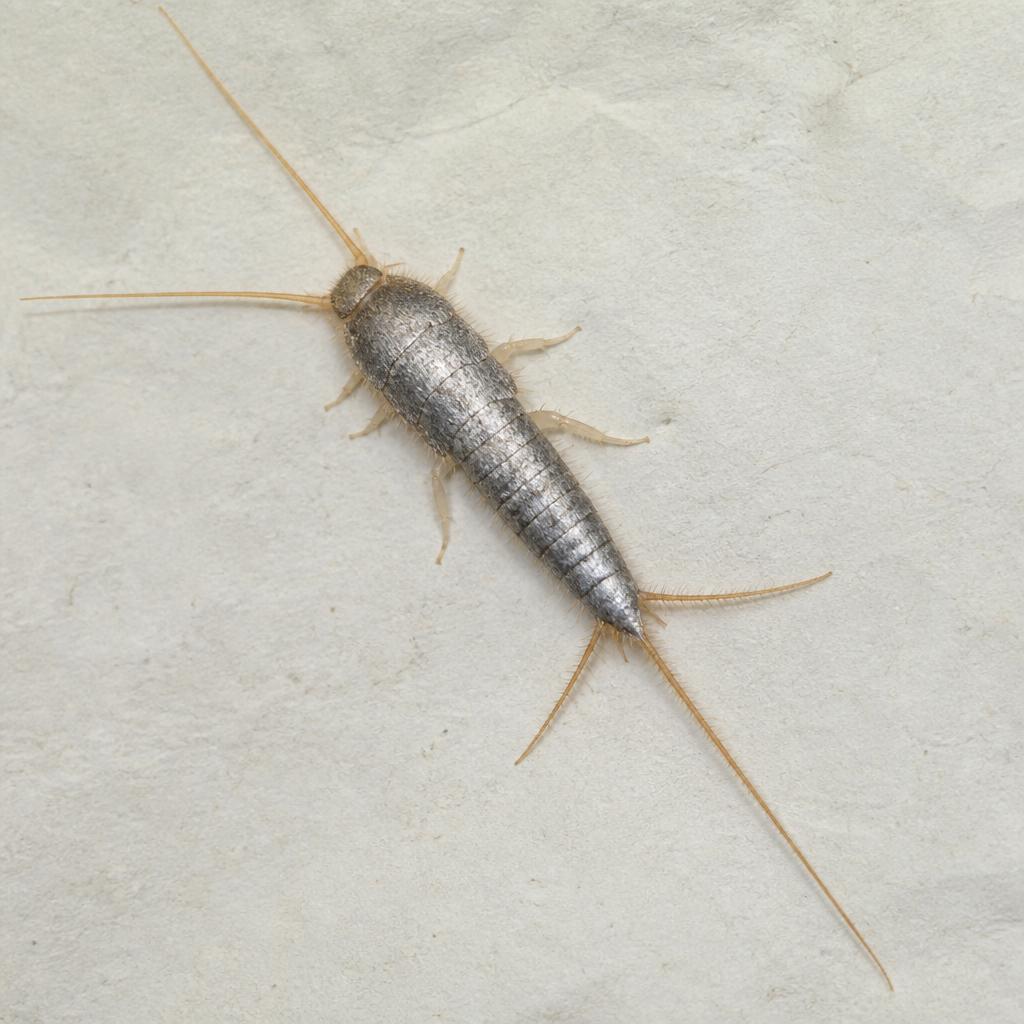
Silverfish
Lepisma saccharinum
Biology
Silverfish, Lepisma saccharinum, belong to the order Zygentoma (formerly Thysanura), one of the most ancient insect groups. Adults typically measure 12–19 mm, excluding their three long, bristle-like caudal filaments – two cerci laterally and one epiproct centrally – which can be as long as their body. They possess a distinctive silvery-gray appearance due to iridescent scales, which are easily dislodged upon handling. Development from egg to adult is apolometabolic, directly transitioning from nymphs to adults, and can take 3–4 months under optimal conditions but extends significantly (up to 2–3 years) in sub-optimal environments. Females lay 1–3 eggs per day, totaling up to 50 eggs over a lifetime, often in crevices, and individuals can live for 2–8 years, molting up to 50 times throughout their prolonged life span, even as adults. They thrive in warm, humid conditions, ideally 21–27°C and relative humidity exceeding 75–95%, showing reduced activity and development below 20°C or in drier environments.
Behaviour
Primarily nocturnal, silverfish are highly thigmotactic, exhibiting a strong preference for narrow, protected spaces close to food sources. Their feeding ecology is marked by polyphagy, specializing in polysaccharides; they actively seek out and consume starchy materials such as paper products, flour, glues, cellulose, textiles (cotton, linen, silk), and even synthetic fibers, digesting these complex carbohydrates with specialized enzymes. Communication is limited, but they employ chemical cues for mating purposes, with males performing a courtship dance involving pheromones to attract females. While considered nuisance pests rather than disease vectors, their feeding habits result in characteristic irregular feeding marks, etchings, or holes on paper goods, fabrics, and book bindings, often accompanied by shed scales and fecal pellets, impacting structural aesthetics and potentially reducing material integrity.
Habits
Silverfish prefer harborage in environments offering high humidity and consistent temperatures, commonly found in basements, attics, bathrooms, kitchens, and wall voids, especially areas with plumbing leaks or condensation. Their foraging patterns involve cryptic exploration from harborage areas, often following pipes, electrical wiring, and wall/floor junctions up to 30 feet from their nest toward food sources. Seasonal activity does not fluctuate significantly indoors due to stable conditions, but outdoor populations may seek indoor refuge during extreme weather. Conducive conditions include cluttered storage areas providing ample food and harborage, water damage, poor ventilation promoting high humidity, and undisturbed, dusty environments. Technicians should look for pinpoint fecal spotting resembling black pepper, shed exoskeletons (molts), characteristic irregular feeding damage on susceptible materials, and live specimens under or behind objects, particularly in areas near moisture sources or where susceptible materials are stored.
Control methods
- 1Reduce humidity below 50% with dehumidifiers
- 2Diatomaceous earth or boric acid in voids and attics
- 3Sticky traps to monitor activity zones
- 4Store paper and books in sealed bins
- 5Seal cracks around baseboards and plumbing
- 6Residual dust in wall voids and crawlspaces
Tailored to Silverfish
IPM Procedure Checklist
Inspection
- Inspect harborage near food, water and warmth
- Check cracks, voids and appliance interiors
- Place sticky monitors at suspected hot-spots
Identification
- Confirm Silverfish (Lepisma saccharinum) — not a look-alike
- Note life stage and risk level: Low
- Capture clear photos and samples for the record
Action Thresholds
- Tolerate low-level activity outside sensitive zones
- Act if activity moves indoors or near food
- Review threshold seasonally with the client
Prevention
- Seal cracks, plumbing penetrations and wall voids
- Eliminate moisture sources and standing water
- Improve sanitation: sealed food storage, grease removal
Control Methods
- Reduce humidity below 50% with dehumidifiers
- Diatomaceous earth or boric acid in voids and attics
- Sticky traps to monitor activity zones
- Store paper and books in sealed bins
Monitoring & Evaluation
- Service monitors on schedule and trend captures
- Re-inspect for Silverfish activity at follow-up
- Adjust tactics based on data; report findings to client