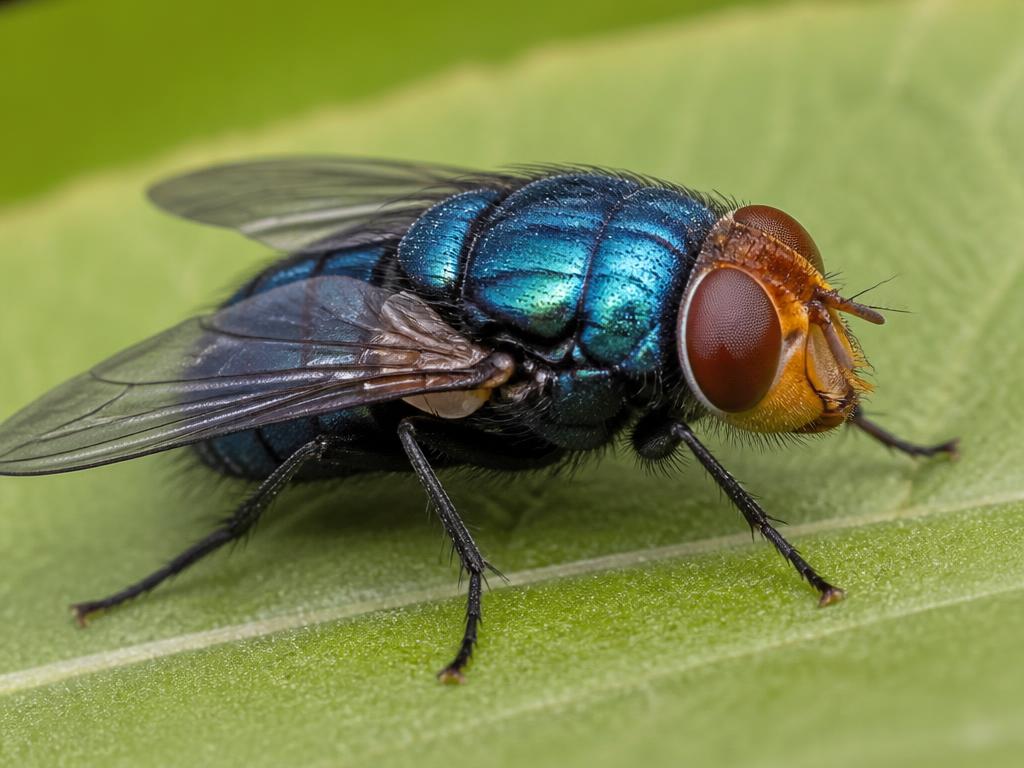
Fly
New World Screwworm Fly
Cochliomyia hominivorax
Biology
Cochliomyia hominivorax (family Calliphoridae) is a metallic blue-green blow fly, 8-10 mm long, with a bright orange head, large reddish-brown eyes, and three dark longitudinal stripes on the thorax. Unlike most blow flies, females oviposit exclusively at the edges of open wounds or moist mucous membranes of living warm-blooded animals, laying shingled batches of 200-300 eggs. Larvae hatch within 12-24 hours and burrow screw-like into living tissue, feeding for 5-7 days through three instars before dropping to the soil to pupate for 7-10 days. The complete cycle takes about three weeks in warm conditions.
Behaviour
This species is an obligate parasite of living tissue — the defining feature separating it from secondary, carrion-feeding blow flies. Females locate hosts by odor of blood and wound exudate, including navels of newborn animals, castration and branding wounds, tick bites, and dehorning sites. Larval feeding enlarges the wound, releases attractant odors, and draws additional gravid females, causing rapidly escalating myiasis that can kill an untreated animal within one to two weeks. Human myiasis cases occur, particularly in individuals with neglected wounds. Adults are strong fliers capable of dispersing tens of kilometers.
Habits
Screwworm is a reportable/notifiable pest in most jurisdictions and was eradicated from North and Central America by the sterile insect technique, with ongoing barrier programs; introductions from endemic regions of South America and the Caribbean remain a standing biosecurity threat. Risk conditions include year-round warm climates, uncontrolled livestock or wildlife movement, unattended surgical or accidental wounds, and unmanaged birthing seasons. Any suspected case in a screwworm-free region must be reported to veterinary authorities immediately.
Control methods
- 1Report suspected cases to veterinary/animal health authorities immediately.
- 2Collect and preserve larvae in alcohol for official identification.
- 3Treat wounds with approved larvicidal and antiseptic dressings.
- 4Time surgical procedures and calving outside peak fly seasons.
- 5Restrict and inspect animal movement from endemic regions.
- 6Support sterile insect technique and area-wide surveillance programs.
Tailored to New World Screwworm Fly
IPM Procedure Checklist
Inspection
- Locate breeding sites: drains, decaying matter, moist organics
- Use tape-over-drain tests and UV/light traps to confirm
- Map dumpster, grease and floor-drain hot-spots
Identification
- Confirm New World Screwworm Fly (Cochliomyia hominivorax) — not a look-alike
- Note life stage and risk level: Severe
- Capture clear photos and samples for the record
Action Thresholds
- Zero-tolerance: act on first confirmed sighting
- Notify client and document the trigger event
- Prioritize health and regulatory risk in the plan
Prevention
- Clean drains with enzymatic foam to remove biofilm
- Manage trash, recycling and grease daily
- Screen windows, doors and air curtains at entries
Control Methods
- Report suspected cases to veterinary/animal health authorities immediately.
- Collect and preserve larvae in alcohol for official identification.
- Treat wounds with approved larvicidal and antiseptic dressings.
- Time surgical procedures and calving outside peak fly seasons.
Monitoring & Evaluation
- Service monitors on schedule and trend captures
- Re-inspect for New World Screwworm Fly activity at follow-up
- Adjust tactics based on data; report findings to client