Stored Product Pest
Sawtoothed Grain Beetle
Oryzaephilus surinamensis
Biology
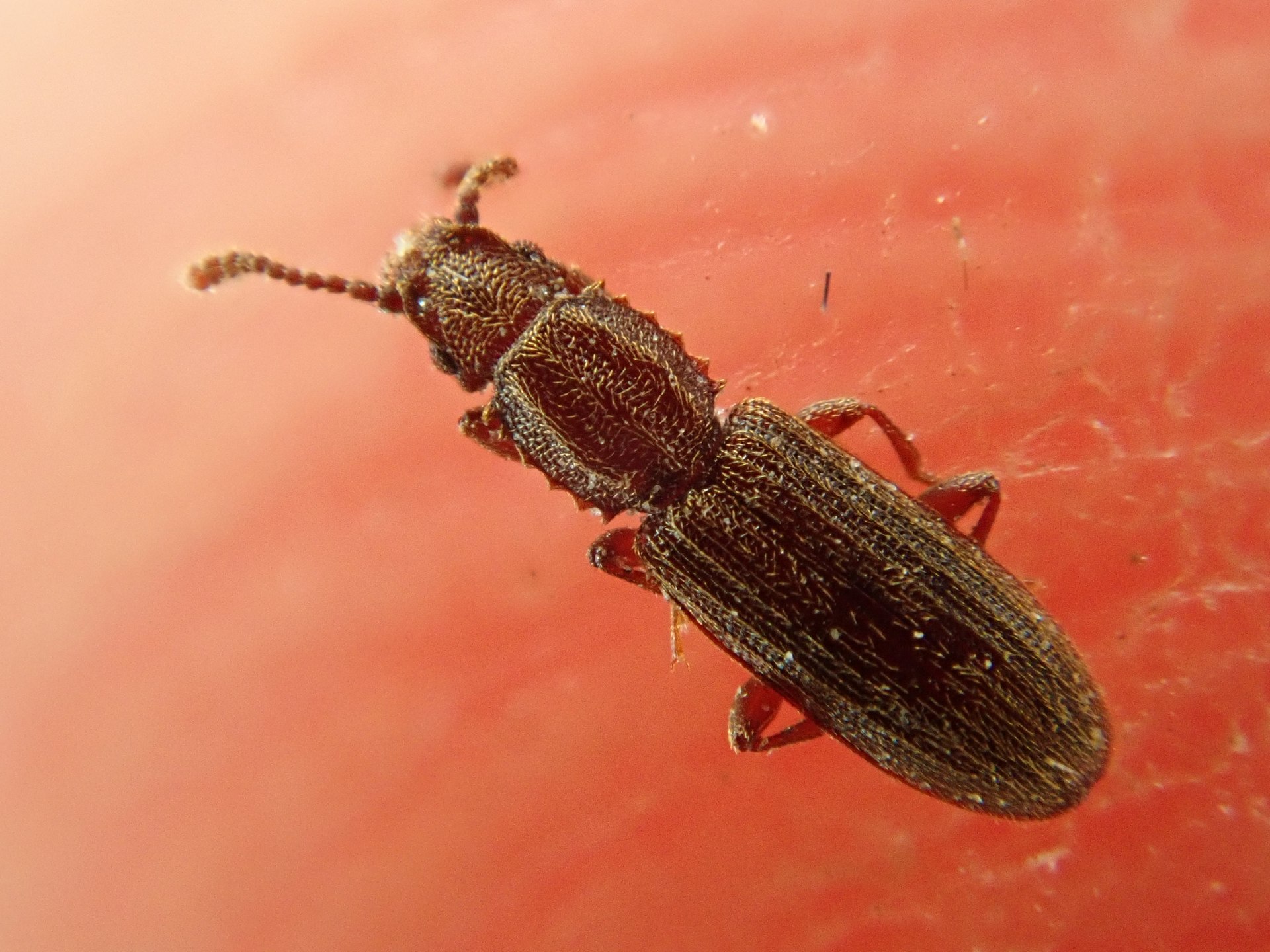
The sawtoothed grain beetle, Oryzaephilus surinamensis (Linnaeus), belongs to the family Silvanidae. Adults typically measure 2.5–3.5 mm in length, exhibiting a narrow, flattened, reddish-brown to dark brown body. A key diagnostic feature is the pronotum, which bears six distinctive, saw-like teeth along each lateral margin, distinguishing it from the similar merchant grain beetle (O. mercator) which possesses larger eyes and temples that project less. Females oviposit 285–375 elongated, whitish eggs loosely among food particles, often tucking them into crevices; these hatch in 3–17 days. Larvae are yellowish-white with a brownish head, undergoing 2–5 instars over 2–10 weeks before pupating, and adults can live for 6–10 months, or even up to 3 years, under optimal conditions. Optimal development occurs at 30–35°C and 70% relative humidity, with the entire lifecycle completing in as little as 20 days; development arrests below 18°C.
Behaviour
Oryzaephilus surinamensis is primarily nocturnal but also exhibits crepuscular activity, becoming more active during twilight hours. They are secondary pests, meaning they cannot attack whole, undamaged grains, but rather feed on broken kernels, processed cereals, flours, dried fruits, nuts, pet foods, and even chocolate. Adults and larvae both feed, causing significant quality degradation due to frass contamination, webbing, and associated fungal growth. These beetles do not fly, relying solely on crawling for dispersal, which contributes to their localized infestations within pantries or storage areas; their flattened bodies facilitate entry into incredibly tight spaces, as small as 0.2 mm. Heavy infestations can lead to “hot spots” in bulk commodities due to increased metabolic activity and moisture, creating conditions conducive to mold proliferation and further pest activity or spoilage. Although not directly harmful to human health, their presence renders food unfit for consumption.
Habits
Sawtoothed grain beetles are generalist stored product pests, frequently harboring in food processing plants, warehouses, grocery stores, and residential kitchens. They exhibit a strong thigmotactic response, preferring to aggregate in tight, dark crevices within product packaging, shelving gaps, and machinery. Their foraging range is typically limited to the immediate vicinity of their food source, but they can actively explore surfaces, leaving behind pheromone trails that may attract more beetles. Conducive conditions for rapid proliferation include warm temperatures (above 20°C), high humidity, and the ready availability of finely divided or damaged food products. Technicians should meticulously inspect all dry food goods—especially breakfast cereals, pasta, pet food, and spices—and examine packaging seams, cracks in pantry shelves, and under appliances for live beetles, cast skins, or frass. Infestations often begin with contaminated products brought into the home or facility.
Control methods
- 1Discard infested packages and clean spillage from shelves
- 2Vacuum seams, cracks and shelf liners thoroughly
- 3Transfer products into airtight containers
- 4Maintain low temperature and humidity in storage areas
- 5Inspect deliveries; reject damaged or weevil-prone packaging
- 6Apply crack-and-crevice residual in commercial settings
Tailored to Sawtoothed Grain Beetle
IPM Procedure Checklist
Inspection
- Inspect grain, spices, pet food and dry goods for larvae and webbing
- Deploy pheromone monitors near storage and shelving
- Check spillage in seams, cracks and shelf liners
Identification
- Confirm Sawtoothed Grain Beetle (Oryzaephilus surinamensis) — not a look-alike
- Note life stage and risk level: Moderate
- Capture clear photos and samples for the record
Action Thresholds
- Trigger action when monitor counts trend up
- Re-evaluate weekly during active season
- Document trigger criteria in the IPM plan
Prevention
- Rotate stock FIFO; reject damaged packaging at receiving
- Store products in airtight containers
- Maintain low humidity and clean storage surfaces
Control Methods
- Discard infested packages and clean spillage from shelves
- Vacuum seams, cracks and shelf liners thoroughly
- Transfer products into airtight containers
- Maintain low temperature and humidity in storage areas
Monitoring & Evaluation
- Service monitors on schedule and trend captures
- Re-inspect for Sawtoothed Grain Beetle activity at follow-up
- Adjust tactics based on data; report findings to client