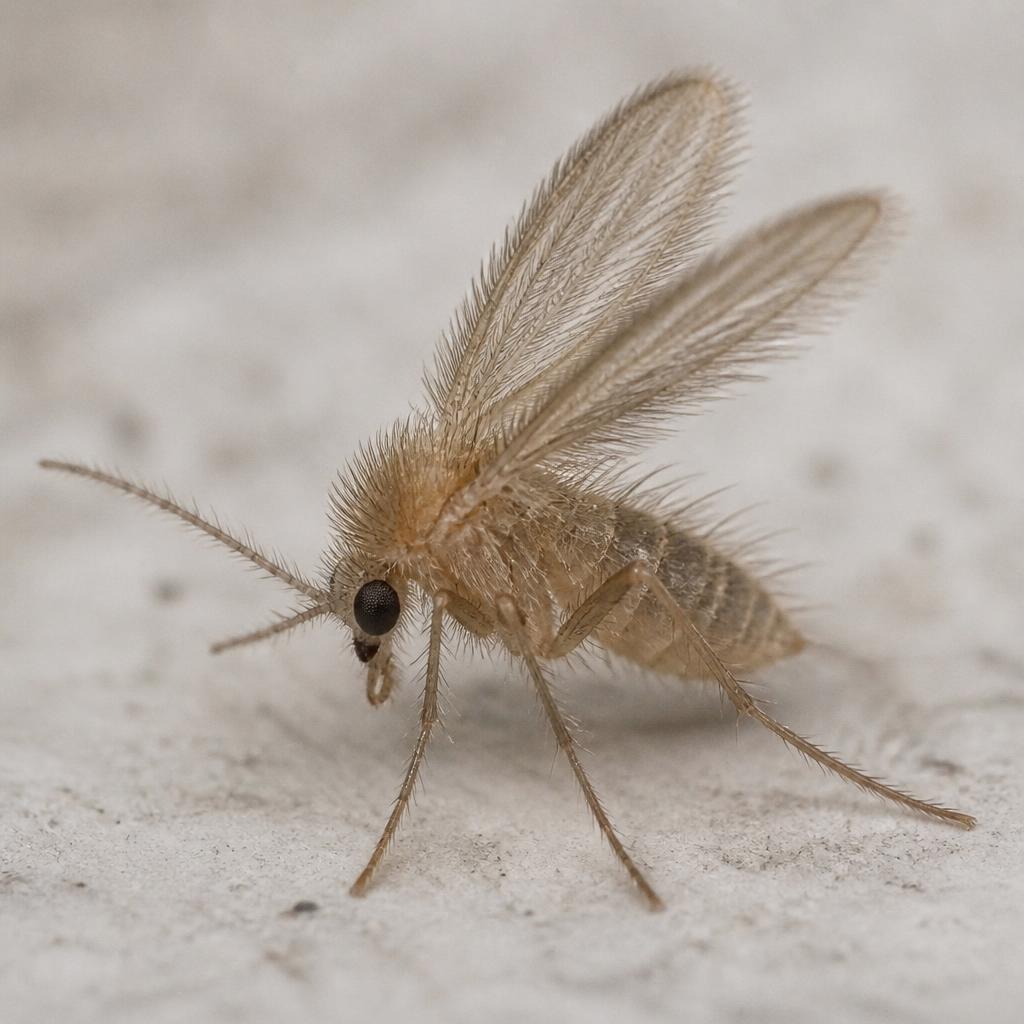
Blood Feeder
Sand Fly
Lutzomyia longipalpis
Biology
Lutzomyia longipalpis, a prominent species of sand fly, belongs to the family Psychodidae. These are tiny, hairy, moth-like flies, typically 2-4 mm in length, with distinctive large, black eyes and a humped thorax. Their wings are often held in a 'V' shape when at rest. The lifecycle encompasses eggs laid in moist organic matter, four larval instars, a pupal stage, and the adult. Complete development can take 30-60 days, highly dependent on temperature and humidity, with optimal conditions around 25-30°C and high relative humidity. Larvae are detritivores, feeding on decaying organic matter in the soil.
Behaviour
Lutzomyia longipalpis is primarily nocturnal and crepuscular, with peak biting activity occurring during twilight hours and throughout the night. Only the female sand fly bites, requiring a blood meal for egg development. They are weak fliers with a characteristic hopping or short-flight pattern, remaining close to the ground. Their small size allows them to easily penetrate typical insect screens. Foraging is guided by host cues like CO2 and body heat. Adults tend to stay within 50-100 meters of their breeding sites, exhibiting limited dispersal from their larval habitats.
Habits
Sand flies prefer habitats with high humidity, shade, and abundant organic matter. Harborage sites include animal burrows, tree hollows, rock crevices, stables, and human dwellings, especially in undisturbed, damp areas. Larval development occurs in moist soil rich in organic debris, rather than standing water. Conducive conditions include poor sanitation, accumulation of organic waste, presence of domestic animals, and unmanaged vegetation that provides shade and moisture. High humidity and warm temperatures significantly accelerate their breeding cycle and activity.
Control methods
- 1Eliminate waste and organic debris.
- 2Seal cracks and crevices in structures.
- 3Use fine-mesh screens on windows/doors.
- 4Apply residual insecticides to resting sites.
- 5Wear protective clothing.
- 6Utilize insecticide-treated bed nets.
Tailored to Sand Fly
IPM Procedure Checklist
Inspection
- Survey interior and exterior for evidence and conducive conditions
- Document findings with photos and a site map
- Place monitors to confirm activity
Identification
- Confirm Sand Fly (Lutzomyia longipalpis) — not a look-alike
- Note life stage and risk level: High
- Capture clear photos and samples for the record
Action Thresholds
- Zero-tolerance: act on first confirmed sighting
- Notify client and document the trigger event
- Prioritize health and regulatory risk in the plan
Prevention
- Exclude entry points and harborage
- Improve sanitation and moisture control
- Modify habitat around the structure
Control Methods
- Eliminate waste and organic debris.
- Seal cracks and crevices in structures.
- Use fine-mesh screens on windows/doors.
- Apply residual insecticides to resting sites.
Monitoring & Evaluation
- Service monitors on schedule and trend captures
- Re-inspect for Sand Fly activity at follow-up
- Adjust tactics based on data; report findings to client