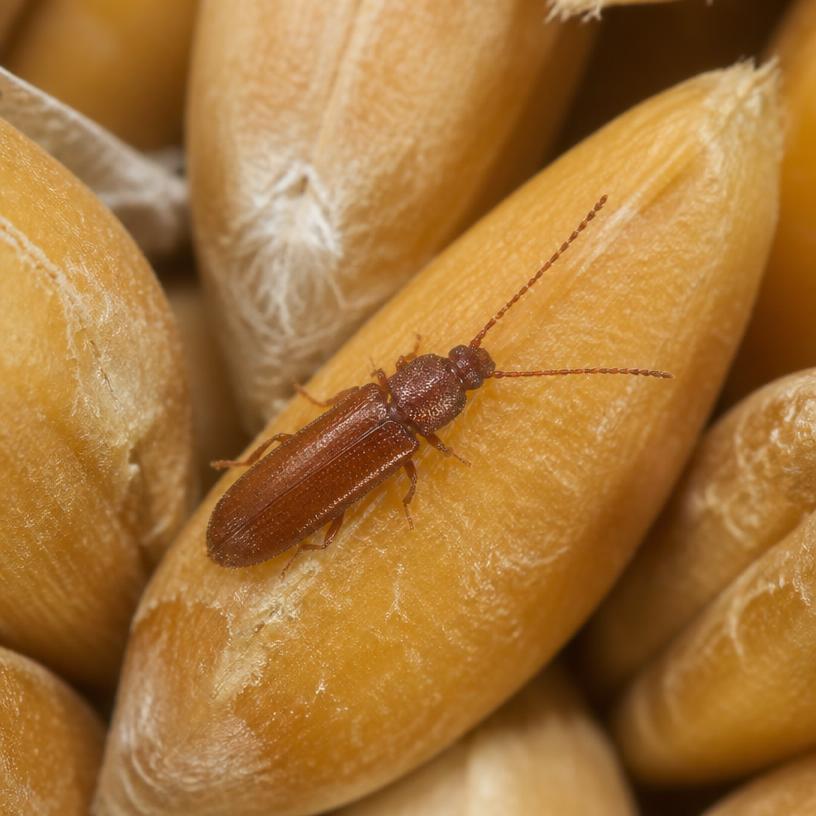
Stored Product Pest
Rusty Grain Beetle
Cryptolestes ferrugineus
Biology
A very small 1.5–2 mm extremely flat, shiny rust-red laemophloeid with thread-like antennae nearly as long as the body. It is the most cold-tolerant of the common grain beetles and can complete a generation in about three weeks at 33°C.
Behaviour
Adults and larvae feed on the germ of damaged kernels and on grain dust, and they thrive in the moist, warm pockets that form at the top and centre of a bin. Its cold tolerance lets populations survive winters that suppress other stored-grain beetles.
Habits
A major bin pest of wheat, barley and canola in temperate grain-growing regions. Hot spots caused by uneven moisture or insufficient aeration are the classic focus. Fine material and broken kernels concentrated in the bin core provide ideal conditions.
Control methods
- 1Level and core the grain to remove fines after filling
- 2Aerate to keep grain cool and evenly dry
- 3Monitor bin temperature for developing hot spots
- 4Clean bins and handling equipment before harvest
- 5Use probe traps within the grain mass to detect early
- 6Turn or transfer grain if a hot spot appears
- 7Fumigate through a licensed applicator when thresholds are exceeded
Tailored to Rusty Grain Beetle
IPM Procedure Checklist
Inspection
- Inspect grain, spices, pet food and dry goods for larvae and webbing
- Deploy pheromone monitors near storage and shelving
- Check spillage in seams, cracks and shelf liners
Identification
- Confirm Rusty Grain Beetle (Cryptolestes ferrugineus) — not a look-alike
- Note life stage and risk level: High
- Capture clear photos and samples for the record
Action Thresholds
- Zero-tolerance: act on first confirmed sighting
- Notify client and document the trigger event
- Prioritize health and regulatory risk in the plan
Prevention
- Rotate stock FIFO; reject damaged packaging at receiving
- Store products in airtight containers
- Maintain low humidity and clean storage surfaces
Control Methods
- Level and core the grain to remove fines after filling
- Aerate to keep grain cool and evenly dry
- Monitor bin temperature for developing hot spots
- Clean bins and handling equipment before harvest
Monitoring & Evaluation
- Service monitors on schedule and trend captures
- Re-inspect for Rusty Grain Beetle activity at follow-up
- Adjust tactics based on data; report findings to client