Rodent
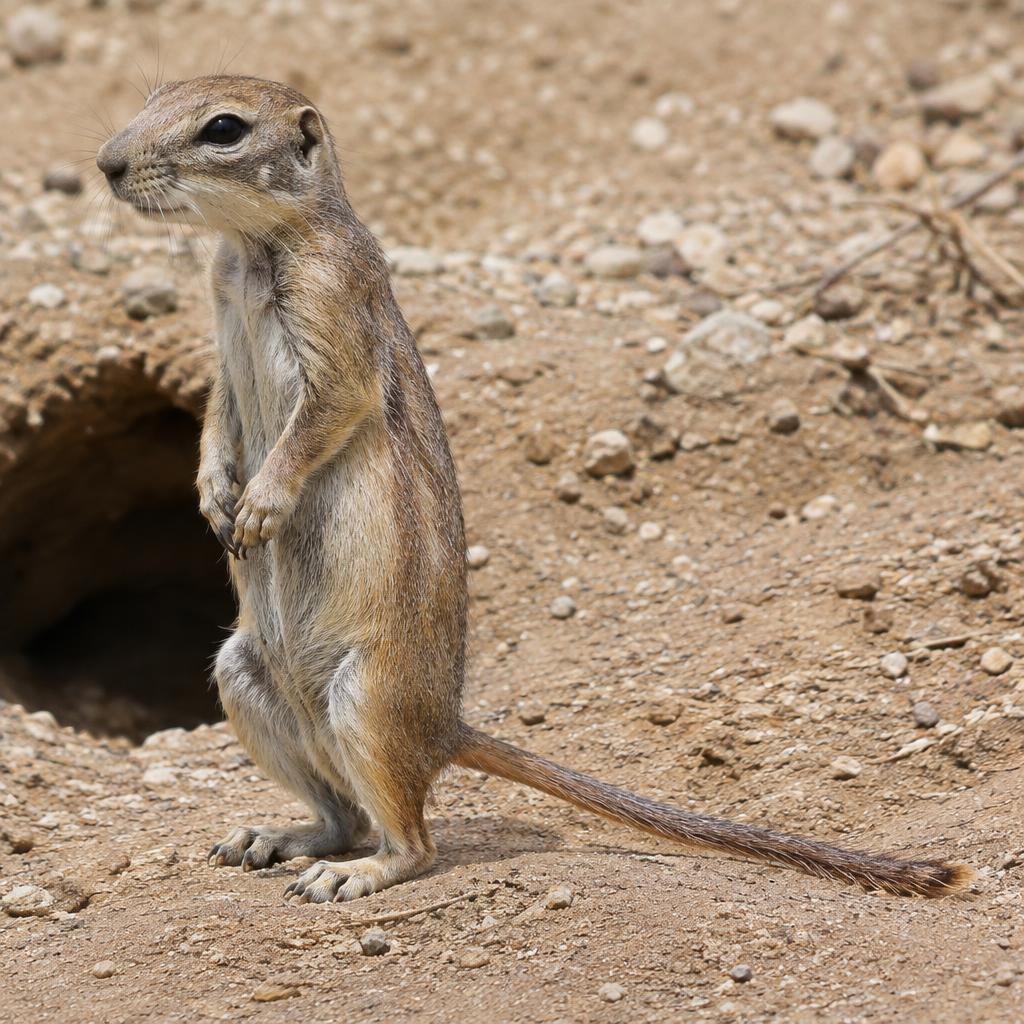
Round-tailed Ground Squirrel
Xerospermophilus tereticaudus
Biology
Xerospermophilus tereticaudus is a small desert ground squirrel, 18–24 cm total length, with a slender body, small ears, and a long thin tail held close to the body. It is tan to buff in color and well-adapted to arid environments.
Behaviour
Round-tailed ground squirrels are diurnal burrowers that feed on seeds, cactus fruit, grasses, and insects. They live in loose colonies and create extensive burrow systems with multiple entrances in sandy or gravelly soils.
Habits
In desert suburbs they dig burrows under rock features, patios, foundations, and road shoulders. Damage includes undermined hardscape, trip hazards, garden raids, and nesting that attracts predators such as snakes and coyotes.
Control methods
- 1Bury hardware cloth or concrete around patios and foundations
- 2Fill inactive burrows with gravel and soil
- 3Reduce ground-level food sources such as fallen fruit and birdseed
- 4Use live traps or approved rodenticides where regulations allow
- 5Maintain bare ground buffers to discourage colonization near structures
- 6Coordinate with pest-control professionals in sensitive desert habitats
Tailored to Round-tailed Ground Squirrel
IPM Procedure Checklist
Inspection
- Locate runways, droppings, rub marks and gnaw damage
- Identify entry points (gaps ≥6 mm) and harborage
- Place tracking patches or non-toxic monitors
Identification
- Confirm Round-tailed Ground Squirrel (Xerospermophilus tereticaudus) — not a look-alike
- Note life stage and risk level: Low
- Capture clear photos and samples for the record
Action Thresholds
- Tolerate low-level activity outside sensitive zones
- Act if activity moves indoors or near food
- Review threshold seasonally with the client
Prevention
- Exclude with steel wool, hardware cloth and door sweeps
- Trim vegetation 0.5 m from structure; clear debris
- Secure trash, pet food and stored grain
Control Methods
- Bury hardware cloth or concrete around patios and foundations
- Fill inactive burrows with gravel and soil
- Reduce ground-level food sources such as fallen fruit and birdseed
- Use live traps or approved rodenticides where regulations allow
Monitoring & Evaluation
- Service monitors on schedule and trend captures
- Re-inspect for Round-tailed Ground Squirrel activity at follow-up
- Adjust tactics based on data; report findings to client