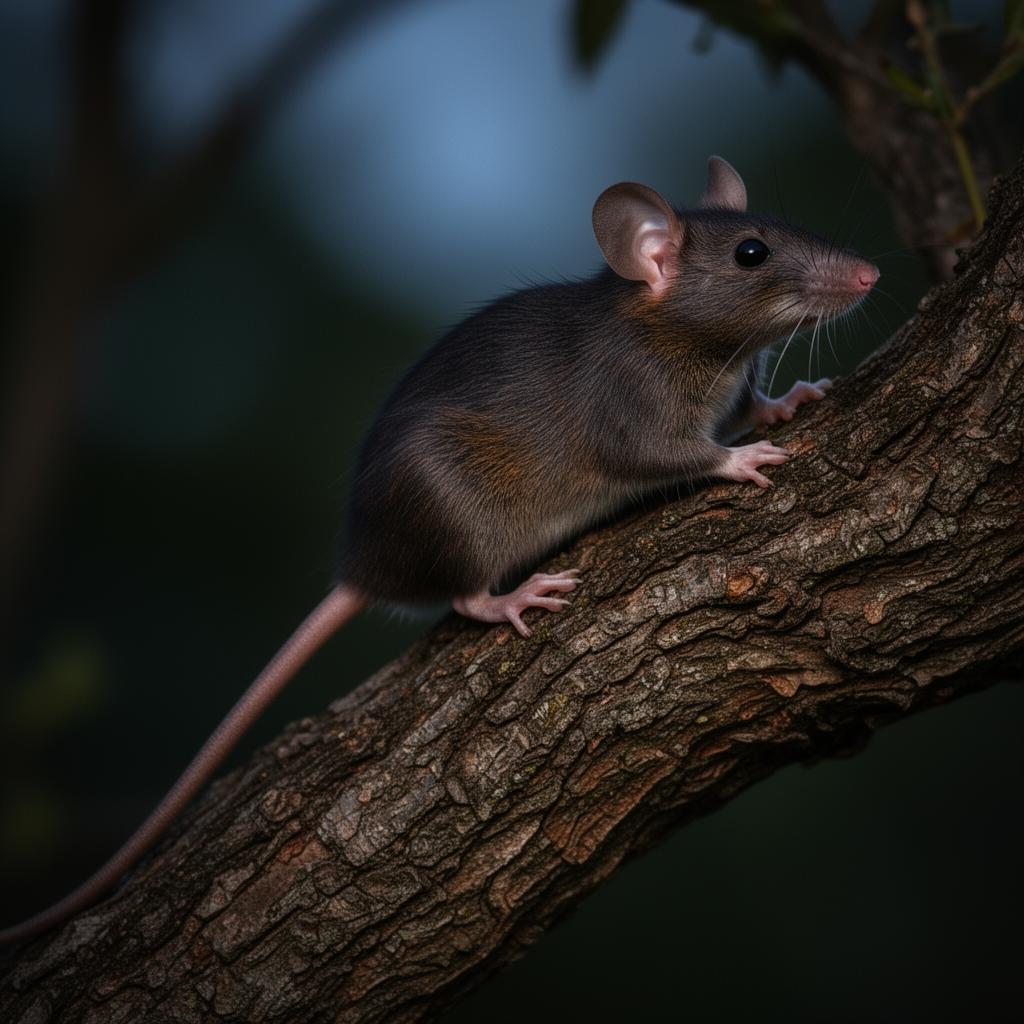
Rodent
Roof Rat
Rattus rattus
Biology
The roof rat, scientific name *Rattus rattus*, is a medium-sized rodent typically weighing 150-250 grams, with a slender body and a distinctive pointed muzzle. Its tail, noticeably longer than its head and body combined (18-25 mm vs. 15-20 mm), and large, hairless ears are key distinguishing features from the Norway rat. Under optimal conditions, a female can produce 4-6 litters annually, each comprising 5-8 pups, reaching sexual maturity in approximately 3-4 months. Their lifespan generally ranges from 12-18 months in the wild, but can extend up to three years under ideal laboratory conditions. They thrive in warm, humid environments, with ideal temperatures between 20-30°C and relative humidity above 50%, which expedites their development and reproductive success.
Behaviour
Roof rats are predominantly nocturnal, with peak activity occurring shortly after dusk and before dawn, though they can be observed during the day in heavily infested areas or when disturbed. They exhibit complex social structures, living in colonies with established dominance hierarchies, and use a variety of olfactory cues, including urine and pheromones, for communication and territory marking. Their agility makes them expert climbers, utilizing utility lines, branches, and rough surfaces to travel vertically and horizontally for food and harborage. As omnivores, their diet is highly opportunistic, favoring fruits, nuts, and grains, but also consuming insects, snails, and other readily available food sources. They are significant vectors for pathogens like *Yersinia pestis* (plague), *Leptospira interrogans* (leptospirosis), and various *Salmonella* species, posing substantial public health risks.
Habits
Roof rats are arboreal and fossorial, preferring elevated harborage locations such as attics, false ceilings, lofts, palm trees, and dense foliage in vines and shrubs, rarely excavating ground burrows. Their foraging range typically extends 30-60 meters from their nest, but can be significantly further in areas with scarce resources. They follow established runways along pipes, wires, and tree branches, leaving behind characteristic rub marks and droppings as indicators of activity. Conducive conditions for infestation include overgrown vegetation adjacent to structures, readily available food sources (e.g., fruit trees, pet food left outdoors), and unsealed entry points larger than 1.5 cm. Technicians should look for gnaw marks on electrical wiring, droppings (spindle-shaped, ~12 mm long) in undisturbed areas, and rustling sounds in walls or ceilings at night.
Control methods
- 1Trim trees and vines 4 ft from roofline
- 2Snap traps in attic on rafters along travel paths
- 3Tamper-resistant bait stations in elevated voids
- 4Seal roof vents, soffits and utility penetrations
- 5Cover chimneys with mesh caps
- 6Remove fruit drops and bird-feeder spillage
Tailored to Roof Rat
IPM Procedure Checklist
Inspection
- Locate runways, droppings, rub marks and gnaw damage
- Identify entry points (gaps ≥6 mm) and harborage
- Place tracking patches or non-toxic monitors
Identification
- Confirm Roof Rat (Rattus rattus) — not a look-alike
- Note life stage and risk level: Severe
- Capture clear photos and samples for the record
Action Thresholds
- Zero-tolerance: act on first confirmed sighting
- Notify client and document the trigger event
- Prioritize health and regulatory risk in the plan
Prevention
- Exclude with steel wool, hardware cloth and door sweeps
- Trim vegetation 0.5 m from structure; clear debris
- Secure trash, pet food and stored grain
Control Methods
- Trim trees and vines 4 ft from roofline
- Snap traps in attic on rafters along travel paths
- Tamper-resistant bait stations in elevated voids
- Seal roof vents, soffits and utility penetrations
Monitoring & Evaluation
- Service monitors on schedule and trend captures
- Re-inspect for Roof Rat activity at follow-up
- Adjust tactics based on data; report findings to client