Blood Feeder
Rocky Mountain Wood Tick
Dermacentor andersoni
Biology
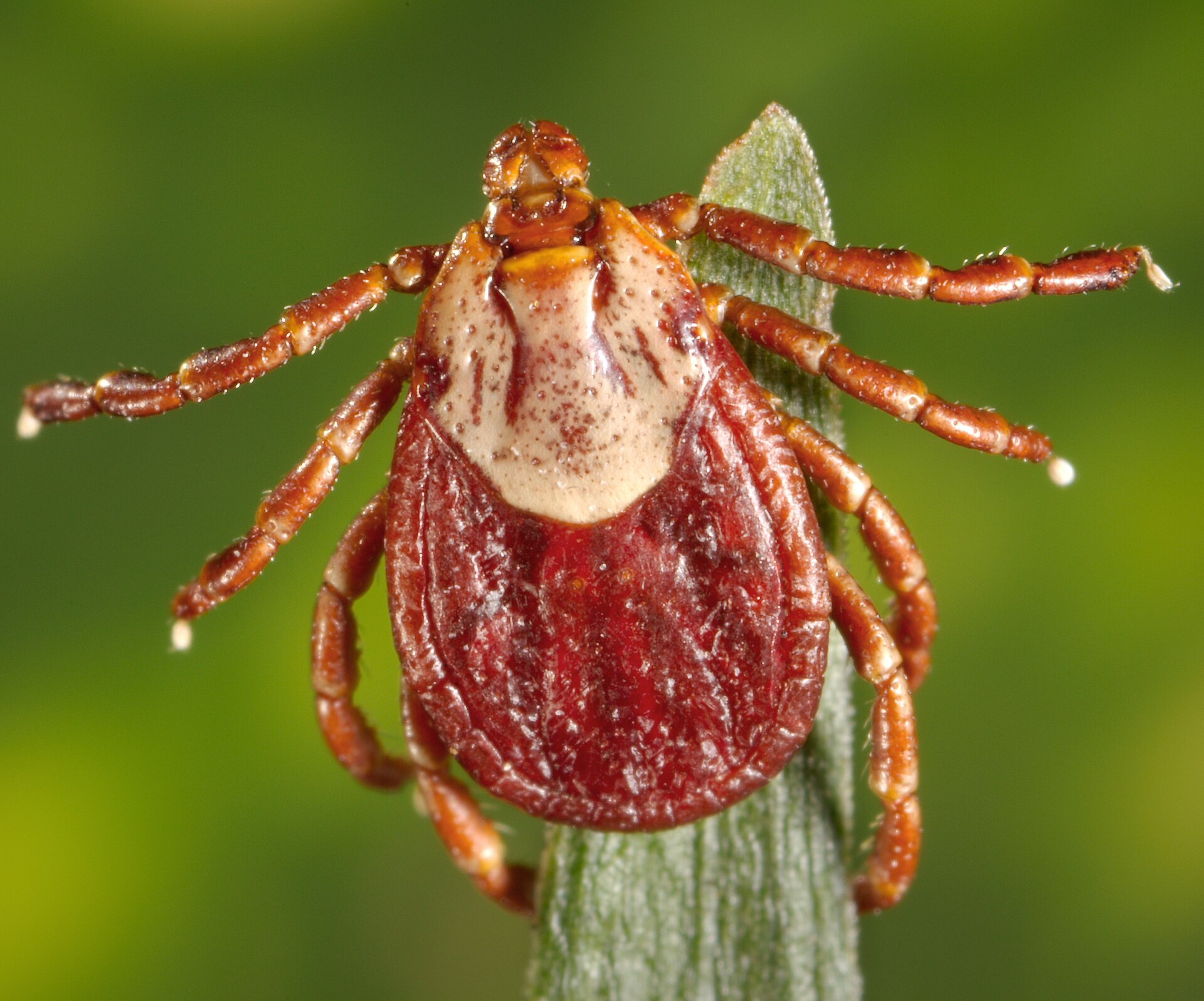
The Rocky Mountain wood tick, Dermacentor andersoni (Stiles), is a three-host hard tick within the family Ixodidae, notorious for its role in transmitting several human diseases. Adults are reddish-brown, with males exhibiting extensive white or silvery markings on their scutum, while females have a smaller, less ornate scutum, expanding significantly when engorged. Its life cycle can extend for one to three years, undergoing complete metamorphosis from egg to larva, nymph, and adult. Each active stage requires a blood meal from a different host to progress. Females lay thousands of eggs in the environment after engorgement.
Behaviour
All active life stages of D. andersoni are obligate blood feeders. Larvae and nymphs primarily parasitize small to medium-sized mammals like rodents, rabbits, and ground squirrels, while adults prefer larger mammals, including deer, livestock, and humans. Questing behavior is typical, where ticks climb onto vegetation to wait for a passing host. They are active during warmer months, typically from early spring to mid-summer. After feeding for several days, they detach from the host and drop to the ground to molt or, in the case of engorged adult females, to lay eggs.
Habits
D. andersoni inhabits diverse environments across western North America, ranging from wooded areas and shrublands to grasslands and high-altitude forests. They are particularly prevalent in areas with abundant wildlife and moderate vegetation. Conducive conditions for tick populations include ample hosts, tall grasses, dense brush, and leaf litter, which provide both questing sites and protective microclimates for molting and egg development. These ticks are significant vectors of Rocky Mountain spotted fever, Colorado tick fever, and tularemia, and can also cause tick paralysis.
Control methods
- 1Perform thorough tick checks after outdoor activities.
- 2Wear protective clothing and use EPA-approved repellents.
- 3Remove leaf litter and keep grass mowed in yards.
- 4Avoid walking through tall grass and dense vegetation.
- 5Treat pets with veterinarian-recommended tick preventatives.
- 6Consider targeted acaricide application in infested areas.
Tailored to Rocky Mountain Wood Tick
IPM Procedure Checklist
Inspection
- Survey interior and exterior for evidence and conducive conditions
- Document findings with photos and a site map
- Place monitors to confirm activity
Identification
- Confirm Rocky Mountain Wood Tick (Dermacentor andersoni) — not a look-alike
- Note life stage and risk level: High
- Capture clear photos and samples for the record
Action Thresholds
- Zero-tolerance: act on first confirmed sighting
- Notify client and document the trigger event
- Prioritize health and regulatory risk in the plan
Prevention
- Exclude entry points and harborage
- Improve sanitation and moisture control
- Modify habitat around the structure
Control Methods
- Perform thorough tick checks after outdoor activities.
- Wear protective clothing and use EPA-approved repellents.
- Remove leaf litter and keep grass mowed in yards.
- Avoid walking through tall grass and dense vegetation.
Monitoring & Evaluation
- Service monitors on schedule and trend captures
- Re-inspect for Rocky Mountain Wood Tick activity at follow-up
- Adjust tactics based on data; report findings to client