All pests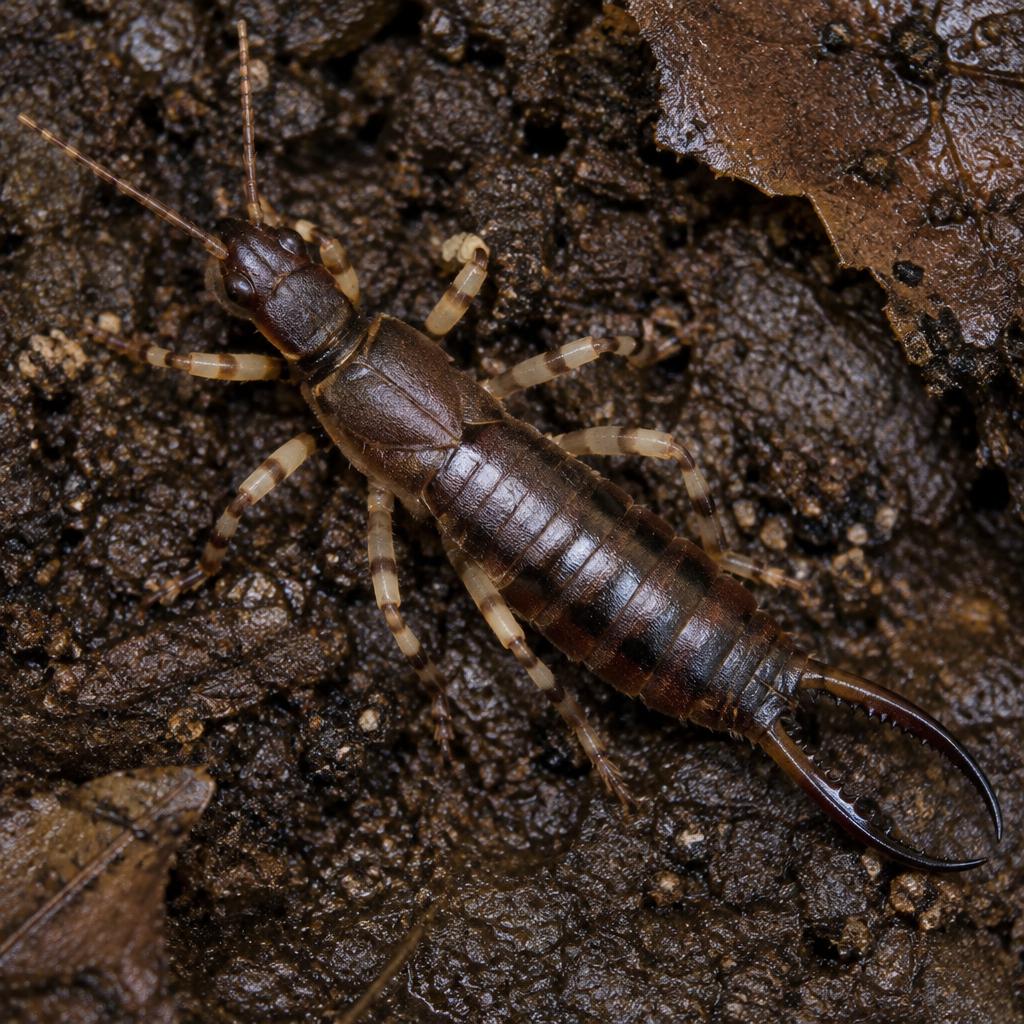 View full procedure
Insect
Ring-legged Earwig
Euborellia annulipes
Low Risk
Biology
Euborellia annulipes is a wingless dark brown earwig 12–16 mm long with distinctive pale bands on the legs and short curved forceps. Females guard eggs and early nymphs in soil chambers.
Behaviour
It is nocturnal and moisture-dependent, sheltering by day under mulch, stones, boards, and pot rims. It is omnivorous, feeding on decaying plant matter, seedlings, and small insects, and will scavenge indoors.
Habits
Indoor sightings follow heavy rain or drought as earwigs migrate toward damp slab edges, garages, and bathrooms. They enter through door sweeps, weep holes, and utility penetrations near heavy mulch.
Control methods
- 1Pull mulch and ground cover back 15 cm from the foundation
- 2Correct drainage and fix leaking spigots and irrigation heads
- 3Install tight door sweeps and screen weep holes
- 4Remove boards, stones, and debris that hold moisture
- 5Switch outdoor lighting to warm low-attraction LEDs
- 6Apply a labelled perimeter treatment at the slab edge
Tailored to Ring-legged Earwig
IPM Procedure Checklist
Step 1
Inspection
- Inspect harborage near food, water and warmth
- Check cracks, voids and appliance interiors
- Place sticky monitors at suspected hot-spots
Step 2
Identification
- Confirm Ring-legged Earwig (Euborellia annulipes) — not a look-alike
- Note life stage and risk level: Low
- Capture clear photos and samples for the record
Step 3
Action Thresholds
- Tolerate low-level activity outside sensitive zones
- Act if activity moves indoors or near food
- Review threshold seasonally with the client
Step 4
Prevention
- Seal cracks, plumbing penetrations and wall voids
- Eliminate moisture sources and standing water
- Improve sanitation: sealed food storage, grease removal
Step 5
Control Methods
- Pull mulch and ground cover back 15 cm from the foundation
- Correct drainage and fix leaking spigots and irrigation heads
- Install tight door sweeps and screen weep holes
- Remove boards, stones, and debris that hold moisture
Step 6
Monitoring & Evaluation
- Service monitors on schedule and trend captures
- Re-inspect for Ring-legged Earwig activity at follow-up
- Adjust tactics based on data; report findings to client