Bird
Red-winged Blackbird
Agelaius phoeniceus
Biology
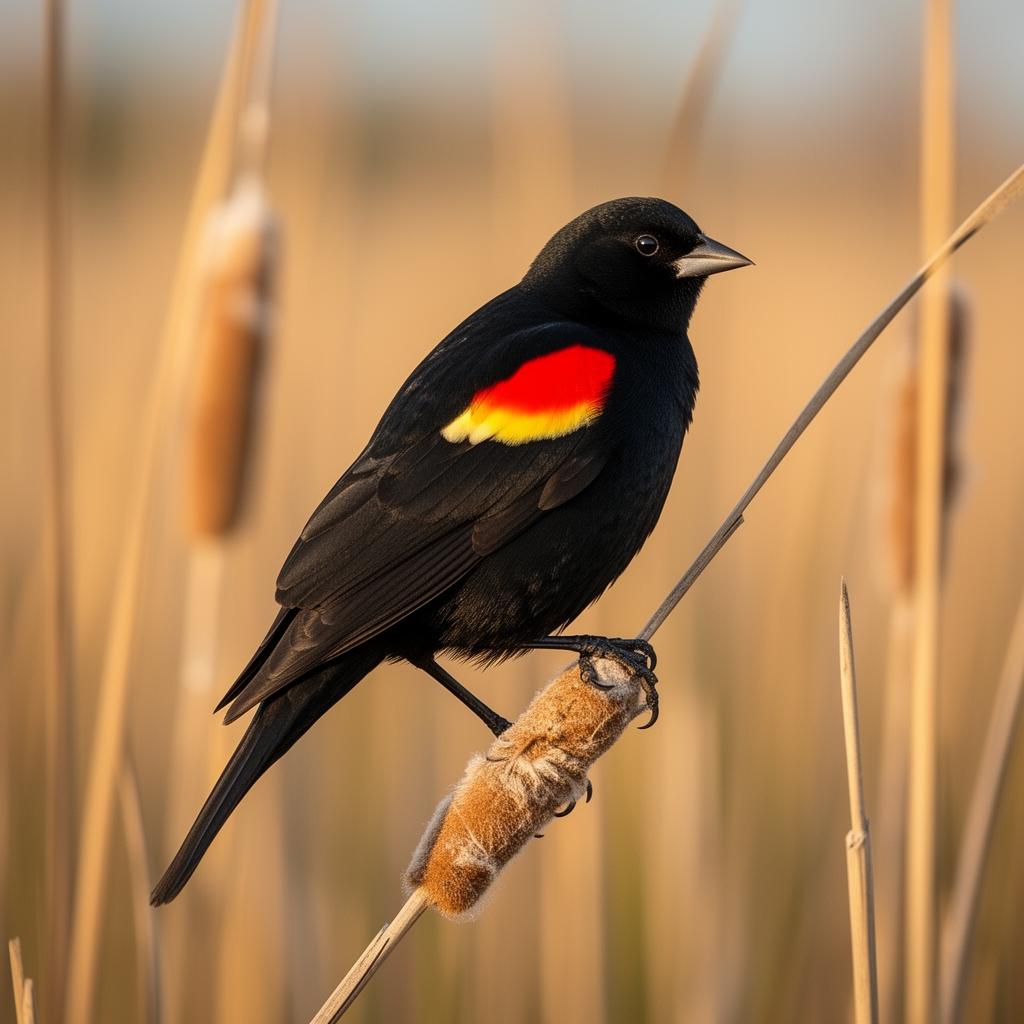
The red-winged blackbird, Agelaius phoeniceus (Order Passeriformes, Family Icteridae), is a medium-sized songbird, typically 17-23 cm in length. Males are striking with glossy black plumage and prominent red and yellow epaulets on their wings, especially visible during display. Females are duller, streaky brown, resembling a large sparrow, with reddish or pinkish tinges on their shoulders. Breeding occurs from April-August. Nests are woven cups, usually attached to vertical stems in dense marsh vegetation. Clutch size is typically 2-4 pale blue-green eggs with dark markings, incubated for 11-12 days. Young fledge in about 10-14 days.
Behaviour
Male red-winged blackbirds are highly territorial, aggressively defending their breeding territories from other males and predators with elaborate displays of their red epaulets and vocalizations. Their distinctive 'conk-la-ree!' song is a common sound in wetlands. Females are often polygamous within a male's territory. Outside the breeding season, they form large, often mixed-species, flocks for foraging and roosting. They probe into vegetation and ground litter for insects and seeds.
Habits
A. phoeniceus is an omnivorous species, primarily consuming insects during the breeding season and shifting to seeds and grains during the non-breeding season. They are known to be significant agricultural pests, particularly to corn and other grain crops. Foraging occurs on the ground, in shallow water, and within vegetation. Harbors include dense emergent vegetation in marshes, wet meadows, and agricultural fields for nesting and roosting. Conducive conditions include wetlands adjacent to agricultural fields, cattail marshes, and suburban areas with suitable aquatic vegetation providing both food and cover.
Control methods
- 1Remove all accessible seed sources.
- 2Employ reflective Mylar strips.
- 3Trim dense vegetation around property.
- 4Install bird netting for crop protection.
- 5Use auditory distress calls.
- 6Discourage feeding by residents.
Tailored to Red-winged Blackbird
IPM Procedure Checklist
Inspection
- Identify roosting, loafing and nesting sites
- Document droppings, feathers and damage to structure
- Note food and water sources attracting birds
Identification
- Confirm Red-winged Blackbird (Agelaius phoeniceus) — not a look-alike
- Note life stage and risk level: Low
- Capture clear photos and samples for the record
Action Thresholds
- Tolerate low-level activity outside sensitive zones
- Act if activity moves indoors or near food
- Review threshold seasonally with the client
Prevention
- Install spikes, netting or shock track on ledges
- Remove standing water and accessible food
- Close openings to attics, vents and signage voids
Control Methods
- Remove all accessible seed sources.
- Employ reflective Mylar strips.
- Trim dense vegetation around property.
- Install bird netting for crop protection.
Monitoring & Evaluation
- Service monitors on schedule and trend captures
- Re-inspect for Red-winged Blackbird activity at follow-up
- Adjust tactics based on data; report findings to client