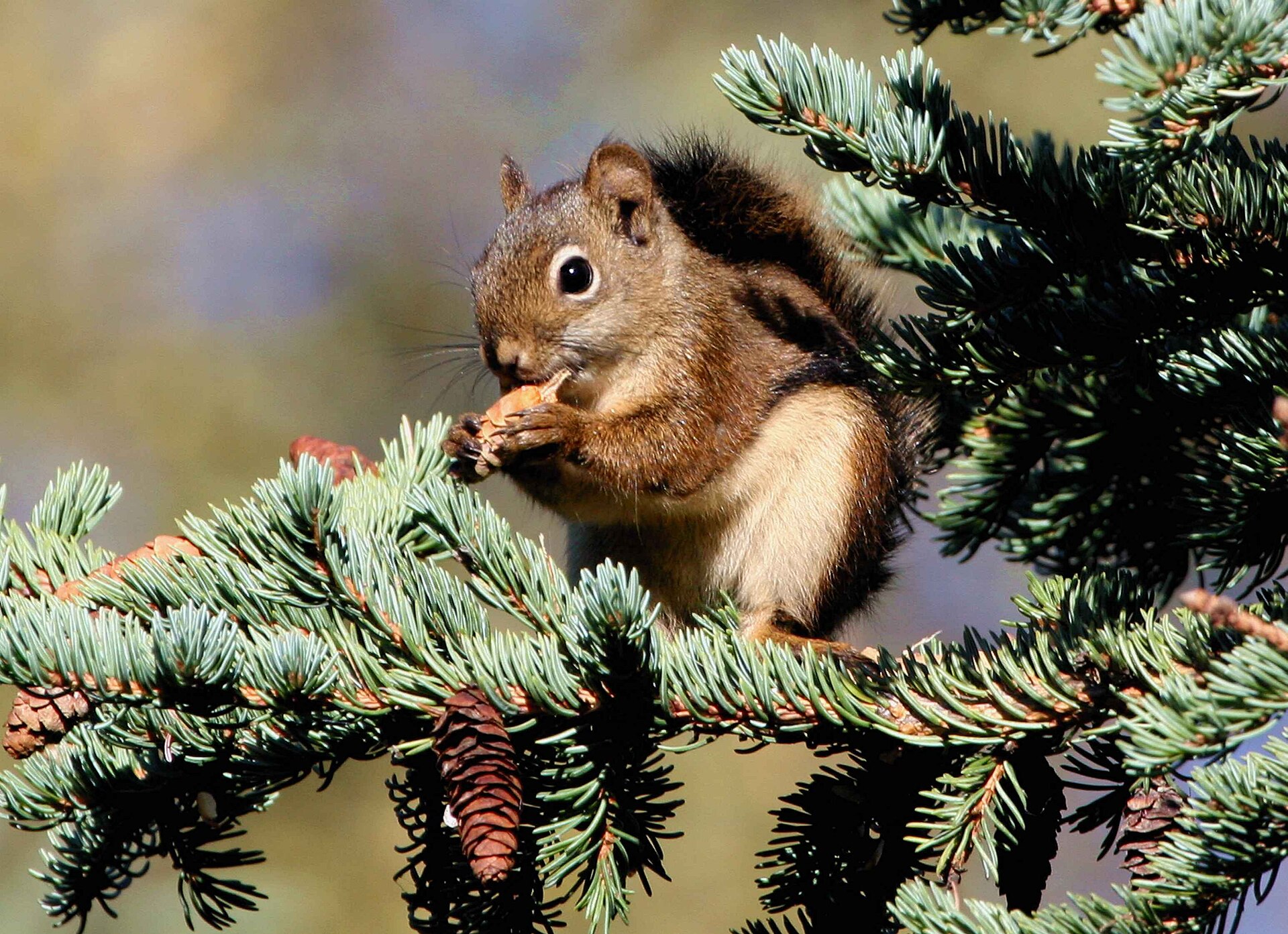
Rodent
Red Squirrel
Tamiasciurus hudsonicus
Biology
Tamiasciurus hudsonicus, known as the American red squirrel, is a small, agile tree squirrel native to North America. Adults typically measure 28-35 cm in total length and weigh 200-280g. Their fur is reddish-brown dorsally with a white or cream-colored belly, and they often have a distinctive white eye ring. Red squirrels are diurnal and highly territorial. They generally breed once or twice a year, typically in early spring and mid-summer, producing litters of 3-7 young after a gestation period of 31-35 days. Young are weaned at approximately 7-8 weeks of age. Their average lifespan in the wild is 3-5 years.
Behaviour
Red squirrels are famously vocal and highly territorial, vigorously defending their 'middens' – large caches of conifer cones – from intruders with chattering calls, tail flicks, and aggressive chases. They are primarily arboreal but will forage on the ground. Their diet consists mainly of conifer seeds, but also includes nuts, fungi, bird eggs, and small vertebrates. Red squirrels are scatter-hoarders, though they extensively cache food in central middens, often creating underground tunnels. In human dwellings, their incessant gnawing to maintain dental health can damage wooden structures, electrical wiring, and insulation, creating fire hazards and structural instability.
Habits
Red squirrels primarily inhabit coniferous and mixed forests, where they construct elaborate middens, often at the base of trees, under logs, or within stumps. These middens provide food storage and protection from predators and extreme weather. Nests are typically built in tree cavities or dreys in tree branches. In residential areas adjacent to wooded environments, red squirrels may seek harborage in attics, wall voids, and crawl spaces, particularly during cold weather or for nesting. Conducive conditions include mature conifers providing abundant food and shelter, and structural deficiencies such such as unsealed eaves, damaged soffits, or uncapped chimneys which allow easy access to building interiors. They are active year-round.
Control methods
- 1Seal all openings with rodent-proof materials.
- 2Trim overhanging tree branches.
- 3Cap chimneys and screen vents.
- 4Remove cached food sources from structures.
- 5Set live traps for removal.
- 6Implement exclusion barriers on trees.
Tailored to Red Squirrel
IPM Procedure Checklist
Inspection
- Locate runways, droppings, rub marks and gnaw damage
- Identify entry points (gaps ≥6 mm) and harborage
- Place tracking patches or non-toxic monitors
Identification
- Confirm Red Squirrel (Tamiasciurus hudsonicus) — not a look-alike
- Note life stage and risk level: Moderate
- Capture clear photos and samples for the record
Action Thresholds
- Trigger action when monitor counts trend up
- Re-evaluate weekly during active season
- Document trigger criteria in the IPM plan
Prevention
- Exclude with steel wool, hardware cloth and door sweeps
- Trim vegetation 0.5 m from structure; clear debris
- Secure trash, pet food and stored grain
Control Methods
- Seal all openings with rodent-proof materials.
- Trim overhanging tree branches.
- Cap chimneys and screen vents.
- Remove cached food sources from structures.
Monitoring & Evaluation
- Service monitors on schedule and trend captures
- Re-inspect for Red Squirrel activity at follow-up
- Adjust tactics based on data; report findings to client