Stinging Insect
Red Paper Wasp
Polistes carolina
Biology
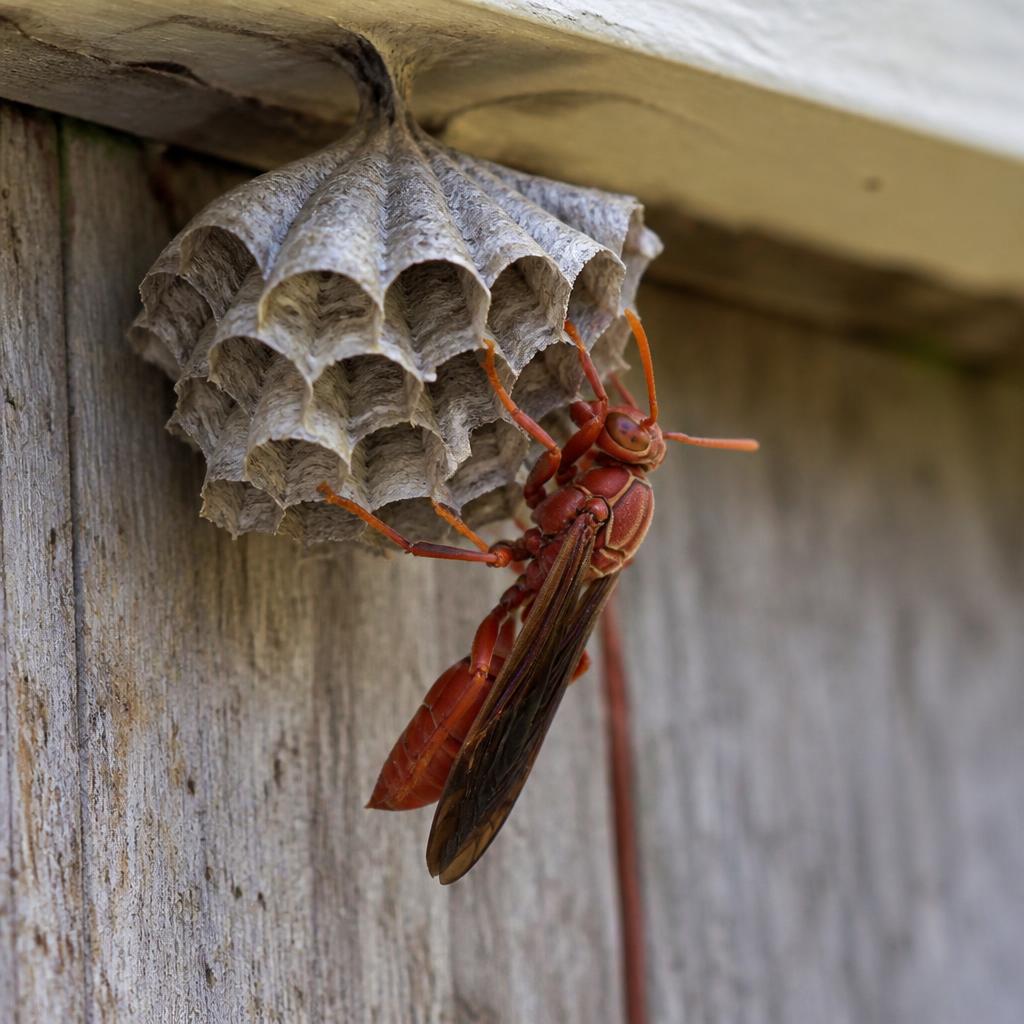
Polistes carolina (Linnaeus), native to North America, is a social wasp within the family Vespidae. This species is easily identified by its reddish-brown to dark red body coloration, often with subtle darker markings, and a body length ranging from 17-20 mm. The wings are translucent dark reddish-brown. Nests are constructed from paper-like material, typically forming a single, open comb of hexagonal cells, similar to other Polistes species. The queen initiates the nest in spring after overwintering, laying eggs and raising the first brood of workers.
Behaviour
P. carolina are opportunistic predators, feeding their larvae with caterpillars, beetle larvae, and other insects captured from surrounding vegetation. Adult wasps feed on nectar, fruits, and honeydew. While generally not aggressive, they will sting defensively if their nest is disturbed or if they perceive a threat. Nests are commonly built in protected locations, particularly in hollow trees, under eaves, or within sheltered cavities. Colony size is moderate for paper wasps, typically ranging from a few dozen to over a hundred individuals.
Habits
Red paper wasps prefer warm, humid climates and are found throughout the southeastern and central United States. They commonly construct nests in secluded, protected spaces, including hollow trees, wall voids, attics, and beneath decks or eaves of buildings. These locations provide protection from weather and predators. Conducive conditions include readily available nesting sites in structural voids or sheltered outdoor areas. Proximity to gardens or natural areas with abundant insect prey also supports thriving colonies.
Control methods
- 1Locate and eradicate active nests.
- 2Apply residual insecticide sprays to nests.
- 3Perform nest removal at dusk or dawn.
- 4Seal cracks and openings in building exteriors.
- 5Install screens over attic vents and soffits.
- 6Reduce garden insect populations if necessary.
Tailored to Red Paper Wasp
IPM Procedure Checklist
Inspection
- Survey interior and exterior for evidence and conducive conditions
- Document findings with photos and a site map
- Place monitors to confirm activity
Identification
- Confirm Red Paper Wasp (Polistes carolina) — not a look-alike
- Note life stage and risk level: Moderate
- Capture clear photos and samples for the record
Action Thresholds
- Trigger action when monitor counts trend up
- Re-evaluate weekly during active season
- Document trigger criteria in the IPM plan
Prevention
- Exclude entry points and harborage
- Improve sanitation and moisture control
- Modify habitat around the structure
Control Methods
- Locate and eradicate active nests.
- Apply residual insecticide sprays to nests.
- Perform nest removal at dusk or dawn.
- Seal cracks and openings in building exteriors.
Monitoring & Evaluation
- Service monitors on schedule and trend captures
- Re-inspect for Red Paper Wasp activity at follow-up
- Adjust tactics based on data; report findings to client