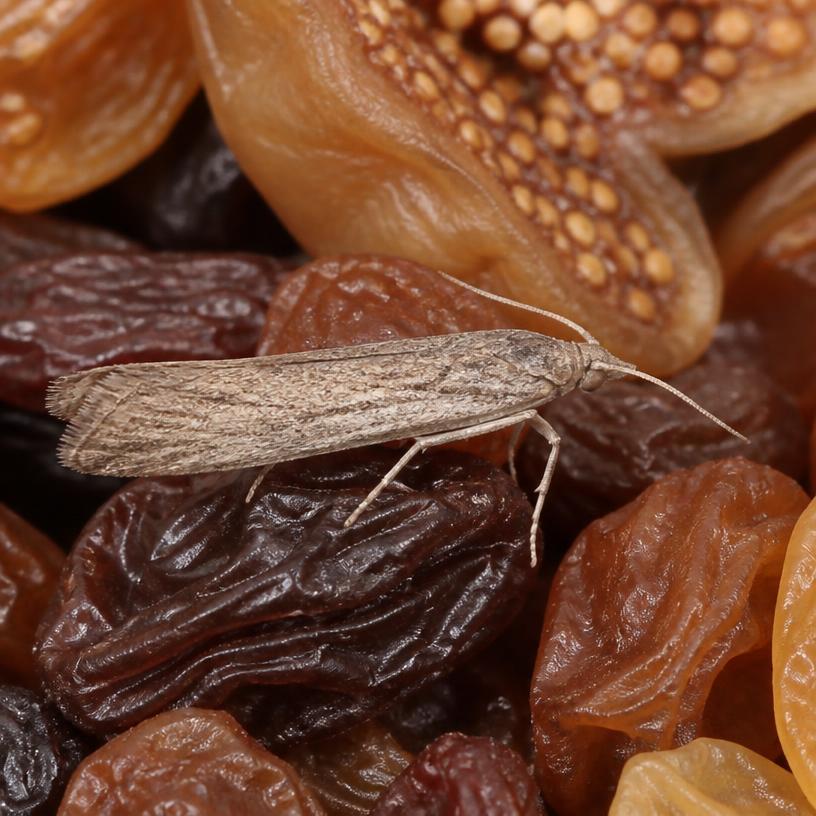
Stored Product Pest
Raisin Moth
Cadra figulilella
Biology
A small pale grey-brown pyralid with a 14–18 mm wingspan and plain, weakly marked forewings. Larvae are pinkish-white and about 12 mm long at maturity; several generations run through the warm season.
Behaviour
Larvae begin in the field on drying fruit and are carried into storage with the crop, where they continue feeding and webbing dried grapes, figs, dates and prunes. Pupation often occurs in soil or debris beneath drying trays, so the surrounding ground is part of the infestation.
Habits
A pest of dried-fruit production areas, packing houses and bulk dried fruit storage. Fruit left on the ground or on drying trays past its window is the main source. Warm dry regions with outdoor drying operations are most affected.
Control methods
- 1Harvest and dry fruit promptly and remove drop fruit
- 2Clean debris and fallen fruit under drying trays
- 3Cool or freeze dried fruit before bulk storage
- 4Use pheromone traps to monitor flight periods
- 5Pack finished fruit in sealed containers
- 6Fumigate or heat-treat incoming lots where warranted
- 7Keep storage areas clean and rotated
Tailored to Raisin Moth
IPM Procedure Checklist
Inspection
- Inspect grain, spices, pet food and dry goods for larvae and webbing
- Deploy pheromone monitors near storage and shelving
- Check spillage in seams, cracks and shelf liners
Identification
- Confirm Raisin Moth (Cadra figulilella) — not a look-alike
- Note life stage and risk level: Moderate
- Capture clear photos and samples for the record
Action Thresholds
- Trigger action when monitor counts trend up
- Re-evaluate weekly during active season
- Document trigger criteria in the IPM plan
Prevention
- Rotate stock FIFO; reject damaged packaging at receiving
- Store products in airtight containers
- Maintain low humidity and clean storage surfaces
Control Methods
- Harvest and dry fruit promptly and remove drop fruit
- Clean debris and fallen fruit under drying trays
- Cool or freeze dried fruit before bulk storage
- Use pheromone traps to monitor flight periods
Monitoring & Evaluation
- Service monitors on schedule and trend captures
- Re-inspect for Raisin Moth activity at follow-up
- Adjust tactics based on data; report findings to client