Mammal
Raccoon
Procyon lotor
Biology
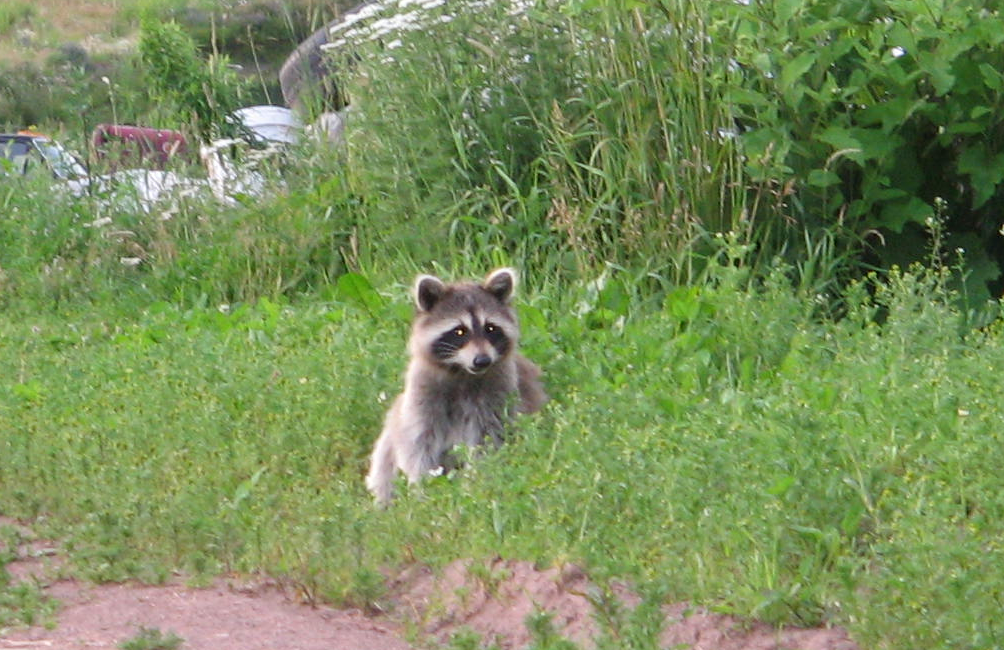
The raccoon, *Procyon lotor*, is a medium-sized mammal belonging to the family Procyonidae, characterized by its distinctive black facial mask and bushy, ringed tail, typically 20-30 cm in length. Adults usually weigh between 4 and 15 kg, with males being slightly larger, and measure 40-70 cm from head to rump. They possess five highly dexterous digits on each forepaw, enabling manipulation of objects with surprising precision, and non-retractable claws. Their breeding season typically occurs from late winter to early spring, with a gestation period of approximately 63 days, resulting in litters of 2-5 kits. While their average lifespan in the wild is 2-3 years, some individuals can live up to 10 years without predation or disease, especially in urban environments.
Behaviour
Raccoons are primarily nocturnal, opportunistic omnivores, displaying peak activity during twilight hours and throughout the night, although daytime activity can increase due to food scarcity or den disturbance. Their diet is incredibly varied, consuming fruits, nuts, insects, crustaceans, small rodents, birds, eggs, and anthropogenic food sources like pet food and garbage. Socially, they are often perceived as solitary, but female raccoons form kin-based social groups, while males may form small, transient groups during the breeding season. They exhibit complex foraging behaviors, often 'washing' food in water, a behavior thought to enhance sensory perception through moistened paws. They are significant vectors for rabies and the parasitic roundworm *Baylisascaris procyonis*, posing public health risks through their feces.
Habits
Raccoons demonstrate remarkable adaptability in establishing dens and foraging across diverse environments, from forests to highly urbanized landscapes. Preferred den sites in residential areas include chimneys, attics, soffits, crawl spaces, sheds, and abandoned structures, often chosen for protection during birthing and rearing young. Foraging patterns are dictated by scent-marking trails and exploring new food sources within a customary home range, typically 1-3 square miles in urban settings, but highly variable directly influenced by food availability. Evidence of raccoon presence includes damaged trash cans (often overturned with contents scattered), gnaw marks on structural components, disturbed pet feeders, and visible fecal matter, which may contain undigested food items and *Baylisascaris* eggs. Identifying these signs is crucial for effective pest management.
Control methods
- 1Secure trash in latching bins or rack
- 2Cap chimneys with steel screen
- 3Install one-way exit doors after kits relocate
- 4Bring pet food indoors at dusk
- 5Electric fence around garden and chicken coops
- 6Use a licensed wildlife operator — never handle directly
Tailored to Raccoon
IPM Procedure Checklist
Inspection
- Survey interior and exterior for evidence and conducive conditions
- Document findings with photos and a site map
- Place monitors to confirm activity
Identification
- Confirm Raccoon (Procyon lotor) — not a look-alike
- Note life stage and risk level: High
- Capture clear photos and samples for the record
Action Thresholds
- Zero-tolerance: act on first confirmed sighting
- Notify client and document the trigger event
- Prioritize health and regulatory risk in the plan
Prevention
- Exclude entry points and harborage
- Improve sanitation and moisture control
- Modify habitat around the structure
Control Methods
- Secure trash in latching bins or rack
- Cap chimneys with steel screen
- Install one-way exit doors after kits relocate
- Bring pet food indoors at dusk
Monitoring & Evaluation
- Service monitors on schedule and trend captures
- Re-inspect for Raccoon activity at follow-up
- Adjust tactics based on data; report findings to client