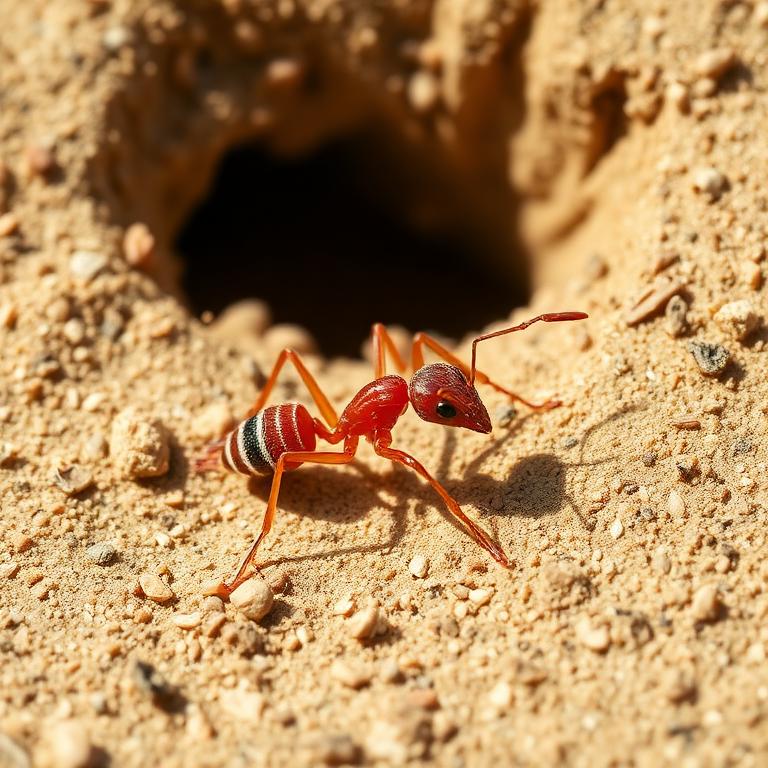
Ant
Pyramid Ant
Dorymyrmex bureni
Biology
Pyramid ants are fast-moving reddish to reddish-brown ants 2–3 mm long, named for the distinct cone- or pyramid-shaped projection on the top rear of the thorax — a reliable field character. Colonies are usually single-queened and modest in size, nesting in soil with a small crater of loose excavated sand around the entrance. They have no sting and emit a mild odour when crushed. Alates fly in late summer and autumn, and colonies persist for several years in the same sunny patch of ground.
Behaviour
Workers are strongly day-active and heat-tolerant, foraging in full sun when other species shelter, and are notable for aggressively raiding and harassing red imported fire ants, sometimes decapitating foragers at the mound edge — a useful natural check. Diet is honeydew plus scavenged and captured insects. They readily trail into buildings for sweets but do not damage structures, bite meaningfully, or sting; complaints are about crater mounds in turf and indoor trailing.
Habits
Nesting is in open, dry, sunny, sandy or well-drained soil: lawns, sandy embankments, sidewalk and driveway edges, golf course roughs, and thin turf, usually with no vegetation shading the entrance. Foragers enter buildings through slab joints, weep holes and door thresholds. Conducive conditions include sparse dry turf, sandy soils, and unsealed slab and pavement joints. Inspect for the low sand craters in sunny areas, then trace the trails from those mounds to any indoor activity.
Control methods
- 1Locate crater nests in sunny turf and treat them directly
- 2Use sweet liquid or granular baits along active trails
- 3Seal slab joints, weep holes and thresholds to stop indoor trailing
- 4Improve turf density and irrigation to discourage open sandy nesting
- 5Control honeydew-producing aphids and scale on nearby plants
- 6Avoid broadcast spraying — it removes a natural fire ant competitor
Tailored to Pyramid Ant
IPM Procedure Checklist
Inspection
- Follow trails to nests, food and moisture sources
- Inspect wall voids, slab edges and exterior soil
- Place non-repellent monitors at trail crossings
Identification
- Confirm Pyramid Ant (Dorymyrmex bureni) — not a look-alike
- Note life stage and risk level: Low
- Capture clear photos and samples for the record
Action Thresholds
- Tolerate low-level activity outside sensitive zones
- Act if activity moves indoors or near food
- Review threshold seasonally with the client
Prevention
- Seal entry cracks, utility penetrations and weep holes
- Eliminate honeydew-producing pests on landscape plants
- Store food in sealed containers and clean spills promptly
Control Methods
- Locate crater nests in sunny turf and treat them directly
- Use sweet liquid or granular baits along active trails
- Seal slab joints, weep holes and thresholds to stop indoor trailing
- Improve turf density and irrigation to discourage open sandy nesting
Monitoring & Evaluation
- Service monitors on schedule and trend captures
- Re-inspect for Pyramid Ant activity at follow-up
- Adjust tactics based on data; report findings to client