Insect
Powderpost Beetle
Lyctus brunneus
Biology
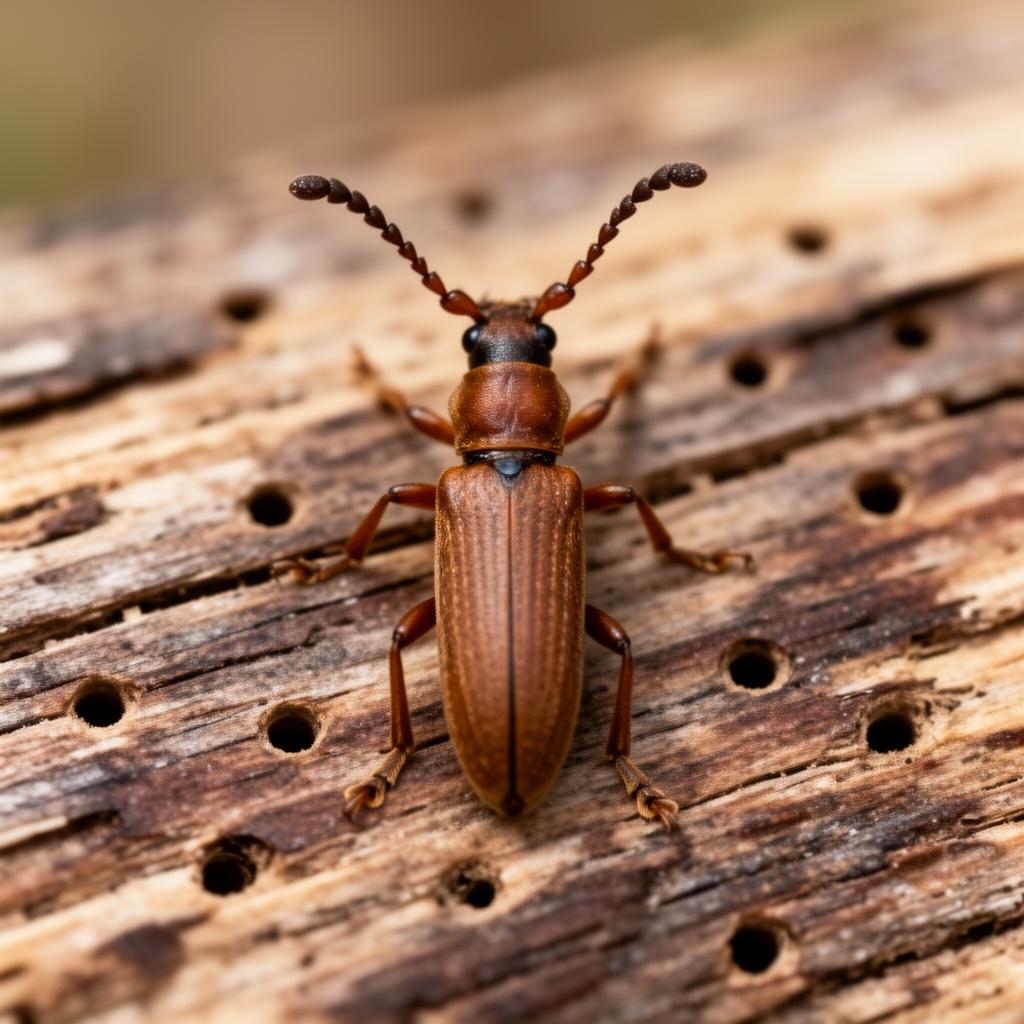
The old world powderpost beetle, Lyctus brunneus (family Bostrichidae, subfamily Lyctinae), is a small, elongated beetle, typically 3-7 mm in length, with a reddish-brown coloration and a distinctly flattened head that is visible from above. Its antennae are clubbed with a two-segmented terminal club, a key morphological feature for identification. The life cycle spans approximately one year under optimal conditions (27-30°C and 80-85% relative humidity), but can extend to five years in less favorable environments. Females lay 20-50 eggs, depositing them in pores of hardwood sapwood, particularly those rich in starch, such as oak, ash, walnut, and hickory. Larval instars, typically 3-4, are C-shaped, creamy-white, and primarily consume starch and sugars within the wood, avoiding cellulose and lignin.
Behaviour
Lyctus brunneus exhibits nocturnal activity, with adults emerging from infested wood primarily during evening hours to mate and oviposit. Dispersal typically involves flight, but can also occur through transportation of infested wooden articles. Communication relies on chemical cues, although specific pheromones involved in mate attraction or aggregation are not fully characterized. Their feeding ecology is specialized, targeting starch-rich sapwood of broadleaf trees, leading to extensive internal tunneling that compromises structural integrity. While not directly harmful to human health, their incessant boring can cause significant structural damage to flooring, antique furniture, and architectural elements, potentially requiring costly repairs or replacement, and rendering the infested material unusable.
Habits
These beetles primarily harbor within seasoned sapwood of hardwoods, typically in conditions where the wood moisture content is between 8-32%. New infestations are initiated when adult females locate suitable wood surfaces, with pores large enough to accommodate their ovipositor for egg-laying. Foraging patterns indicate a preference for high-starch content, commonly found in unsealed or inadequately seasoned timber. Signs of infestation include accumulations of very fine, flour-like frass (resembling talcum powder) expelled from 1.5-2.0 mm diameter perfectly round exit holes. Infestations are often exacerbated in environments with high ambient humidity and moderate temperatures, and wood that has been improperly stored or finished is particularly vulnerable to attack.
Control methods
- 1Borate (Bora-Care) surface treatment of bare wood
- 2Replace heavily damaged structural members
- 3Reduce wood moisture below 8% via ventilation
- 4Kiln-dry or freeze (-18°C, 72 h) movable items
- 5Fumigation (sulfuryl fluoride) for whole-structure
- 6Seal/finish wood surfaces to deter egg-laying
Tailored to Powderpost Beetle
IPM Procedure Checklist
Inspection
- Inspect harborage near food, water and warmth
- Check cracks, voids and appliance interiors
- Place sticky monitors at suspected hot-spots
Identification
- Confirm Powderpost Beetle (Lyctus brunneus) — not a look-alike
- Note life stage and risk level: High
- Capture clear photos and samples for the record
Action Thresholds
- Zero-tolerance: act on first confirmed sighting
- Notify client and document the trigger event
- Prioritize health and regulatory risk in the plan
Prevention
- Seal cracks, plumbing penetrations and wall voids
- Eliminate moisture sources and standing water
- Improve sanitation: sealed food storage, grease removal
Control Methods
- Borate (Bora-Care) surface treatment of bare wood
- Replace heavily damaged structural members
- Reduce wood moisture below 8% via ventilation
- Kiln-dry or freeze (-18°C, 72 h) movable items
Monitoring & Evaluation
- Service monitors on schedule and trend captures
- Re-inspect for Powderpost Beetle activity at follow-up
- Adjust tactics based on data; report findings to client