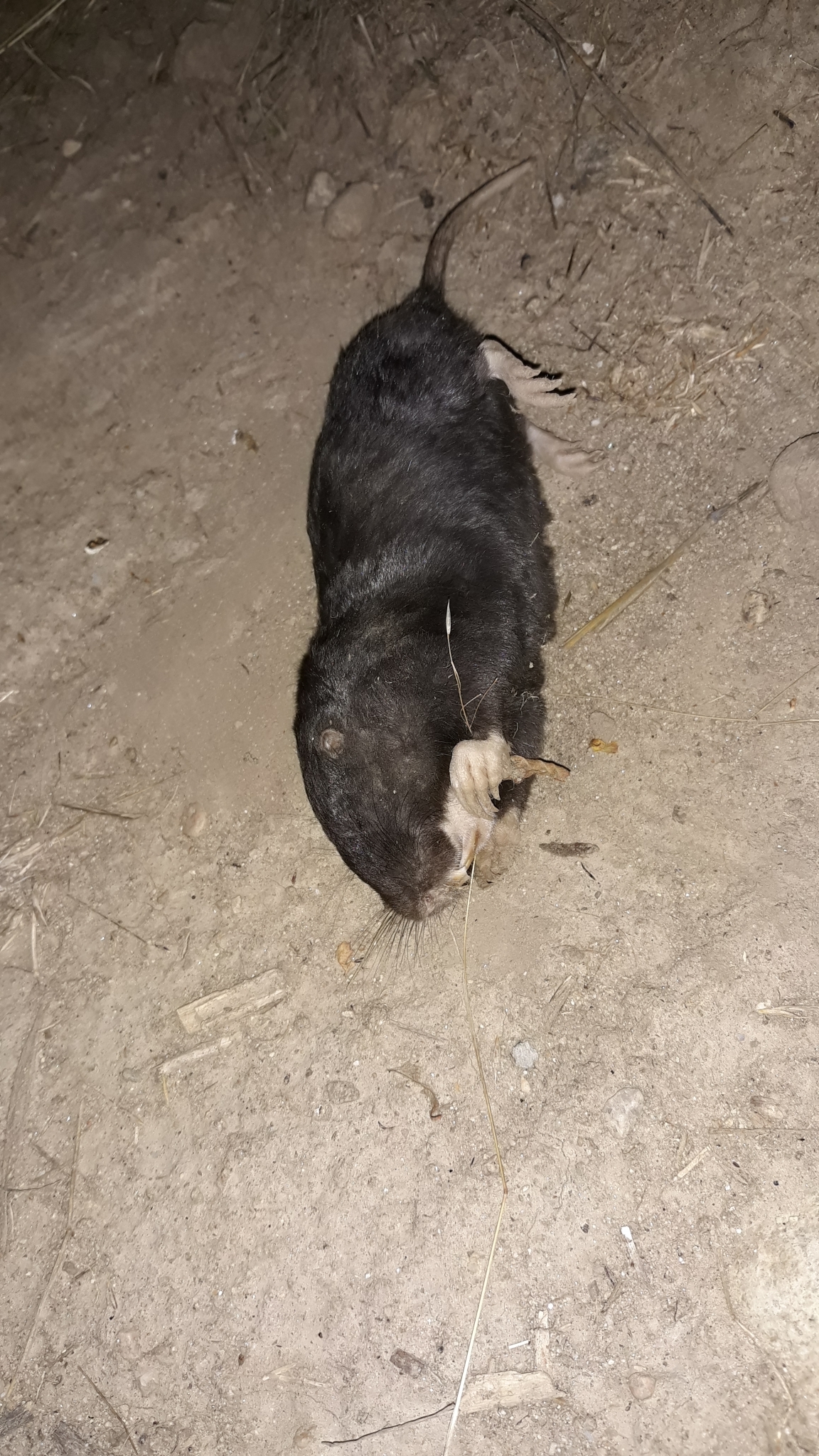
Rodent
Pocket Gopher
Thomomys
Biology
Pocket gophers (family Geomyidae) are medium-sized fossorial rodents, typically 15–35 cm in total length, with males generally larger than females. They possess powerful forelimbs equipped with long claws for digging, and their prominent incisors, which grow continuously, are used for excavating soil and cutting roots, often closing behind external fur-lined cheek pouches used for transport of food. Their life cycle typically involves a gestation period of 18–19 days, producing 1–10 altricial young (average 3–4) in one to two litters per year, with peak breeding often occurring in spring. Gophers can live 1–3 years in the wild, with some individuals reaching up to 5 years, and their survival is highly dependent on sufficient soil moisture and palatable root availability.
Behaviour
Pocket gophers are relentlessly solitary, maintaining exclusive burrow systems and exhibiting aggressive territoriality towards conspecifics, especially within the same sex, communicating primarily through scent marking and tactile interactions during breeding. They are active year-round, predominantly nocturnal or crepuscular, though their activity rhythms can vary with ambient temperature and soil conditions. Their feeding ecology is strictly herbivorous, consuming roots, tubers, and succulent stems pulled from below ground into their burrows, occasionally venturing above to forage for greens near burrow entrances. Their burrowing activities cause significant structural impacts, undermining foundations, disrupting irrigation systems, and creating hazards for farm machinery and livestock due to concealed tunnel networks.
Habits
Pocket gophers exhibit distinct harborage preferences for well-drained, friable soils with ample perennial vegetation, favouring agricultural fields, pastures, and landscaped areas, creating extensive burrow systems ranging from 50 to 500 feet in length and 6 inches to 3 feet in depth. Their foraging patterns are characterized by localized excavation around preferred food sources, with main runways connecting feeding tunnels and deeper nesting/storage chambers. Infestations are most readily identified by the presence of crescent- or fan-shaped soil mounds, where soil is pushed from a lateral tunnel, typically plugging the surface opening. Technicians should also look for 'feeding plugs' – small soil plugs indicating where a gopher has pulled vegetation into its tunnel, and damaged subsurface irrigation lines or severed plant roots.
Control methods
- 1Locate fresh mounds and identify main tunnel
- 2Set lethal box traps (Macabee) in main tunnel
- 3Use bait applicators with anticoagulant rodenticide
- 4Flood irrigation to drive out and locate active runs
- 5Wire mesh baskets around new tree plantings
- 6Maintain dense turf to discourage establishment
Tailored to Pocket Gopher
IPM Procedure Checklist
Inspection
- Locate runways, droppings, rub marks and gnaw damage
- Identify entry points (gaps ≥6 mm) and harborage
- Place tracking patches or non-toxic monitors
Identification
- Confirm Pocket Gopher (Thomomys) — not a look-alike
- Note life stage and risk level: High
- Capture clear photos and samples for the record
Action Thresholds
- Zero-tolerance: act on first confirmed sighting
- Notify client and document the trigger event
- Prioritize health and regulatory risk in the plan
Prevention
- Exclude with steel wool, hardware cloth and door sweeps
- Trim vegetation 0.5 m from structure; clear debris
- Secure trash, pet food and stored grain
Control Methods
- Locate fresh mounds and identify main tunnel
- Set lethal box traps (Macabee) in main tunnel
- Use bait applicators with anticoagulant rodenticide
- Flood irrigation to drive out and locate active runs
Monitoring & Evaluation
- Service monitors on schedule and trend captures
- Re-inspect for Pocket Gopher activity at follow-up
- Adjust tactics based on data; report findings to client