All pests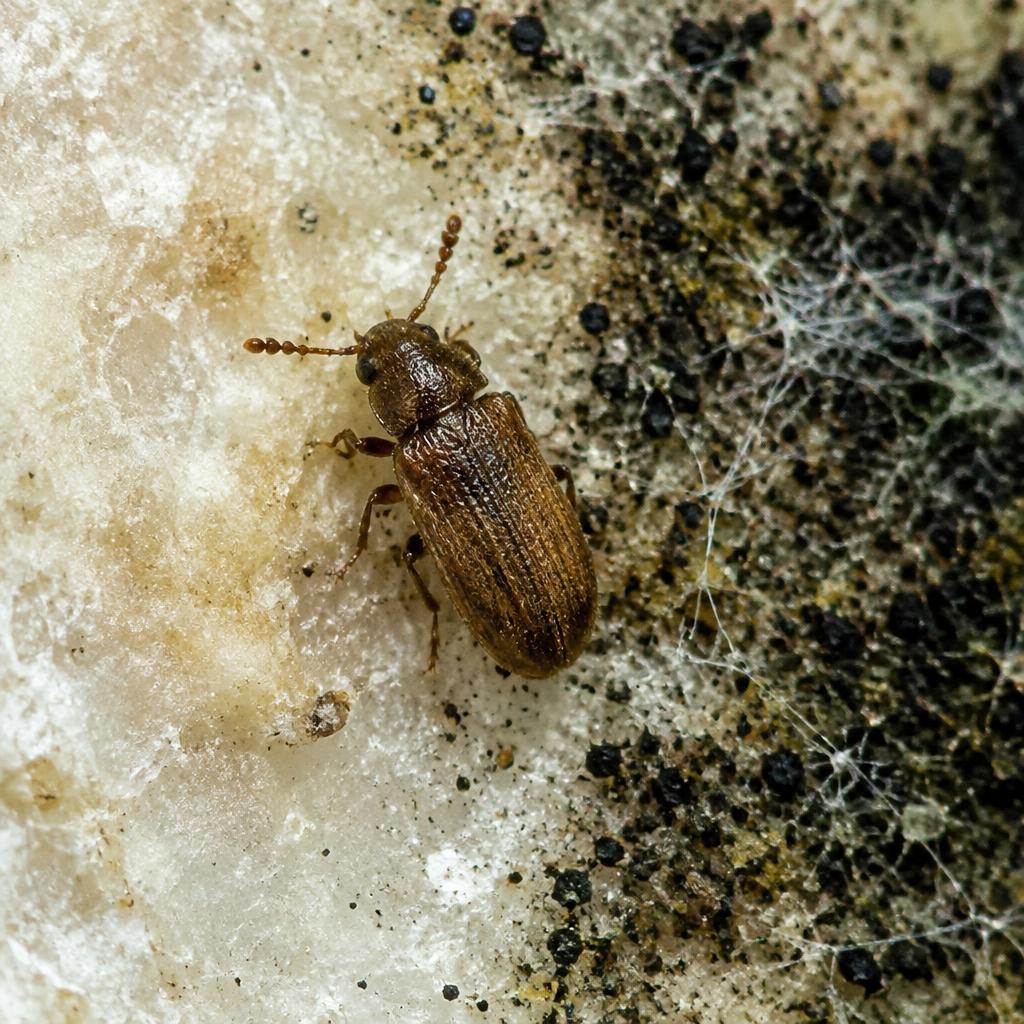 View full procedure
Insect
Plaster Beetle
Cartodere constricta
Low Risk
Biology
Cartodere constricta is a minute brown scavenger beetle 1–2 mm long with an elongate ridged body. It feeds exclusively on moulds and mildew, completing development in a few weeks under damp conditions.
Behaviour
It appears in newly built or water-damaged buildings where plaster, drywall, and framing remain damp enough to support mould. Adults wander onto windowsills and light fixtures in large numbers.
Habits
Mass appearances indicate hidden moisture: leaking pipes, condensation in wall voids, flood residue, or unseasoned lumber. Populations collapse once the substrate dries out.
Control methods
- 1Find and repair the underlying moisture or leak source
- 2Dry affected voids with dehumidifiers and forced ventilation
- 3Remove and replace mould-damaged drywall and insulation
- 4Improve crawlspace ventilation and add a vapour barrier
- 5Vacuum visible beetles from sills and fixtures
- 6Avoid insecticides; drying the structure ends the infestation
Tailored to Plaster Beetle
IPM Procedure Checklist
Step 1
Inspection
- Inspect harborage near food, water and warmth
- Check cracks, voids and appliance interiors
- Place sticky monitors at suspected hot-spots
Step 2
Identification
- Confirm Plaster Beetle (Cartodere constricta) — not a look-alike
- Note life stage and risk level: Low
- Capture clear photos and samples for the record
Step 3
Action Thresholds
- Tolerate low-level activity outside sensitive zones
- Act if activity moves indoors or near food
- Review threshold seasonally with the client
Step 4
Prevention
- Seal cracks, plumbing penetrations and wall voids
- Eliminate moisture sources and standing water
- Improve sanitation: sealed food storage, grease removal
Step 5
Control Methods
- Find and repair the underlying moisture or leak source
- Dry affected voids with dehumidifiers and forced ventilation
- Remove and replace mould-damaged drywall and insulation
- Improve crawlspace ventilation and add a vapour barrier
Step 6
Monitoring & Evaluation
- Service monitors on schedule and trend captures
- Re-inspect for Plaster Beetle activity at follow-up
- Adjust tactics based on data; report findings to client